Stock Management System Kenya
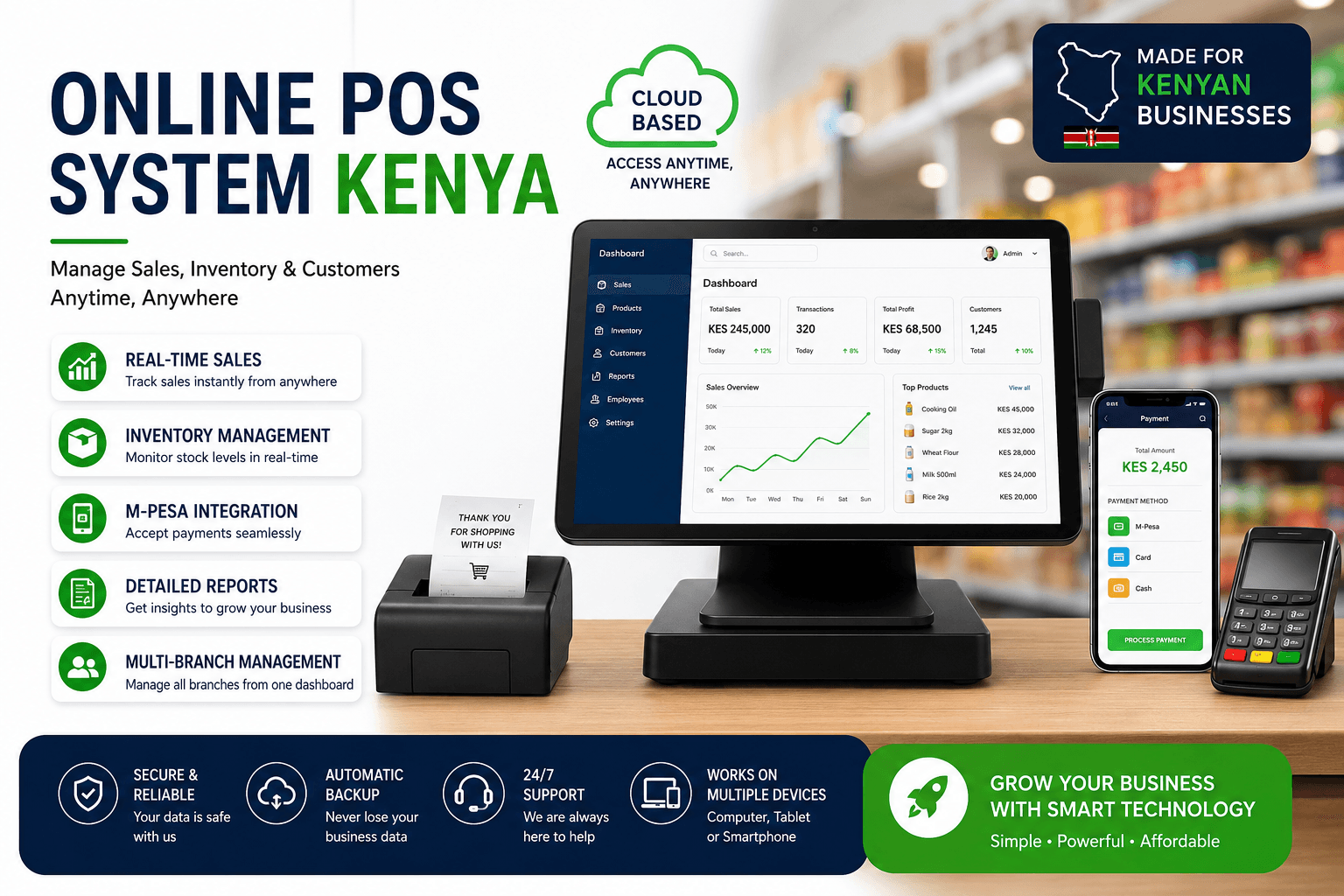
Stock Management System solutions are transforming how businesses in Kenya manage inventory, track products, monitor stock levels, and improve operational efficiency. In today’s competitive business environment, effective inventory management is essential for maintaining profitability, reducing losses, and delivering excellent customer service.
Whether you operate a retail store, supermarket, pharmacy, hardware shop, restaurant, warehouse, electronics business, or wholesale enterprise, a reliable Stock Management System helps streamline operations and provides real-time visibility into inventory performance.
Businesses that continue to rely on manual stock tracking often experience stock shortages, overstocking, inaccurate inventory records, and reduced profitability. Modern inventory management software eliminates these challenges through automation and real-time reporting.
What is a Stock Management System?
A Stock Management System is software designed to help businesses monitor, organize, control, and optimize inventory. The system tracks products from purchase to sale while providing accurate stock information at all times.
A modern Stock Management System enables businesses to:
- Monitor inventory levels
- Track stock movement
- Generate inventory reports
- Manage suppliers
- Prevent stock shortages
- Reduce inventory losses
- Improve purchasing decisions
- Increase profitability
The primary objective is to ensure the right products are available at the right time without tying up excessive capital in inventory.
Why Businesses Need a Stock Management System
Inventory represents one of the largest investments for most businesses. Poor inventory control can significantly affect cash flow and customer satisfaction.
Common Inventory Challenges
Businesses without a proper system often face:
- Stockouts
- Overstocking
- Inventory theft
- Manual errors
- Poor visibility
- Delayed reporting
- Customer dissatisfaction
A Stock Management System addresses these issues by providing automation and real-time inventory tracking.
Benefits of a Stock Management System
Improved Inventory Accuracy
Manual inventory tracking often results in errors.
A Stock Management System automatically updates stock levels after every transaction, ensuring accurate records.
Reduced Stock Losses
Businesses can monitor:
- Damaged stock
- Expired products
- Missing inventory
- Theft incidents
This helps reduce unnecessary losses.
Better Customer Service
Customers expect products to be available when needed.
Real-time stock visibility enables businesses to meet customer demand consistently.
Faster Business Operations
Employees spend less time counting inventory and more time serving customers.
Automation increases productivity throughout the organization.
Better Financial Management
Inventory reports provide valuable insights into:
- Product performance
- Profit margins
- Purchasing trends
- Cash flow management
Key Features of a Modern Stock Management System
Real-Time Inventory Tracking
Monitor inventory levels instantly across all products and locations.
Barcode Management
Barcode scanning speeds up inventory updates and improves accuracy.
Multi-Location Inventory Control
Businesses with multiple branches can manage stock from a centralized dashboard.
Purchase Order Management
Track supplier orders from creation to delivery.
Stock Alerts
Receive automatic notifications when inventory reaches minimum levels.
Reporting and Analytics
Generate detailed reports on:
- Sales performance
- Inventory turnover
- Stock valuation
- Product profitability
Types of Businesses That Need a Stock Management System
Retail Stores
Retailers require accurate inventory tracking to maintain product availability.
Supermarkets
Large inventories require automated stock management.
Pharmacies
Medication inventory must be tracked carefully to prevent shortages and expiry issues.
Restaurants
Food inventory management helps reduce waste and improve profitability.
Hardware Stores
Thousands of products can be tracked efficiently through automation.
Electronics Shops
Track inventory, warranties, and product movement accurately.
Wholesale Businesses
Manage large stock volumes while maintaining efficient distribution processes.
How a Stock Management System Improves Business Growth
A Stock Management System directly contributes to growth by:
- Improving operational efficiency
- Reducing costs
- Increasing sales
- Enhancing customer satisfaction
- Supporting better decision-making
Businesses with strong inventory control gain a significant competitive advantage in today’s marketplace.
Why Cloud-Based Stock Management Systems Are Better
Cloud technology has transformed inventory management.
Advantages Include:
- Access from anywhere
- Automatic backups
- Real-time synchronization
- Enhanced security
- Scalability
Business owners can monitor inventory using smartphones, tablets, or computers from any location.
Stock Management System and Business Automation
Automation is becoming essential for modern businesses.
By integrating inventory management with:
- POS systems
- Accounting software
- CRM systems
- E-commerce platforms
Businesses create a seamless operational workflow that improves productivity and profitability.
Conclusion
A Stock Management System is no longer optional for businesses that want to remain competitive. Effective inventory management improves efficiency, reduces losses, enhances customer satisfaction, and supports long-term business growth.
Whether you operate a small retail shop or a large enterprise, investing in a modern Stock Management System provides the tools needed to manage inventory effectively and maximize profitability.
Advanced Stock Management System Features Every Business Needs
As businesses grow, inventory management becomes more complex. Modern Stock Management Systems provide advanced tools that help organizations maintain control over inventory while improving efficiency and profitability.
Automated Inventory Tracking
Automation is one of the biggest advantages of a Stock Management System.
The system automatically:
- Updates stock levels
- Records stock movement
- Tracks product sales
- Monitors returns
- Calculates inventory balances
This eliminates manual data entry and reduces human errors.
Real-Time Inventory Visibility
Business owners need instant access to inventory information.
A Stock Management System provides real-time visibility into:
- Current stock levels
- Product availability
- Inventory movement
- Branch inventory status
This information helps businesses make informed decisions quickly.
Multi-Branch Inventory Management
Many businesses operate multiple locations.
Managing inventory manually across different branches can be difficult.
A centralized Stock Management System allows businesses to:
- Monitor inventory across all branches
- Transfer stock between locations
- Generate branch-specific reports
- Maintain consistent inventory records
This improves operational efficiency and reduces stock discrepancies.
Stock Reordering Automation
Running out of stock can result in lost sales and dissatisfied customers.
A modern Stock Management System helps prevent stock shortages through automatic reorder alerts.
Benefits include:
- Reduced stockouts
- Improved purchasing efficiency
- Better supplier management
- Consistent product availability
Businesses can establish minimum stock levels and receive notifications when inventory falls below those thresholds.
How Stock Management Systems Reduce Business Losses
Inventory losses directly impact profitability.
Common causes include:
Overstocking
Excess inventory ties up capital and increases storage costs.
A Stock Management System helps businesses maintain optimal inventory levels.
Stock Shortages
Insufficient inventory can lead to:
- Lost sales
- Customer dissatisfaction
- Reduced revenue
Automated stock monitoring minimizes this risk.
Theft and Shrinkage
Inventory theft remains a challenge for many businesses.
Stock tracking systems improve accountability by monitoring product movement and user activity.
Expired Products
Businesses selling perishable goods can track expiry dates and rotate inventory efficiently.
Inventory Reporting and Business Intelligence
One of the most valuable features of a Stock Management System is reporting.
Reports help business owners understand inventory performance and identify opportunities for improvement.
Inventory Valuation Reports
Track the financial value of inventory.
This information is essential for:
- Financial planning
- Accounting
- Tax reporting
Stock Movement Reports
Analyze:
- Fast-moving products
- Slow-moving products
- Seasonal trends
This helps optimize purchasing decisions.
Profitability Reports
Determine which products generate the highest profits.
This enables businesses to focus on high-performing inventory.
Supplier Performance Reports
Evaluate supplier reliability based on:
- Delivery times
- Product quality
- Order accuracy
Strong supplier relationships improve inventory management.
Stock Management System for Retail Businesses
Retail businesses rely heavily on accurate inventory management.
Benefits for Retail Stores
- Faster inventory counts
- Improved stock visibility
- Better customer service
- Reduced losses
Retailers can track product sales in real time and identify best-selling items quickly.
Stock Management System for Supermarkets
Supermarkets handle thousands of products daily.
An advanced Stock Management System helps:
- Manage large inventories
- Track product categories
- Monitor stock movement
- Generate inventory reports
This improves efficiency and profitability.
Stock Management System for Pharmacies
Pharmacies require precise inventory control.
The system helps manage:
- Medicine stock levels
- Expiry dates
- Supplier orders
- Prescription inventory
This improves patient service and regulatory compliance.
Stock Management System for Restaurants
Food inventory management is critical for restaurant profitability.
Benefits include:
- Ingredient tracking
- Waste reduction
- Purchase planning
- Menu profitability analysis
Restaurants can better manage food costs and improve operational efficiency.
Stock Management System for E-Commerce Businesses
Online businesses require accurate inventory synchronization.
The system supports:
- Real-time inventory updates
- Order management
- Product tracking
- Sales reporting
This ensures customers only purchase products that are actually available.
Cloud-Based Stock Management Systems
Cloud technology continues to transform inventory management.
Accessibility
Business owners can access inventory information from:
- Smartphones
- Tablets
- Computers
Automatic Data Backup
Cloud systems automatically protect business data.
Scalability
The system grows alongside the business.
Enhanced Security
Advanced security measures protect sensitive business information.
Inventory Optimization Strategies
A Stock Management System supports several inventory optimization techniques.
ABC Inventory Analysis
Products are categorized based on importance and value.
Category A
High-value products requiring close monitoring.
Category B
Moderately important products.
Category C
Lower-value products with less monitoring requirements.
This approach improves inventory efficiency.
Why Businesses Are Moving Toward Digital Inventory Management
Traditional inventory methods are becoming outdated.
Businesses are adopting digital solutions because they provide:
- Better accuracy
- Faster reporting
- Improved visibility
- Increased efficiency
- Lower operational costs
Companies that embrace automation gain a significant competitive advantage.
Frequently Asked Questions
What is a Stock Management System?
A Stock Management System is software that helps businesses track, manage, and optimize inventory.
Why is inventory management important?
Effective inventory management reduces costs, prevents stock shortages, and improves customer satisfaction.
Can small businesses benefit from a Stock Management System?
Yes. Small businesses often experience the greatest benefits through improved efficiency and reduced losses.
Is cloud-based inventory management secure?
Modern cloud platforms use advanced security measures to protect business data.
Can inventory software integrate with POS systems?
Yes. Most modern Stock Management Systems integrate with POS, accounting, and e-commerce platforms.
Conclusion
A Stock Management System is a powerful business tool that helps organizations improve inventory accuracy, reduce costs, increase efficiency, and enhance customer satisfaction. Whether you operate a retail store, supermarket, pharmacy, restaurant, warehouse, or e-commerce business, inventory management software provides the visibility and control needed to support long-term growth and profitability.
Businesses that invest in modern inventory management solutions position themselves for success in an increasingly competitive marketplace.