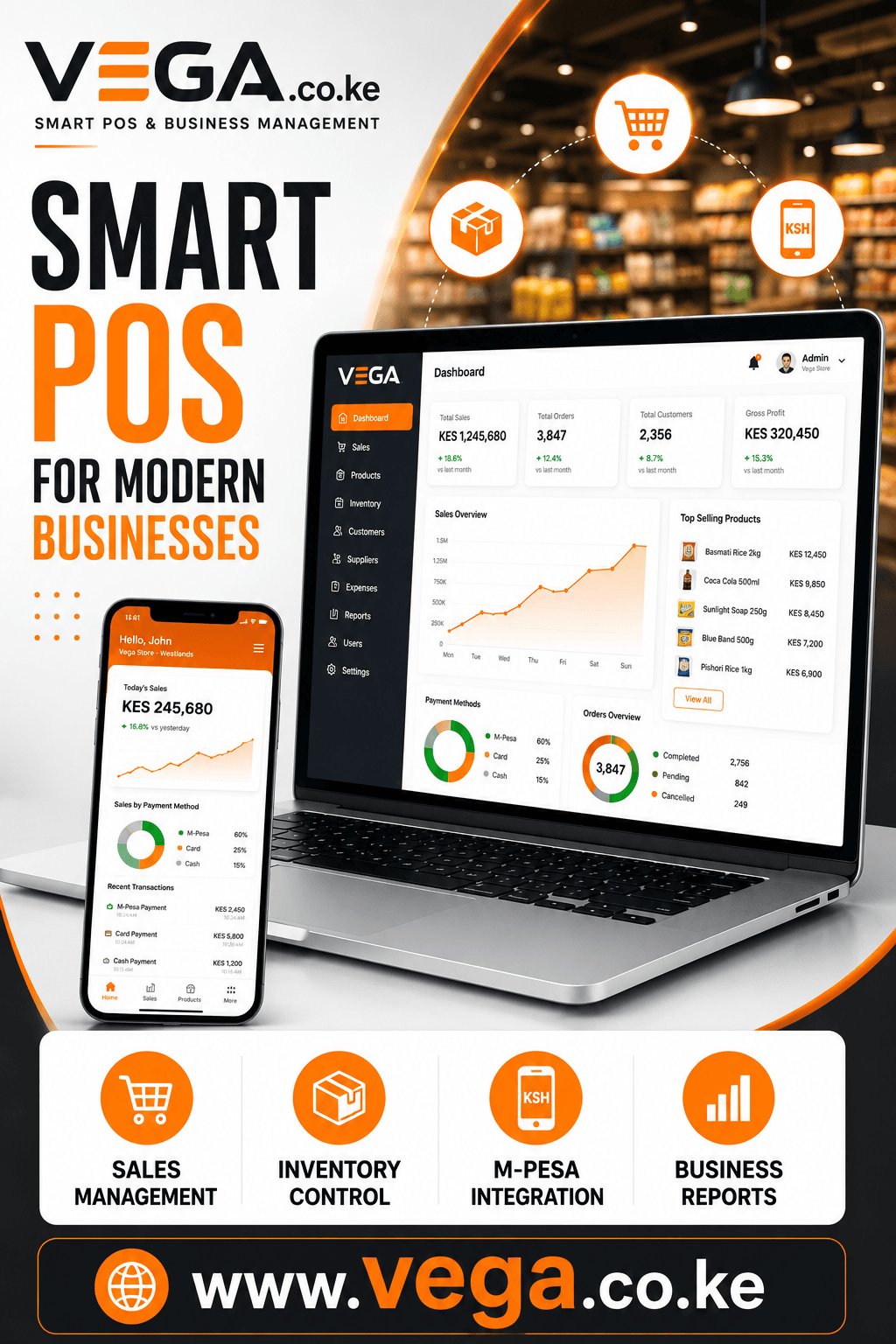
Retail Stock Control Platform is an essential solution for businesses seeking to manage inventory efficiently, maintain accurate stock records, reduce inventory losses, and improve overall retail performance.
Inventory is one of the most valuable assets within any retail business. Whether operating a supermarket, pharmacy, hardware store, electronics shop, wholesaler, convenience store, or multi-branch retail chain, maintaining accurate stock control is critical for profitability and customer satisfaction.
As businesses grow, inventory management becomes increasingly complex. Products move through multiple stages including purchasing, receiving, storage, transfers, sales, returns, and adjustments. Managing these activities manually often leads to stock discrepancies, overstocking, stock shortages, financial losses, and operational inefficiencies.
A Retail Stock Control Platform addresses these challenges by providing centralized inventory management capabilities that automate stock tracking and improve visibility across all retail operations.
The platform enables businesses to monitor inventory in real time, manage stock movement efficiently, optimize purchasing decisions, and maintain accurate inventory records.
Instead of relying on spreadsheets, paper-based systems, or disconnected software applications, organizations can use a single platform to manage inventory throughout its entire lifecycle.
For businesses throughout Kenya, where retail competition continues to intensify and customer expectations continue to evolve, a Retail Stock Control Platform provides the operational foundation necessary to maintain inventory accuracy while supporting sustainable business growth.
Organizations that invest in effective stock control solutions often experience improved efficiency, reduced losses, and stronger profitability.
Table of Contents
- Understanding Retail Stock Control Platform
- Why Retail Stock Control Platform Matters
- Core Features of Retail Stock Control Platform
- Inventory Monitoring and Stock Visibility
- Stock Movement and Inventory Tracking
- Purchasing and Replenishment Management
- Reporting and Inventory Intelligence
- Challenges of Manual Stock Control Methods
Understanding Retail Stock Control Platform
A Retail Stock Control Platform is a software solution designed to help businesses monitor, manage, track, and optimize inventory across retail operations.
The platform centralizes inventory information and provides visibility into stock levels, product movement, purchasing activities, stock transfers, inventory adjustments, and sales-related stock consumption.
Inventory management plays a critical role in business success because inventory directly affects sales performance, customer satisfaction, cash flow, and profitability.
Without effective stock control processes, businesses may struggle with inaccurate records, inventory shortages, excess stock, and poor purchasing decisions.
A Retail Stock Control Platform helps organizations overcome these challenges by automating inventory-related workflows and maintaining accurate records in real time.
The software typically integrates with point of sale systems, purchasing modules, supplier databases, warehouse operations, and reporting tools.
This integration ensures inventory information remains synchronized across all business functions.
For retailers operating throughout Kenya, maintaining visibility into stock levels is becoming increasingly important as competition grows and consumer expectations rise.
A Retail Stock Control Platform provides the tools needed to manage inventory effectively while supporting operational efficiency and long-term growth.
Why Retail Stock Control Platform Matters
Inventory directly influences a retailer’s ability to generate revenue and satisfy customer demand.
Businesses that lack accurate stock information often experience inventory-related problems that negatively affect performance.
Stock shortages can lead to lost sales opportunities, while excess inventory ties up capital and increases storage costs.
A Retail Stock Control Platform helps eliminate these challenges through automation and centralized inventory management.
One major advantage is real-time inventory visibility.
Managers can monitor stock levels instantly and respond quickly to inventory-related issues.
The platform also improves inventory accuracy by reducing manual record keeping and automating stock updates.
Operational efficiency improves because employees spend less time tracking inventory manually and more time supporting customers and business objectives.
A Retail Stock Control Platform helps businesses optimize purchasing decisions by providing accurate information regarding inventory availability and product demand.
Decision-making becomes more effective because managers gain access to reliable inventory data and performance insights.
For businesses throughout Kenya, these capabilities contribute to stronger operational performance, improved customer service, and increased profitability.
Organizations that implement Retail Stock Control Platform solutions often gain a competitive advantage through better inventory management and operational control.
Core Features of Retail Stock Control Platform
A comprehensive Retail Stock Control Platform includes a wide range of features designed to support inventory management and retail operations.
Real-time inventory tracking enables businesses to monitor stock levels continuously.
Stock movement management records inventory transfers, adjustments, returns, and product consumption.
Purchasing management tools support supplier coordination and inventory replenishment activities.
Product management capabilities maintain detailed product records, categories, pricing information, and inventory attributes.
Multi-location inventory control supports businesses operating multiple branches or warehouses.
Low-stock alerts help organizations identify replenishment requirements before shortages occur.
Inventory valuation tools provide visibility into stock-related financial performance.
Reporting and analytics capabilities generate insights into inventory activity and product performance.
User access controls support security and accountability through role-based permissions.
Business intelligence tools transform inventory data into actionable operational insights.
Together, these capabilities make a Retail Stock Control Platform an essential component of modern retail management.
Inventory Monitoring and Stock Visibility
One of the most important functions of a Retail Stock Control Platform is providing real-time visibility into inventory levels.
Businesses must know exactly what inventory is available, where it is located, and how quickly it is moving through operations.
The platform continuously tracks inventory and updates stock records whenever products are received, sold, transferred, returned, or adjusted.
Managers gain immediate access to accurate stock information through centralized dashboards.
A Retail Stock Control Platform helps eliminate uncertainty regarding inventory availability and product movement.
Businesses can identify inventory shortages quickly and take corrective action before customers are affected.
The software also helps improve forecasting by providing historical inventory data and usage trends.
For retailers throughout Kenya, inventory visibility contributes to better decision-making and improved operational performance.
Accurate stock information enables organizations to serve customers more effectively while maximizing inventory efficiency.
Stock Movement and Inventory Tracking
Inventory is constantly moving throughout retail operations.
Products are purchased from suppliers, received into storage, transferred between locations, sold to customers, returned, and adjusted for various operational reasons.
Tracking these movements manually can be difficult and prone to errors.
A Retail Stock Control Platform automates inventory tracking by recording every stock movement in real time.
The software maintains a complete history of inventory activity, providing transparency and accountability across operations.
Managers can monitor product movement patterns and identify unusual inventory behavior quickly.
A Retail Stock Control Platform helps reduce losses by ensuring inventory remains traceable throughout its lifecycle.
The platform also supports inventory audits and reconciliation activities by maintaining accurate records of stock transactions.
For businesses managing large inventories, automated tracking significantly improves operational efficiency and accuracy.
The result is stronger inventory control and improved confidence in stock-related information.
Purchasing and Replenishment Management
Effective inventory management requires timely replenishment and strategic purchasing decisions.
A Retail Stock Control Platform helps businesses maintain optimal inventory levels by providing visibility into stock availability and demand patterns.
The software can identify products approaching reorder thresholds and generate alerts for replenishment activities.
Managers gain access to information that supports more accurate purchasing decisions.
A Retail Stock Control Platform helps prevent stock shortages while reducing the risk of excess inventory accumulation.
Purchasing teams can monitor supplier performance, track purchase orders, and manage inventory replenishment workflows more effectively.
The software also supports budgeting and inventory planning activities by providing detailed inventory analytics.
For retailers throughout Kenya, these capabilities contribute to improved cash flow management and stronger inventory performance.
Effective replenishment management ensures products remain available when customers need them.
Reporting and Inventory Intelligence
Modern inventory management requires more than simply tracking stock levels.
Businesses need actionable insights that support informed decision-making and operational improvement.
A Retail Stock Control Platform includes reporting and analytics tools that transform inventory data into valuable business intelligence.
Managers can generate reports related to stock availability, inventory turnover, product performance, purchasing trends, and inventory valuation.
Dashboards provide real-time visibility into key inventory metrics and operational indicators.
The software helps identify fast-moving products, slow-moving inventory, and opportunities for optimization.
A Retail Stock Control Platform supports strategic planning by providing historical data and forecasting insights.
For organizations operating multiple branches or warehouses, centralized reporting creates a unified view of inventory performance.
These capabilities help businesses improve efficiency, reduce costs, and maximize profitability.
Challenges of Manual Stock Control Methods
Many retailers continue to manage inventory using spreadsheets, notebooks, paper records, and disconnected software systems.
While these methods may appear sufficient during the early stages of business growth, they often become ineffective as inventory complexity increases.
Manual stock control can result in inaccurate records, delayed updates, inventory discrepancies, and limited visibility into stock performance.
Employees may spend significant time conducting stock counts and reconciling inventory information.
Managers often struggle to obtain accurate inventory data needed for purchasing and operational decisions.
Stock shortages and overstocking become more common when inventory information is not updated consistently.
As businesses grow, these challenges can significantly affect profitability and customer satisfaction.
A Retail Stock Control Platform addresses these limitations by centralizing inventory management, automating stock tracking, improving visibility, enhancing accuracy, and supporting scalable growth.
For supermarkets, pharmacies, wholesalers, hardware stores, electronics retailers, and multi-branch businesses throughout Kenya, implementing a Retail Stock Control Platform is becoming increasingly important for maintaining competitiveness, improving efficiency, and maximizing inventory performance.
Benefits for Business Owners
Retail Stock Control Platform provides significant advantages for business owners seeking to maintain accurate inventory records, reduce stock-related losses, improve operational efficiency, and increase profitability.
Inventory often represents one of the largest investments within a retail business. Without effective stock management, businesses risk losing revenue through stock shortages, overstocking, theft, damage, expiration, and inaccurate inventory records.
A Retail Stock Control Platform helps business owners gain complete visibility into inventory performance through centralized dashboards and real-time reporting.
Owners can monitor stock levels, inventory valuation, product movement, purchasing activities, and inventory turnover without relying on manually prepared reports.
The software enables business leaders to identify fast-moving products, monitor slow-moving inventory, and optimize purchasing decisions based on accurate data.
A Retail Stock Control Platform also improves financial control because inventory information remains synchronized with operational activities.
Business owners gain greater confidence in inventory accuracy, which supports budgeting, forecasting, and strategic planning initiatives.
The platform reduces dependence on manual processes and improves operational consistency across departments and locations.
As businesses expand, managing inventory becomes increasingly challenging.
A Retail Stock Control Platform provides the scalability necessary to support larger product catalogs, higher transaction volumes, multiple branches, and more complex supply chains.
For retailers throughout Kenya, these capabilities contribute to stronger profitability, improved cash flow management, and better long-term business performance.
Organizations that invest in inventory automation often gain a competitive advantage through enhanced operational control and more efficient resource utilization.
Benefits for Store Managers and Inventory Supervisors
Store managers and inventory supervisors are responsible for maintaining stock availability, preventing inventory losses, and ensuring efficient retail operations.
A Retail Stock Control Platform provides the tools necessary to perform these responsibilities more effectively.
Managers gain access to real-time information regarding stock levels, product movement, supplier deliveries, inventory adjustments, transfers, and replenishment requirements.
This visibility allows operational teams to respond quickly to inventory challenges before they affect customers or sales performance.
A Retail Stock Control Platform simplifies inventory monitoring by automating stock updates and maintaining accurate records across all inventory-related activities.
Managers no longer need to rely solely on manual stock counts or spreadsheets to understand inventory status.
The software also supports inventory accountability by maintaining detailed records of stock movement and adjustment activities.
Managers can identify discrepancies more quickly and investigate inventory issues with greater accuracy.
For organizations operating multiple stores or warehouses, a Retail Stock Control Platform provides centralized inventory visibility across locations.
This capability improves coordination between departments and supports more effective inventory planning.
The result is stronger inventory control, improved efficiency, and better operational performance.
Benefits for Employees and Stock Handling Teams
Employees involved in inventory management benefit significantly from the automation provided by a Retail Stock Control Platform.
Traditional inventory management often requires extensive paperwork, manual stock counts, spreadsheet updates, and repetitive administrative tasks.
These activities consume valuable time while increasing the risk of human error.
A Retail Stock Control Platform automates many routine inventory processes, allowing employees to focus on higher-value operational activities.
Stock handlers can access accurate inventory information instantly without manually searching through records.
Receiving teams can process incoming inventory more efficiently because stock updates occur automatically.
Sales teams benefit from improved inventory visibility that helps them provide accurate product availability information to customers.
The software also improves workplace productivity by reducing confusion caused by outdated or inconsistent inventory records.
Employees gain confidence because inventory information remains accurate and accessible whenever needed.
A Retail Stock Control Platform helps create a more organized and efficient operational environment where inventory-related tasks can be completed more effectively.
For growing retail businesses throughout Kenya, these improvements contribute to stronger productivity, reduced workload pressures, and better employee performance.
Automation enables staff to focus on customer service and operational excellence rather than manual administrative processes.
Benefits for Customers
Customers benefit directly from the improvements in inventory accuracy and operational efficiency provided by a Retail Stock Control Platform.
One of the most important advantages is improved product availability.
Businesses that maintain accurate inventory records are better positioned to keep popular products in stock and replenish inventory before shortages occur.
Customers are more likely to find the products they need when inventory is managed effectively.
A Retail Stock Control Platform also improves service quality because employees can access accurate stock information immediately.
Customers receive reliable answers regarding product availability, delivery expectations, and inventory status.
The software helps reduce situations where products appear available but are actually out of stock due to inaccurate records.
Inventory accuracy contributes to a more consistent shopping experience and higher customer satisfaction.
A Retail Stock Control Platform also supports faster service because employees spend less time verifying inventory information manually.
For consumers throughout Kenya, these capabilities contribute to greater confidence in retail businesses and stronger customer relationships.
Organizations that manage inventory effectively are often better positioned to deliver the reliable service that modern customers expect.
Improving Efficiency Through Automation
Automation is one of the most valuable capabilities offered by a Retail Stock Control Platform.
Traditional inventory management processes require substantial manual effort to track stock movement, update records, conduct stock counts, reconcile inventory, and generate reports.
As inventory complexity increases, these responsibilities become increasingly difficult to manage efficiently.
A Retail Stock Control Platform automates inventory tracking, stock updates, inventory transfers, replenishment monitoring, reporting, and inventory analysis.
The software continuously maintains accurate records without requiring constant manual intervention.
Automation significantly reduces administrative workloads while improving inventory accuracy and consistency.
Managers gain immediate access to inventory information and performance metrics through real-time dashboards.
The platform also improves operational responsiveness because inventory changes are reflected instantly across the system.
A Retail Stock Control Platform helps eliminate many of the inefficiencies associated with manual inventory management.
For businesses throughout Kenya, automation contributes to lower operating costs, improved productivity, and stronger inventory performance.
Organizations that embrace inventory automation are often able to scale operations more efficiently while maintaining high levels of operational control.
The software transforms inventory management into a streamlined and reliable business process.
Compliance, Security, and Inventory Risk Management
Maintaining accurate inventory records is essential for financial accountability, operational transparency, and business governance.
A Retail Stock Control Platform helps organizations improve inventory control through centralized record keeping and comprehensive activity tracking.
The platform maintains detailed records of inventory receipts, transfers, adjustments, returns, sales-related stock movement, and inventory audits.
These records support financial reviews, inventory reconciliation, operational evaluations, and internal control procedures.
A Retail Stock Control Platform also enhances security through role-based access controls and user permissions.
Administrators can define inventory-related responsibilities while maintaining oversight of critical operational activities.
Risk management improves because the software provides visibility into unusual inventory patterns, unexplained stock losses, and operational discrepancies.
Managers can identify issues early and take corrective action before significant losses occur.
Inventory shrinkage, theft, data inaccuracies, and unauthorized adjustments become easier to detect and investigate.
For retailers throughout Kenya, these capabilities support stronger inventory governance and more reliable operational performance.
A Retail Stock Control Platform provides a structured framework for protecting inventory assets while maintaining accountability and transparency.
Why Vega Is the Ideal Solution
Vega is designed to help retail businesses manage inventory efficiently through centralized automation and intelligent operational management.
A Retail Stock Control Platform becomes significantly more powerful when inventory management is integrated with sales processing, purchasing workflows, supplier management, product administration, reporting, and business analytics.
Vega combines all these capabilities within a single platform.
The system enables businesses to monitor inventory levels, manage stock movement, oversee purchasing activities, track product performance, and generate detailed operational reports from one centralized dashboard.
Vega helps eliminate the inefficiencies associated with spreadsheets, paper-based inventory records, and disconnected software applications.
A Retail Stock Control Platform powered by Vega ensures that inventory information remains synchronized across all business functions.
Business owners gain complete visibility into inventory performance while operational teams benefit from automated workflows and improved efficiency.
For supermarkets, pharmacies, wholesalers, hardware stores, electronics retailers, convenience stores, and multi-branch businesses throughout Kenya, Vega provides a scalable solution capable of supporting both current operations and future growth.
By centralizing inventory management and automating stock control processes, Vega helps organizations reduce losses, improve accuracy, increase profitability, and support long-term success.
Future Trends
The future of inventory management will be influenced by artificial intelligence, predictive analytics, cloud computing, automation, and real-time business intelligence technologies.
Retail Stock Control Platform solutions are expected to become increasingly intelligent, helping businesses predict inventory requirements more accurately and optimize stock levels automatically.
Artificial intelligence may assist with demand forecasting, replenishment planning, inventory classification, and loss prevention activities.
Cloud-based platforms will continue gaining popularity because they provide accessibility, scalability, and centralized management capabilities.
Advanced analytics tools will offer deeper insights into inventory turnover, supplier performance, purchasing trends, and product profitability.
Mobile inventory management will become increasingly important as managers seek real-time access to inventory information from any location.
Automation technologies will continue reducing administrative workloads while improving inventory accuracy and responsiveness.
As retail businesses throughout Kenya continue adopting digital solutions, Retail Stock Control Platform will remain a critical component of operational success.
Organizations that embrace innovation early will gain significant advantages in efficiency, profitability, and customer satisfaction.
Getting Started
Implementing a Retail Stock Control Platform begins with evaluating existing inventory management processes and identifying opportunities for improvement.
Businesses should assess inventory tracking procedures, stock counting methods, purchasing workflows, reporting requirements, and operational challenges.
The next step involves selecting a solution capable of centralizing inventory management while integrating with other critical business functions.
Organizations should establish inventory policies, stock handling procedures, and operational standards before implementation.
Employee training is essential to ensure successful adoption and maximize system benefits.
A Retail Stock Control Platform delivers the greatest value when implemented as part of a broader strategy focused on operational efficiency, inventory accuracy, customer satisfaction, and business growth.
For businesses seeking a complete inventory management solution, Vega offers integrated capabilities that support stock control, purchasing management, sales operations, supplier administration, reporting, business analytics, and operational automation.
By implementing a Retail Stock Control Platform, organizations can improve inventory visibility, strengthen operational control, reduce losses, increase efficiency, enhance customer experiences, and create a scalable foundation for long-term success.