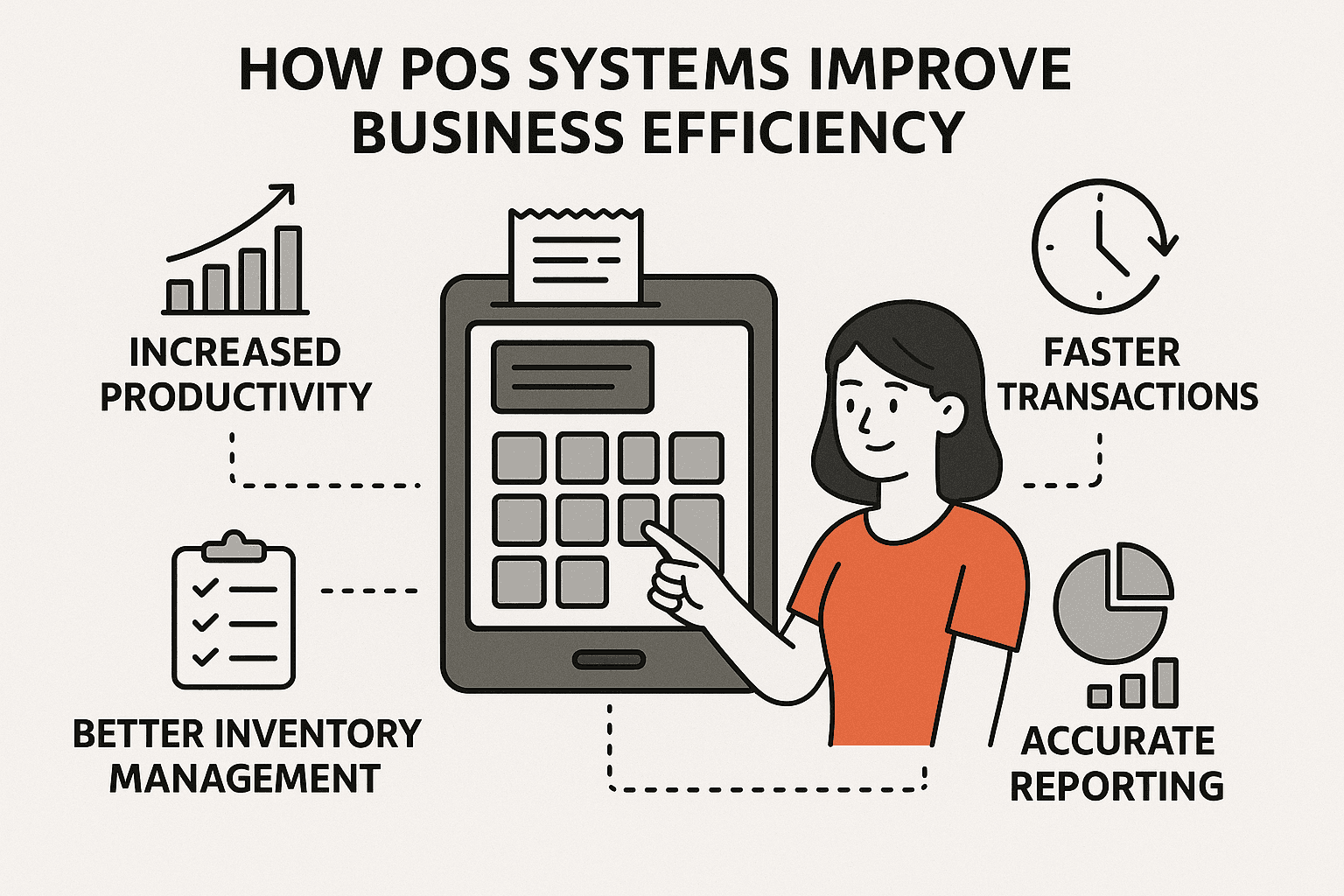
How POS Systems Improve Business Efficiency
In today’s fast-paced business world, efficiency is the key to success. Whether you run a retail store, restaurant, or service-based business, managing operations effectively can make all the difference. That’s where POS systems (Point of Sale systems) come in. These smart solutions are transforming how businesses handle sales, inventory, customer service, and reporting. But exactly how do POS systems improve business efficiency? Let’s find out.
1. Streamlined Sales and Transactions
A POS system simplifies the checkout process by automating transactions, reducing manual errors, and speeding up service. Cashiers can quickly scan items, process multiple payment methods, and issue receipts instantly. This not only improves transaction accuracy but also enhances the customer experience, leading to faster service and shorter queues.
2. Real-Time Inventory Management
Keeping track of stock levels manually is time-consuming and prone to mistakes. With a POS system, businesses can monitor inventory in real time, automatically update stock after each sale, and set alerts for low-stock items. This level of automation ensures you never run out of top-selling products or overstock slow-moving ones—saving both time and money.
3. Enhanced Employee Productivity
POS systems make employee management easier. From tracking sales performance to managing shifts and permissions, the system automates administrative tasks. This allows business owners and managers to focus on strategy and customer service instead of paperwork. With less manual work, staff can work smarter and deliver better results.
4. Accurate and Instant Reporting
Data is the backbone of modern business decisions. A good POS system provides detailed reports on sales trends, profit margins, and customer preferences. These insights help you understand which products are performing well, identify peak hours, and plan promotions more effectively. Accessing real-time reports means faster, more informed decision-making.
5. Improved Customer Relationship Management (CRM)
A POS system doesn’t just process sales — it collects valuable customer data. This includes purchase history, preferences, and contact details, enabling personalized marketing and loyalty programs. By understanding your customers better, you can improve retention, encourage repeat sales, and boost overall satisfaction.
6. Seamless Multi-Location Management
For businesses with multiple branches, a cloud-based POS system provides centralized control. You can monitor sales, inventory, and performance across all locations from a single dashboard. This saves time and ensures consistent operations, even when managing multiple outlets.
7. Reduced Human Error and Fraud
Automation through POS systems helps minimize mistakes in billing, pricing, and reporting. With controlled access and audit trails, it’s also easier to detect irregularities or unauthorized activities, reducing the risk of internal fraud.
Final Thoughts
In summary, POS systems improve business efficiency by automating core processes, enhancing data accuracy, and optimizing both staff and customer experiences. Investing in the right POS software isn’t just about upgrading technology—it’s about transforming how your business operates, saves time, and grows profitably.
If you’re ready to take your operations to the next level, consider upgrading to a modern POS system today and experience the difference in speed, accuracy, and efficiency.
8. Better Financial Management and Transparency
A POS system integrates sales, expenses, and payments into one platform, helping businesses maintain clear financial records. You can easily reconcile daily sales, track cash flow, and generate tax reports without manual spreadsheets. This transparency not only saves time but also simplifies accounting, ensuring compliance and reducing costly financial errors.
9. Integration with Other Business Tools
Modern POS systems integrate seamlessly with accounting software, eCommerce platforms, and customer management tools. For instance, linking your POS with QuickBooks or Shopify allows automatic data synchronization. This eliminates redundant data entry, prevents mismatched records, and ensures that every department—from finance to marketing—stays aligned.
10. Mobile and Cloud Flexibility
Cloud-based POS systems give you the flexibility to manage your business from anywhere. You can track real-time sales, check inventory, or view reports using your smartphone or laptop. Mobile POS options even let staff process sales on the go—perfect for restaurants, outdoor events, or delivery services. This agility keeps your business running smoothly, even when you’re not physically on-site.
11. Scalability for Business Growth
As your business grows, a POS system grows with you. Whether you’re opening new branches, adding new products, or hiring more staff, a scalable POS system adapts to your needs. You won’t need to overhaul your system every time your business expands—simply upgrade your plan or add new modules to stay efficient.
12. Environmental and Cost Benefits
By reducing paper use through digital receipts and automated reporting, POS systems help businesses become more eco-friendly. Additionally, automation minimizes labor hours, reduces losses due to human error, and cuts administrative costs. In the long term, the return on investment (ROI) of a POS system is substantial.
Frequently Asked Questions (FAQs)
1. How does a POS system save time for businesses?
A POS system automates everyday tasks like billing, inventory updates, and reporting. This reduces manual work, allowing employees to focus on customer service and sales.
2. Can a POS system help small businesses become more efficient?
Absolutely! Even small businesses benefit from faster transactions, better stock control, and data-driven decisions that save money and improve productivity.
3. Is a POS system expensive to maintain?
Not necessarily. Many cloud POS systems offer affordable monthly plans with free updates, making them cost-effective for businesses of all sizes.
4. What type of businesses benefit most from POS systems?
Retail stores, restaurants, supermarkets, salons, and pharmacies all benefit greatly from POS systems that streamline operations and improve service.
5. How do POS systems improve customer satisfaction?
By speeding up checkout times, enabling accurate billing, and offering loyalty programs, POS systems help create a smooth, personalized shopping experience.
Final Takeaway
Implementing a POS system is one of the smartest ways to improve business efficiency. From faster sales to smarter data insights, POS solutions empower business owners to work more strategically and serve customers better.
Whether you manage a small boutique or a large retail chain, a smart POS system helps you save time, reduce costs, and scale faster—all while boosting overall productivity.
How POS Systems Improve Business Efficiency Across Different Industries
While the benefits of POS systems apply to all businesses, different sectors experience unique advantages. Here’s how POS technology enhances efficiency across various industries:
1. Retail Stores
For retailers, POS systems improve business efficiency by simplifying product management, pricing updates, and promotions. Real-time sales tracking helps identify best-selling items, while integrated loyalty programs increase repeat purchases. With barcode scanning and stock-level alerts, retail managers save hours on manual stocktaking and reordering.
Key Benefits for Retail:
Fast checkout and reduced queues
Real-time inventory and pricing updates
Customer loyalty and discount management
2. Restaurants and Cafés
In hospitality, speed and accuracy are crucial. A Restaurant POS system connects kitchen orders, table management, and billing on one platform. Waitstaff can take orders directly from a tablet, reducing miscommunication and speeding up service. Inventory tracking helps monitor ingredient usage and control food costs.
Key Benefits for Restaurants:
Faster order processing and table turnover
Better kitchen coordination
Reduced food waste through inventory control
3. Supermarkets and Grocery Stores
Supermarkets benefit from POS systems that handle large transaction volumes efficiently. Barcode scanning, digital receipts, and integration with scales simplify checkout. Automated purchase orders and supplier management improve restocking accuracy and eliminate manual paperwork.
Key Benefits for Supermarkets:
Streamlined checkout for multiple customers
Smart supplier and purchase order management
Detailed daily sales reports for analysis
4. Salons and Spas
For service-based businesses like salons and spas, POS systems improve efficiency by automating appointment scheduling, managing stylist commissions, and tracking product sales. Integrated CRM tools also help build customer loyalty through targeted offers.
Key Benefits for Salons:
Easy appointment and staff scheduling
Customer history and loyalty tracking
Inventory and sales performance insights
5. Pharmacies and Clinics
Pharmacy POS systems ensure accuracy in prescriptions, expiry tracking, and batch management. They streamline billing, integrate with insurance systems, and maintain complete audit trails for regulatory compliance.
Key Benefits for Pharmacies:
Accurate medicine tracking and expiry alerts
Quick prescription billing
Secure customer and insurance data management
Why Businesses Are Switching to Modern POS Systems
Traditional cash registers and manual record-keeping can no longer keep up with today’s fast-paced markets. Businesses that adopt modern POS solutions experience higher productivity, lower operating costs, and improved customer satisfaction.
With features like cloud access, analytics dashboards, and automated reporting, business owners gain full visibility into performance metrics—anytime, anywhere.
Top 5 Reasons to Invest in a POS System Today
Save hours of manual work each week.
Access accurate, real-time sales and inventory data.
Enhance customer experience and loyalty.
Prevent stockouts and cash discrepancies.
Scale your operations confidently with automation.
Final Conclusion
In conclusion, understanding how POS systems improve business efficiency is crucial for any business aiming to grow sustainably. From automating sales to empowering data-driven decisions, POS technology eliminates guesswork and boosts productivity across all departments.
Whether you operate a small retail shop or a multi-branch enterprise, investing in a smart POS system is a strategic step toward faster growth, higher profits, and smoother operations.
Don’t let manual systems hold your business back—upgrade to a modern POS system today and experience efficiency at its best.