Guide to setting up a new retail shop in Kenya is the essential resource for any entrepreneur ready to enter Kenya’s vibrant retail market. From choosing a location to registering your business, every step matters. This guide breaks down the entire process into clear, actionable steps. You will learn the Guide to setting up a new retail shop in Kenya from business registration to opening day. We cover permits, taxes, equipment, staffing, and payment systems. By the end, you will have a roadmap for the Guide to setting up a new retail shop in Kenya that saves you time and money.
Whether you plan a small duka in Nakuru or a supermarket in Nairobi, this Guide to setting up a new retail shop in Kenya applies to your situation. Many first-time entrepreneurs underestimate the paperwork and planning required. Others overcomplicate simple steps. This article finds the balance. It provides a practical Guide to setting up a new retail shop in Kenya that you can follow at your own pace. We will also share a Guide to setting up a new retail shop in Kenya for different budget levels. You will see how a Guide to setting up a new retail shop in Kenya connects to long-term success
The Guide to setting up a new retail shop in Kenya also covers common mistakes that delay opening. And it shows how a Guide to setting up a new retail shop in Kenya can help you avoid costly legal issues. You will learn the Guide to setting up a new retail shop in Kenya through real examples and checklists. The Guide to setting up a new retail shop in Kenya is not just about compliance.It is about building a foundation for growth. You will also understand the Guide to setting up a new retail shop in Kenya when you have limited capital.
And you will see the Guide to setting up a new retail shop in Kenya for businesses that plan to expand. The Guide to setting up a new retail shop in Kenya includes technology choices. It also includes the Guide to setting up a new retail shop in Kenya for hiring your first staff. You will learn the Guide to setting up a new retail shop in Kenya through a phased approach. And finally, the Guide to setting up a new retail shop in Kenya will show you how to prepare for opening day. Let us begin.
Table of Contents
ToggleWhy Setting Up a Retail Shop in Kenya Is a Smart Move
Kenya’s retail sector is one of the most dynamic in East Africa. A growing middle class, rapid urbanisation, and high mobile money adoption create strong demand. From groceries to electronics, consumers are spending more. This makes the Guide to setting up a new retail shop in Kenya a valuable skill for any entrepreneur.
The sector offers opportunities at every scale. A small kiosk can serve a neighbourhood. A medium shop can anchor a shopping centre. A supermarket chain can dominate a region. Each level requires different capital and systems. But the Guide to setting up a new retail shop in Kenya follows similar principles regardless of size.
Kenya also has a supportive environment for small businesses. The eCitizen platform simplifies registration. Mobile money reduces the need for cash handling. County governments are investing in market infrastructure. These factors make the Guide to setting up a new retail shop in Kenya more accessible than ever.
However, success is not automatic. Many shops fail within the first year. Poor location, weak cash control, and lack of planning are common causes. Following a structured Guide to setting up a new retail shop in Kenya reduces these risks significantly.
Step-by-Step: Guide to Setting Up a New Retail Shop in Kenya
Step 1: Choose Your Business Structure
The first step in the Guide to setting up a new retail shop in Kenya is deciding your business structure. The most common options are sole proprietorship, partnership, and limited company.
A sole proprietorship is the simplest and cheapest. It is ideal for one owner starting small. You register a business name and operate as an individual. The main drawback is unlimited liability. Your personal assets are at risk if the business incurs debts.
A partnership involves two or more people. It allows shared capital and skills. But partners must have a clear agreement on profit sharing and decision-making.
A limited company is a separate legal entity. It protects personal assets. It is better for businesses seeking investment or planning to grow large. However, it costs more to register and has more compliance requirements.
Your choice affects your taxes, liability, and registration process. Consider your long-term goals when deciding.
Step 2: Register Your Business Name
Once you choose your structure, register your business name. This is a key step in the Guide to setting up a new retail shop in Kenya.
The process is done online through the eCitizen portal. You need your National ID or passport. You also need a KRA PIN. You will propose three to five business names in order of preference. The system checks availability. If approved, you pay a reservation fee. Then you complete the registration and pay the final fee.
For a sole proprietorship, the total cost is around KES 950. The process usually takes one to two business days. You will receive a Certificate of Registration. Keep this document safe. You will need it for permits, bank accounts, and tax registration.
Step 3: Obtain Your KRA PIN
Every business in Kenya needs a KRA PIN. This is your tax identification number. The Guide to setting up a new retail shop in Kenya cannot proceed without it.
Register for your PIN on the KRA iTax portal. For a business, select “Non-Individual” registration. You will need your business registration certificate, ID, and other details. The process is free and done online.
Once registered, you will receive your PIN certificate. Display it at your premises. You will use this PIN for all tax filings, including VAT and PAYE if you have employees.
Step 4: Apply for a County Single Business Permit
Every business operating in a Kenyan county needs a Single Business Permit (SBP). This is also called a Unified Business Permit (UBP) in some counties. It is a mandatory part of the Guide to setting up a new retail shop in Kenya.
The permit consolidates several county licences into one. It covers trading, fire safety, health, and advertising. The requirements depend on your business type. A food business will need a health certificate. A shop with signage will need an advertising permit.
Apply through your county’s revenue office or online portal. You will need your business registration certificate, KRA PIN, ID, and lease agreement. Fees vary by county, business size, and location. A small shop in Nairobi may pay around KES 4,000. Larger operations pay more. In 2026, Nairobi County announced a waiver for new startups. Check if you qualify.
Step 5: Choose the Right Location
Location is one of the most critical decisions in the Guide to setting up a new retail shop in Kenya. It determines your customer base, rent, and competition.
Look for areas with high foot traffic. This could be near a market, bus stop, school, or residential estate. Study the demographics. Who lives nearby? What are their income levels and shopping habits? A location that works for a hardware shop may not work for a boutique.
Consider accessibility. Can customers reach you easily? Is there parking? Is the area safe? Also check the lease terms. How long is the lease? What are the renewal conditions? Avoid locations with unclear ownership or frequent disputes.
Visit the area at different times of day. Morning, lunch, and evening traffic patterns vary. A location that is busy in the morning may be dead in the afternoon. The Guide to setting up a new retail shop in Kenya emphasises observation over assumption.
Step 6: Secure Your Premises and Lease
Once you choose a location, secure the premises. Negotiate the lease carefully. A good lease protects your interests.
Key terms to review include rent amount, deposit, lease duration, renewal options, and responsibilities for repairs. Clarify who pays for utilities, security, and maintenance. Get everything in writing. Do not rely on verbal agreements.
Register the lease with the relevant authorities if required. Keep a copy at your premises. This document is needed for your county permit application. A clear lease is a foundation of the Guide to setting up a new retail shop in Kenya.
Step 7: Set Up Your Shop Infrastructure
Your shop needs basic infrastructure before you open. This includes shelving, counters, lighting, and a cash area. The layout should make shopping easy and checkout efficient.
Plan your customer flow. Where do customers enter? How do they move through the shop? Where do they pay? A good layout reduces congestion and increases sales. Keep high-demand items at the back to draw customers through the shop.
Security is important. Consider locks, grilles, and if possible, cameras. A safe for cash and valuables is essential. These measures protect your investment. The Guide to setting up a new retail shop in Kenya includes security planning as a core step.
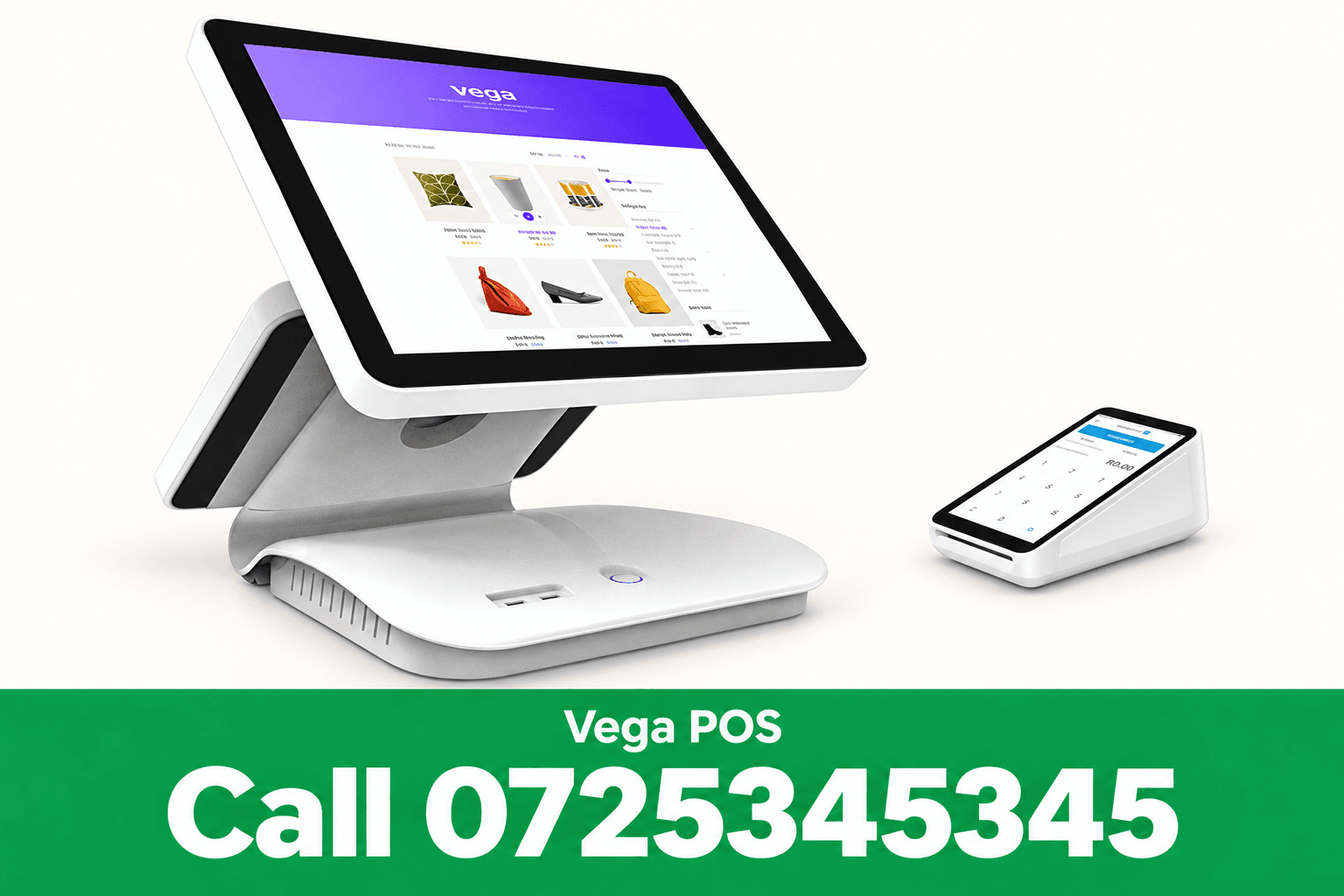
Step 8: Choose Your Point of Sale System
A reliable POS system is essential for modern retail. It records sales, tracks stock, and generates reports. It also speeds up checkout and reduces errors.
POS options in Kenya range from simple cash registers to full computer-based systems. Costs vary. A basic tablet and printer setup may cost around KES 25,000. A full touchscreen system with scanner and cash drawer may cost KES 50,000 or more.
Consider your transaction volume and product range. A small kiosk may need only a basic system. A supermarket needs barcode scanning and inventory integration. Choose a system that fits your needs and can grow with you.
For the Guide to setting up a new retail shop in Kenya, vega.co.ke offers tracking and reporting tools that help you monitor sales and shift performance. It supports better control from day one.
Step 9: Set Up M-Pesa Payment Integration
M-Pesa is the dominant payment method in Kenya. Your shop must accept it. Setting up M-Pesa is a key part of the Guide to setting up a new retail shop in Kenya.
Apply for a Lipa Na M-Pesa Buy Goods Till Number. You can apply online or through Safaricom shops. You will need your business registration, KRA PIN, and ID. The application is usually processed within 24 hours.
Once you receive your till number, activate it. Display the sticker prominently. Train staff on how to confirm payments. For higher volumes, consider STK Push integration with your POS. This confirms payments automatically and speeds up checkout.
Step 10: Open a Business Bank Account
A separate business bank account is essential. It keeps personal and business finances separate. This simplifies accounting and tax filing.
Requirements vary by bank. Generally, you need your business registration certificate, KRA PIN, ID, and a minimum opening deposit. Some banks require a lease agreement or proof of address.
Shop around for the best terms. Look at transaction fees, monthly charges, and minimum balances. A good business account helps you track cash flow and build a financial history. The Guide to setting up a new retail shop in Kenya treats this as a non-negotiable step.
Step 11: Hire and Register Employees
As your shop grows, you will need staff. Hiring is both an opportunity and a responsibility. You must comply with Kenyan labour laws.
Register as an employer with NSSF and NHIF (now SHIF). Both you and your employees contribute. NSSF contributions are 6% of gross salary from each side. NHIF rates are based on salary bands.
Prepare written employment contracts. Include job description, salary, working hours, and termination terms. The Employment Act 2007 governs these relationships. Keep accurate records of hours worked and wages paid.
Train your staff on customer service, cash handling, and shop policies. Well-trained staff serve customers better and reduce errors. The Guide to setting up a new retail shop in Kenya includes staffing as a critical success factor.
Step 12: Stock Your Shop and Set Prices
Before opening, you need stock. Identify your product mix based on customer demand. Start with essential items that sell fast. Avoid overstocking slow-moving products.
Negotiate with suppliers for good prices and credit terms. Start with small orders to test demand. Build relationships with reliable suppliers.
Set prices carefully. Your price must cover cost, expenses, and profit. Study competitor pricing. Decide whether to compete on price or value. Review prices regularly as costs change.
Use a simple system to track stock levels. Even a notebook can work initially. As you grow, consider inventory software. The Guide to setting up a new retail shop in Kenya emphasises stock control from day one.
Step 13: Plan Your Opening
Plan your opening day carefully. Announce it to the community. Use social media, flyers, and word of mouth. Consider a small promotion to attract first customers.
Prepare your team. Run a dry run of the checkout process. Test your POS and M-Pesa. Ensure everything works. Stock shelves fully. Clean the shop thoroughly.
On opening day, greet customers warmly. Collect feedback. Note what works and what needs improvement. Your opening sets the tone. The Guide to setting up a new retail shop in Kenya ends with a successful launch, but the real work continues.
Budgeting for Your New Retail Shop
A clear budget prevents surprises. Costs vary by location, size, and product type. Here are the main categories.
Registration and permits: Business name (KES 950), KRA PIN (free), county permit (KES 4,000–30,000+ depending on size).
Rent and deposit: Two to three months’ rent upfront. A small shop may cost KES 15,000–30,000 per month. A larger space costs more.
Shop fit-out: Shelving, counters, lighting, signage, and security. Budget KES 50,000–200,000 depending on size.
Equipment: POS system, printer, cash drawer, scanner. Budget KES 25,000–60,000.
Initial stock: This is often the largest cost. Budget based on your product mix. A small grocery may start with KES 100,000–200,000.
Working capital: Keep three to six months of expenses in reserve. This covers rent, salaries, and utilities before sales stabilise.
Marketing: Flyers, social media, opening promotions. Budget KES 10,000–30,000.
The Guide to setting up a new retail shop in Kenya recommends overestimating costs. Unexpected expenses always arise.
Common Mistakes to Avoid
Skipping Registration
Some entrepreneurs start trading before registering. This exposes them to fines, closure, and legal problems. Always complete registration first. The Guide to setting up a new retail shop in Kenya starts with compliance.
Choosing Location on Rent Alone
Cheap rent in a poor location costs more in lost sales. Prioritise foot traffic and accessibility. The Guide to setting up a new retail shop in Kenya puts location above rent.
Ignoring M-Pesa
Cash-only shops lose customers. M-Pesa is essential. Set it up before opening. Train staff on how to use it.
Undercapitalisation
Many shops fail because they run out of money. Budget for slow months. Keep reserves. The Guide to setting up a new retail shop in Kenya warns against spending all capital on stock.
Poor Stock Control
Without stock records, you cannot know what is selling. Use a simple system. Count regularly. The Guide to setting up a new retail shop in Kenya includes stock control as a core discipline.
Neglecting Staff Training
Untrained staff make mistakes and provide poor service. Invest in training. It pays back through better performance.
Ignoring Legal Requirements
Labour laws, tax rules, and health regulations apply. Ignoring them leads to penalties. Stay compliant. The Guide to setting up a new retail shop in Kenya covers all legal obligations.
Not Planning for Growth
A system that works today may fail tomorrow. Choose scalable solutions. Plan for expansion from the start.
How vega.co.ke Helps with the Guide to Setting Up a New Retail Shop in Kenya
Guide to setting up a new retail shop in Kenya becomes easier when you have good tracking and reporting from day one. vega.co.ke helps businesses monitor sales, cash, and shift performance.
With vega.co.ke, you can see daily sales clearly. You can compare cash with recorded sales. You can spot variances early. This supports better control and faster decisions.
vega.co.ke also helps with accountability. You can track sales by cashier and shift. This reduces errors and protects your revenue. It gives you the data you need to manage a growing shop.
The platform is designed for Kenyan and African businesses. It focuses on clarity and ease of use. You do not need technical expertise.
If you are following the Guide to setting up a new retail shop in Kenya, consider using vega.co.ke for your sales and cash tracking. Visit vega.co.ke to see how it can support your new venture.
Frequently Asked Questions
1. How much does it cost to register a retail shop in Kenya?
For a sole proprietorship, registration costs about KES 950. This includes name search and registration. County permits cost extra, typically KES 4,000 and above depending on location and size.
2. Do I need a KRA PIN to open a retail shop?
Yes. Every business in Kenya needs a KRA PIN. It is required for tax filing, bank accounts, and county permits. Registration is free on the iTax portal.
3. How long does it take to register a business in Kenya?
Name reservation takes one to two days. Registration usually takes one business day after submitting documents. Total time is about three to five working days.
4. Can I operate a retail shop from my home?
Yes, if your county permits it and your lease allows it. However, home-based shops may have restrictions on signage and customer access. Check local regulations.
5. What is the best POS system for a small shop in Kenya?
The best system depends on your needs. A simple tablet and printer setup works for small shops. Costs start around KES 25,000. Look for systems that support M-Pesa and inventory tracking.
6. How do I set up M-Pesa for my shop?
Apply for a Lipa Na M-Pesa Buy Goods Till Number through Safaricom. You need your business registration, KRA PIN, and ID. The application is processed within 24 hours.
7. Do I need to register employees for NSSF and NHIF?
Yes. As an employer, you must register with NSSF and NHIF (SHIF). Both you and your employees contribute. Registration is mandatory.
8. How can vega.co.ke help my new retail shop?
vega.co.ke helps you track sales, cash, and shift performance. It gives you visibility into daily operations. It supports accountability and better decision-making. Visit vega.co.ke to learn more. Take Action on the Guide to Setting Up a New Retail Shop in Kenya
The Guide to setting up a new retail shop in Kenya is a structured process. It starts with registration and permits. It continues with location, infrastructure, and systems. It ends with a successful opening and ongoing management.
Follow each step carefully. Choose the right structure. Register your business. Get your permits. Find a good location. Set up M-Pesa and a POS. Hire and train staff. Budget wisely. Avoid common mistakes.
Remember that the Guide to setting up a new retail shop in Kenya is not just about opening day. It is about building a foundation for growth. Good systems and disciplined routines create lasting success.
Use vega.co.ke to track your sales and cash from the beginning. Visit vega.co.ke today to explore how it can support your new retail business. Take the first step toward a well-organised, profitable shop. The future of your retail venture starts with the Guide to setting up a new retail shop in Kenya.