POS System Kenya: The Ultimate Guide to Modern Point of Sale Solutions
In today’s fast-paced business environment, efficiency and accuracy are critical for success. Businesses across Kenya are rapidly adopting modern technology to streamline operations, manage sales, and enhance customer experience. One of the most important tools transforming retail, hospitality, and service businesses is the POS system Kenya.
A Point of Sale (POS) system is more than just a digital cash register. It integrates hardware and software to manage sales transactions, inventory, reports, and customer data in one platform. From small retail shops to large supermarkets in Nairobi and beyond, POS systems are becoming essential for modern businesses.
This comprehensive guide explores everything you need to know about POS systems in Kenya, including features, benefits, types, and how to choose the best solution for your business.
What is a POS System?
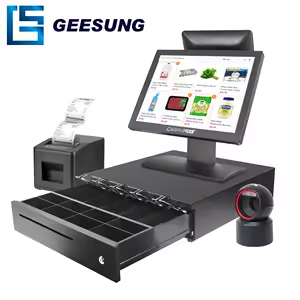
A POS system (Point of Sale system) is the place where customers complete purchases. It consists of both hardware and software designed to process payments and manage sales operations.
A typical POS system includes:
POS software
Barcode scanner
Receipt printer
Cash drawer
Payment terminal
Inventory management tools
Sales reporting system
Modern POS solutions also integrate with mobile payment platforms like M-Pesa, which makes them ideal for businesses operating in Kenya’s mobile-first economy.
Why POS Systems Are Important for Businesses in Kenya
The rapid growth of retail, restaurants, and service industries across Mombasa, Kisumu, and other urban centers has increased demand for efficient management systems.
Here are key reasons why POS systems are becoming essential.
1. Faster Transactions
POS systems automate calculations and payment processing, reducing waiting time and improving customer satisfaction.
2. Inventory Management
Businesses can track stock levels in real time, preventing shortages and overstocking.
3. Accurate Sales Reporting
POS systems generate detailed reports showing daily, weekly, and monthly sales performance.
4. Improved Customer Experience
Faster checkouts and accurate billing improve customer satisfaction and loyalty.
5. Integration with Mobile Payments
Many POS systems in Kenya support mobile payment platforms such as M-Pesa, debit cards, and QR payments.
Key Features of a POS System in Kenya
When choosing a POS system Kenya, businesses should consider features that improve efficiency and profitability.
Sales Management
POS systems track all transactions and record every sale automatically.
Inventory Tracking
Inventory tools help monitor stock movement, reorder products, and prevent stockouts.
Customer Management
Businesses can store customer information, purchase history, and loyalty data.
Reporting and Analytics
POS systems generate reports on sales, staff performance, and inventory turnover.
Multi-Payment Support
Most modern POS systems support:
Cash payments
Mobile money
Debit and credit cards
Online payments
Types of POS Systems in Kenya
Different businesses require different types of POS systems. Here are the most common options available.
1. Retail POS Systems
Retail POS systems are designed for supermarkets, shops, and boutiques. They focus on:
Barcode scanning
Inventory tracking
Pricing management
Sales reporting
These systems are common in retail stores across Nakuru and other commercial towns.
2. Restaurant POS Systems
Restaurants and cafés require POS systems that manage:
Orders
Kitchen printing
Table management
Billing
Restaurant POS systems help waiters take orders directly through tablets or mobile devices.
3. Mobile POS Systems
Mobile POS (mPOS) systems use smartphones or tablets to process transactions.
These are popular with:
Small businesses
Market vendors
Delivery services
Mobile POS solutions are especially useful for entrepreneurs operating in busy marketplaces like Gikomba Market.
4. Cloud-Based POS Systems
Cloud POS systems store data online instead of locally on a computer.
Benefits include:
Remote access
Automatic updates
Real-time reporting
Data backup
This makes them ideal for businesses with multiple branches.
Hardware Components of a POS System
A complete POS setup usually includes several hardware components.
POS Terminal
This is the main device used to process transactions.
Barcode Scanner
Used to scan product barcodes quickly.
Receipt Printer
Prints customer receipts after every purchase.
Cash Drawer
Stores cash securely during transactions.
Payment Terminal
Allows customers to pay using debit or credit cards.
Benefits of Using a POS System in Kenya
Implementing a POS system offers many advantages for business owners.
Improved Business Efficiency
Automation reduces manual work and minimizes errors.
Better Financial Management
POS systems provide accurate financial records and reports.
Enhanced Security
Transaction records help prevent fraud and theft.
Business Growth Insights
Analytics tools help businesses identify best-selling products and peak sales times.
Integration with Accounting Systems
Many POS solutions integrate with accounting software, simplifying bookkeeping.
Industries Using POS Systems in Kenya
POS systems are widely used across different industries.
Retail Shops
Supermarkets, clothing stores, and electronics shops use POS systems for inventory and sales tracking.
Restaurants and Cafés
Restaurants rely on POS systems for order management and billing.
Pharmacies
Pharmacies use POS systems to track medicine inventory and sales.
Hotels
Hotels use POS systems for restaurant billing, bar management, and guest services.
How to Choose the Best POS System in Kenya
Selecting the right POS system depends on your business needs.
Consider Your Business Size
Small businesses may only require a simple mobile POS system, while large enterprises need advanced solutions.
Check Payment Integration
Ensure the POS system supports local payment platforms such as M-Pesa.
Evaluate Pricing
POS systems vary in cost depending on features and hardware requirements.
Look for Customer Support
Choose a provider offering reliable technical support and training.
Ensure Scalability
Your POS system should be able to grow with your business.
Cost of POS Systems in Kenya
The price of a POS system in Kenya depends on the features and hardware required.
Typical cost ranges include:
Basic POS software: $100 – $300
POS hardware package: $300 – $800
Cloud POS subscription: $20 – $100 per month
Some providers offer bundled packages that include software, hardware, and installation.
Future of POS Systems in Kenya
Technology continues to transform how businesses operate. The future of POS systems in Kenya includes:
AI-Driven Analytics
Advanced systems will provide predictive sales insights.
Contactless Payments
More businesses will adopt NFC and QR code payments.
E-Commerce Integration
POS systems will increasingly connect online and offline sales channels.
Mobile-First POS Solutions
Smartphone-based POS systems will become more popular among small businesses.
Conclusion
The demand for POS system Kenya solutions is rapidly growing as businesses adopt digital tools to improve efficiency and profitability. From retail stores to restaurants and service providers, POS systems help streamline operations, manage inventory, and enhance customer experience.
With features such as real-time reporting, mobile payment integration, and cloud-based access, POS systems are becoming essential for modern businesses in Kenya. By choosing the right POS solution, entrepreneurs can improve business management, increase productivity, and support long-term growth.