Retail POS Software Kenya
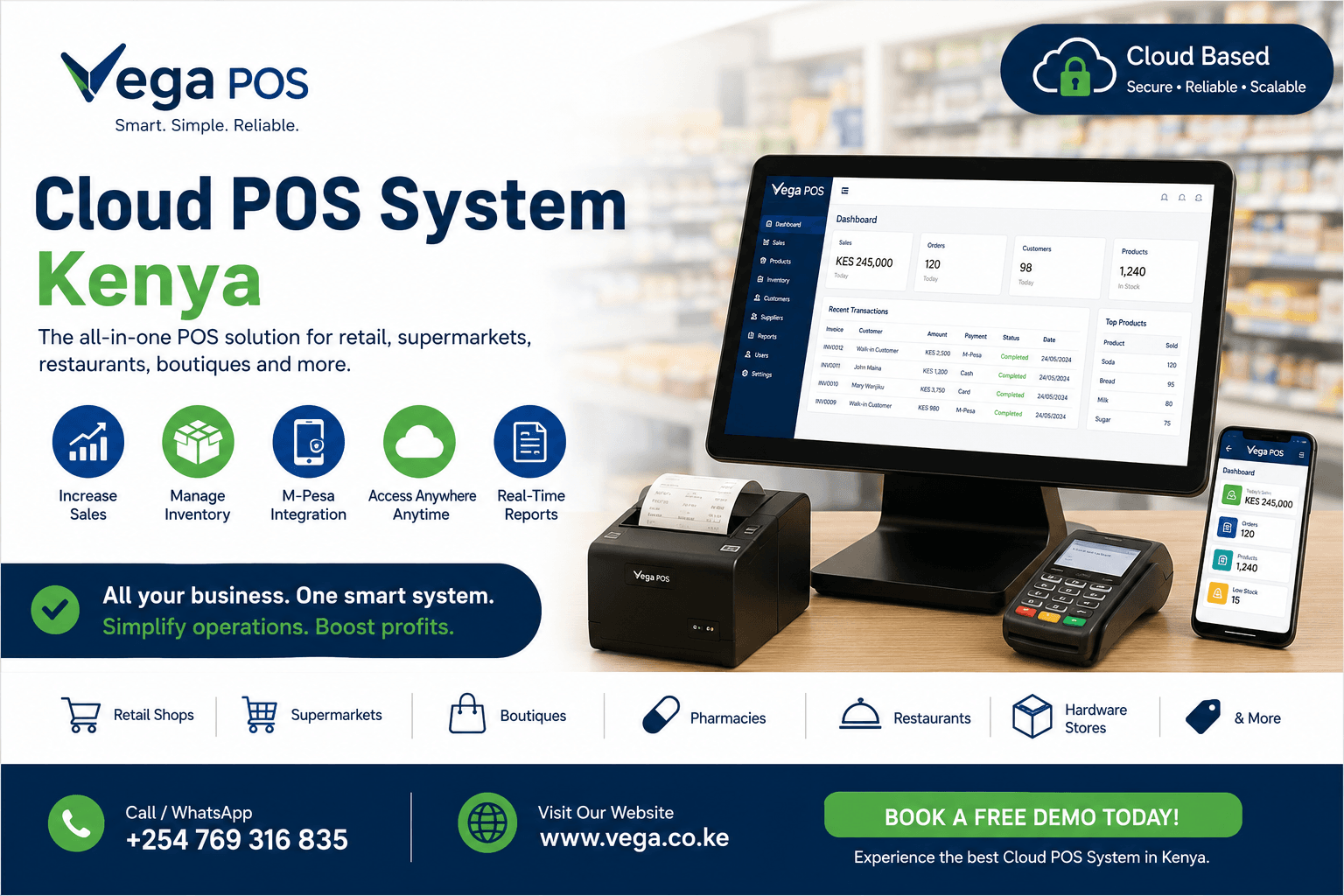
The retail industry in Kenya is evolving rapidly as businesses embrace technology to improve efficiency, customer service, and profitability. Whether you own a supermarket, wholesale shop, electronics store, cosmetics shop, pharmacy, fashion boutique, hardware store, or convenience shop, having the right Retail POS Software Kenya solution can transform the way you manage your business.
Traditional methods of recording sales and tracking inventory are becoming obsolete. Modern consumers expect faster service, accurate billing, multiple payment options, and excellent customer experiences. Retailers who continue relying on manual processes often struggle with stock losses, accounting errors, inventory inaccuracies, and reduced profitability.
Retail POS Software provides a centralized platform for managing sales transactions, inventory, customer records, employee performance, accounting, and business reporting. By automating critical retail operations, businesses can save time, reduce costs, and make data-driven decisions.
This comprehensive guide explores everything you need to know about Retail POS Software in Kenya, including features, benefits, implementation strategies, and why modern retailers are investing in advanced point-of-sale systems.
What Is Retail POS Software?
Retail POS Software (Point of Sale Software) is a digital solution that enables businesses to process sales transactions while managing inventory, customers, suppliers, and financial records from a single platform.
A POS system typically consists of:
- POS Software
- Computer or Touchscreen Terminal
- Barcode Scanner
- Receipt Printer
- Cash Drawer
- Customer Display Screen
- Payment Integration Tools
Whenever a customer purchases a product, the POS system records the transaction automatically, updates inventory levels, calculates taxes, generates receipts, and stores customer purchase history.
Modern Retail POS Software Kenya solutions go beyond simple billing by offering advanced business management capabilities that improve operational efficiency.
Why Retail Businesses in Kenya Need POS Software
The Kenyan retail market has become increasingly competitive. Businesses need accurate data and automation tools to stay ahead.
Improved Sales Management
Retail POS software allows businesses to process transactions quickly and accurately. Cashiers can scan products, apply discounts, calculate taxes, and complete sales within seconds.
This reduces customer waiting time and improves the overall shopping experience.
Real-Time Inventory Tracking
Inventory management is one of the biggest challenges facing retailers.
A POS system automatically updates stock levels whenever products are sold, returned, or received.
Benefits include:
- Reduced stock losses
- Prevention of overstocking
- Prevention of stockouts
- Accurate inventory records
- Improved purchasing decisions
Better Customer Experience
Customers appreciate quick service and accurate billing.
POS software helps businesses:
- Process payments faster
- Maintain customer records
- Offer loyalty programs
- Track purchase history
- Personalize promotions
Enhanced Reporting and Analytics
Modern retail POS systems generate detailed reports that help business owners understand performance.
Reports include:
- Daily sales reports
- Profit reports
- Inventory reports
- Employee performance reports
- Customer reports
- Supplier reports
These insights help retailers make informed decisions.
Increased Business Security
POS software reduces opportunities for theft and fraud through:
- User access controls
- Audit trails
- Cash management monitoring
- Transaction history tracking
- Employee accountability
Key Features of Retail POS Software Kenya
When selecting Retail POS Software Kenya, it is important to evaluate the available features.
Sales Processing
The primary function of any POS system is transaction processing.
Features include:
- Fast checkout
- Barcode scanning
- Product search
- Multiple payment methods
- Receipt generation
- Discount management
Inventory Management
Inventory tracking ensures businesses always know what products are available.
Capabilities include:
- Stock monitoring
- Product categorization
- Reorder alerts
- Stock transfers
- Batch tracking
- Stock adjustments
Barcode Management
Barcode functionality simplifies product identification.
Benefits include:
- Faster checkout
- Reduced human errors
- Improved inventory accuracy
- Efficient stock taking
Customer Relationship Management (CRM)
CRM features help retailers build stronger customer relationships.
Functions include:
- Customer registration
- Purchase tracking
- Loyalty points
- Customer segmentation
- Marketing campaigns
Employee Management
Retail businesses often employ multiple staff members.
POS software can track:
- User logins
- Sales performance
- Shift activities
- Attendance records
- Access permissions
Supplier Management
Retailers need reliable supplier information.
Supplier management features include:
- Supplier database
- Purchase orders
- Delivery tracking
- Payment records
- Supplier performance monitoring
Multi-Store Management
Businesses operating multiple branches benefit from centralized management.
Multi-store features include:
- Branch inventory visibility
- Consolidated reporting
- Branch performance analysis
- Centralized pricing control
Accounting Integration
POS software can integrate with accounting systems to simplify bookkeeping.
Benefits include:
- Automated financial records
- Reduced accounting errors
- Accurate profit calculations
- Tax compliance support
Types of Retail Businesses That Need POS Software
Supermarkets
Supermarkets handle thousands of transactions and inventory items daily.
POS software helps with:
- Fast checkout
- Stock control
- Supplier management
- Promotional pricing
Wholesale Shops
Wholesalers require bulk pricing and customer account management.
POS systems support:
- Volume discounts
- Customer credit management
- Bulk inventory tracking
Fashion Stores
Fashion retailers benefit from:
- Size and color tracking
- Seasonal inventory management
- Customer purchase history
Electronics Stores
Electronics retailers need:
- Serial number tracking
- Warranty management
- Supplier monitoring
Cosmetic Shops
Beauty product retailers require:
- Product categorization
- Inventory alerts
- Customer loyalty programs
Pharmacies
Pharmacies benefit from:
- Expiry date tracking
- Batch number management
- Regulatory compliance support
Hardware Stores
Hardware businesses need:
- Large inventory databases
- Supplier management
- Product categorization
Benefits of Cloud-Based Retail POS Software Kenya
Cloud technology has revolutionized retail management.
Access From Anywhere
Business owners can monitor operations remotely using smartphones, tablets, or computers.
Automatic Backups
Data is stored securely in the cloud, reducing the risk of loss due to hardware failure.
Real-Time Reporting
Owners can access sales reports instantly from any location.
Reduced IT Costs
Cloud solutions eliminate expensive server infrastructure requirements.
Easy Software Updates
Providers automatically update systems with new features and security enhancements.
How Retail POS Software Improves Inventory Management
Inventory represents one of the largest investments for retailers.
Without proper management, businesses experience:
- Stock losses
- Dead stock
- Overstocking
- Understocking
- Revenue leakage
POS software solves these challenges through automation.
Automated Stock Updates
Every sale automatically reduces inventory quantities.
Reorder Notifications
The system alerts users when stock reaches minimum levels.
Stock Audits
Retailers can conduct regular inventory audits efficiently.
Inventory Forecasting
Historical sales data helps predict future inventory requirements.
Product Performance Analysis
Businesses can identify:
- Fast-moving products
- Slow-moving products
- Seasonal trends
- Profit margins
Mobile Payments and POS Integration in Kenya
Kenya leads Africa in mobile money adoption.
Modern Retail POS Software Kenya solutions integrate seamlessly with:
- M-Pesa
- Airtel Money
- Bank Transfers
- Debit Cards
- Credit Cards
- Digital Wallets
Integrated payments reduce reconciliation errors and improve customer convenience.
Retail POS Software and Customer Loyalty Programs
Customer retention is more cost-effective than customer acquisition.
POS systems help businesses build loyalty through:
Loyalty Points
Customers earn points based on purchases.
Membership Programs
Retailers can create exclusive benefits for members.
Personalized Promotions
Businesses can target customers based on purchase behavior.
Purchase History Tracking
Retailers understand customer preferences and shopping habits.
These features encourage repeat business and increase customer lifetime value.
Choosing the Best Retail POS Software Kenya
Selecting the right POS software requires careful evaluation.
Consider the following factors:
Ease of Use
The software should be user-friendly and require minimal training.
Scalability
Choose a solution that grows with your business.
Security
Look for advanced security features and data protection measures.
Customer Support
Reliable technical support is essential.
Reporting Capabilities
Comprehensive reporting helps improve decision-making.
Integration Options
Ensure compatibility with accounting, e-commerce, and payment systems.
Cost Effectiveness
Evaluate total ownership costs including:
- Licensing
- Implementation
- Training
- Support
- Upgrades
Future of Retail POS Software Kenya
Retail technology continues to evolve rapidly.
Emerging trends include:
- Artificial Intelligence
- Predictive Analytics
- Mobile POS Systems
- Contactless Payments
- Cloud Computing
- Customer Personalization
- Business Intelligence Dashboards
- Automated Inventory Forecasting
Retailers who adopt modern technologies position themselves for long-term growth and competitiveness.
Retail POS Software Kenya: Implementation, Pricing, Security, and Advanced Features
Implementing Retail POS Software in Kenya
Successful implementation of Retail POS Software Kenya requires careful planning and execution. Businesses that follow a structured implementation process experience faster adoption and better results.
Step 1: Assess Business Requirements
Before selecting a POS solution, identify your business needs.
Consider:
- Number of products
- Number of employees
- Number of branches
- Payment methods accepted
- Inventory complexity
- Reporting requirements
- Customer management needs
A clear understanding of your requirements helps you select the most suitable software.
Step 2: Select the Right POS Provider
Not all POS systems offer the same capabilities.
Evaluate providers based on:
- Features
- Scalability
- Customer support
- Security
- Cost
- Industry specialization
- Integration capabilities
Choose a provider with experience serving Kenyan retail businesses.
Step 3: Hardware Setup
Most retail businesses require supporting hardware.
Common POS hardware includes:
- Touchscreen terminals
- Barcode scanners
- Receipt printers
- Cash drawers
- Customer displays
- Label printers
- Weighing scales
The right hardware improves efficiency and enhances customer experience.
Step 4: Product Data Entry
Products must be entered into the system accurately.
Required information includes:
- Product names
- SKUs
- Barcodes
- Categories
- Selling prices
- Cost prices
- Stock quantities
- Supplier information
Accurate setup ensures reliable reporting and inventory tracking.
Step 5: Employee Training
Staff training is critical for successful implementation.
Training topics include:
- Sales processing
- Returns and refunds
- Inventory management
- Customer registration
- Report generation
- Security procedures
Well-trained employees maximize system effectiveness.
Step 6: Testing and Go-Live
Before full deployment, conduct testing.
Verify:
- Product pricing
- Inventory updates
- Receipt printing
- Payment processing
- Reporting accuracy
Once testing is complete, the system can be deployed fully.
Retail POS Software Pricing in Kenya
One of the most common questions business owners ask is how much Retail POS Software Kenya costs.
Pricing varies depending on:
- Features
- Number of users
- Number of branches
- Cloud or on-premise deployment
- Hardware requirements
- Support packages
Entry-Level POS Systems
Suitable for small shops and startups.
Features typically include:
- Sales management
- Basic inventory control
- Basic reporting
Mid-Sized Business Solutions
Designed for growing retailers.
Additional features include:
- CRM tools
- Multi-user access
- Supplier management
- Enhanced reporting
Enterprise POS Systems
Ideal for supermarkets and large retail chains.
Advanced capabilities include:
- Multi-branch management
- Advanced analytics
- ERP integration
- Business intelligence tools
- Centralized control
Businesses should focus on value rather than simply selecting the cheapest solution.
Retail POS Software for Small Businesses in Kenya
Small businesses often operate with limited resources.
A modern POS system helps them compete effectively against larger retailers.
Benefits for Small Businesses
Reduced Administrative Work
Automation eliminates manual record keeping.
Better Cash Flow Management
Owners gain visibility into daily revenue and expenses.
Inventory Accuracy
Accurate stock records prevent unnecessary purchases.
Improved Decision Making
Reports provide valuable business insights.
Business Growth Support
The software grows as the business expands.
Retail POS Software for Supermarkets
Supermarkets manage thousands of products and high customer traffic.
A supermarket POS solution should support:
High-Speed Checkout
Fast transactions reduce customer queues.
Barcode Scanning
Efficient product identification improves accuracy.
Bulk Inventory Management
Large inventories require advanced tracking capabilities.
Supplier Coordination
Automated purchasing improves stock availability.
Promotions and Discounts
Flexible pricing tools help drive sales.
Retail POS Software for Wholesalers
Wholesale businesses have unique operational requirements.
Key features include:
Customer Credit Management
Track customer balances and payment histories.
Bulk Pricing
Offer different pricing structures based on quantity.
Purchase Order Management
Simplify supplier transactions.
Account Statements
Generate detailed customer statements.
Debt Collection Monitoring
Improve cash flow management.
Retail POS Software for Fashion and Apparel Stores
Fashion retailers manage products with multiple variations.
Size Management
Track inventory by size.
Color Tracking
Monitor stock by color variation.
Seasonal Inventory Planning
Manage inventory based on demand cycles.
Customer Preferences
Track customer buying habits for targeted promotions.
Loyalty Programs
Encourage repeat purchases through rewards.
Retail POS Software for Pharmacies
Pharmacies operate under strict regulations.
Specialized pharmacy POS systems provide:
Expiry Date Monitoring
Prevent sales of expired products.
Batch Tracking
Track medication batches efficiently.
Prescription Management
Support prescription-related processes.
Regulatory Reporting
Assist with compliance requirements.
Stock Alerts
Ensure critical medicines remain available.
Retail POS Software for Hardware Stores
Hardware stores often carry thousands of product lines.
A POS solution helps by:
- Organizing products effectively
- Tracking inventory accurately
- Managing suppliers efficiently
- Monitoring profitability
- Reducing stock losses
Cloud-Based vs On-Premise Retail POS Software
Businesses must decide between cloud-based and on-premise solutions.
Cloud-Based POS Software
Advantages:
- Remote access
- Automatic backups
- Lower upfront costs
- Easy scalability
- Automatic updates
Disadvantages:
- Internet dependency
- Ongoing subscription fees
On-Premise POS Software
Advantages:
- Full local control
- No recurring cloud subscriptions
- Independent operation
Disadvantages:
- Higher setup costs
- Maintenance responsibilities
- Limited remote access
Many Kenyan retailers are increasingly choosing cloud-based systems because of flexibility and affordability.
Retail POS Software Security Features
Security is a major concern for retailers.
A modern POS solution should include:
User Authentication
Ensure only authorized personnel access the system.
Role-Based Permissions
Limit employee access according to responsibilities.
Transaction Logs
Maintain complete audit trails.
Data Encryption
Protect sensitive business information.
Secure Backups
Prevent data loss due to hardware failure or cyber incidents.
Fraud Prevention
Monitor suspicious activities and unusual transactions.
Retail POS Software and E-Commerce Integration
The rise of online shopping has changed retail operations.
Retailers increasingly need systems that connect physical and online stores.
Unified Inventory Management
Inventory updates automatically across all sales channels.
Order Synchronization
Online orders are processed alongside in-store sales.
Centralized Reporting
View all business performance from one dashboard.
Customer Data Integration
Maintain a single customer database.
Improved Operational Efficiency
Reduce duplication of work.
Advanced Reporting Capabilities
Data-driven decision-making is essential for retail success.
Modern POS systems provide detailed analytics.
Sales Reports
Monitor:
- Daily sales
- Weekly sales
- Monthly sales
- Annual sales
Product Reports
Identify:
- Best-selling products
- Slow-moving products
- High-margin products
Inventory Reports
Track:
- Current stock
- Stock movements
- Inventory valuation
Employee Reports
Measure:
- Sales performance
- Attendance
- Productivity
Customer Reports
Understand:
- Purchase patterns
- Spending habits
- Customer lifetime value
Benefits of Real-Time Business Intelligence
Retailers can respond quickly to changing market conditions.
Benefits include:
Faster Decision-Making
Managers access live business data instantly.
Improved Profitability
Identify revenue opportunities and cost reductions.
Better Resource Allocation
Allocate staff and inventory more effectively.
Competitive Advantage
Stay ahead of market trends.
Common Challenges Solved by Retail POS Software Kenya
Inventory Losses
POS systems improve stock visibility and accountability.
Long Checkout Queues
Fast transaction processing enhances customer satisfaction.
Manual Errors
Automation reduces mistakes in pricing and inventory records.
Poor Reporting
Comprehensive analytics provide accurate business insights.
Employee Mismanagement
User tracking increases accountability.
Cash Flow Problems
Financial visibility helps improve cash management.
Future Trends in Retail POS Software Kenya
Technology continues to reshape retail operations.
Artificial Intelligence
AI-powered systems help predict demand and optimize inventory.
Mobile POS
Sales can be completed using smartphones and tablets.
Contactless Payments
Increasing adoption of tap-and-pay solutions.
Predictive Analytics
Forecast future sales and inventory requirements.
Omnichannel Retailing
Seamless integration across physical and digital channels.
Customer Personalization
Customized promotions based on customer behavior.
Automation
Routine processes become increasingly automated.
Frequently Asked Questions (FAQs)
What is Retail POS Software?
Retail POS Software is a system that manages sales, inventory, customers, suppliers, and reporting from a centralized platform.
Is POS software suitable for small businesses?
Yes. Small businesses benefit significantly from automation, inventory control, and reporting features.
Can POS software integrate with M-Pesa?
Yes. Many modern systems support M-Pesa and other digital payment methods.
Does POS software work with multiple branches?
Yes. Multi-branch functionality allows centralized management of multiple locations.
Is cloud POS software secure?
Yes. Reputable providers use encryption, backups, and advanced security protocols.
Can POS software improve profitability?
Absolutely. Better inventory management, reporting, and operational efficiency contribute to increased profits.
Conclusion
Retail POS Software Kenya has become an essential tool for businesses seeking growth, efficiency, and competitiveness. From sales management and inventory tracking to customer relationship management and advanced analytics, modern POS solutions provide the technology retailers need to succeed in an increasingly digital marketplace.
Whether you operate a supermarket, wholesale shop, pharmacy, fashion store, electronics shop, cosmetics business, or multi-branch retail chain, investing in the right POS system can significantly improve productivity, reduce operational costs, enhance customer satisfaction, and increase profitability.
As Kenya’s retail sector continues to evolve, businesses that embrace modern POS technology will be better positioned to adapt, compete, and achieve sustainable long-term success.