 Vega
Vega Mobile App Development Kenya: Why Every Business Needs an App
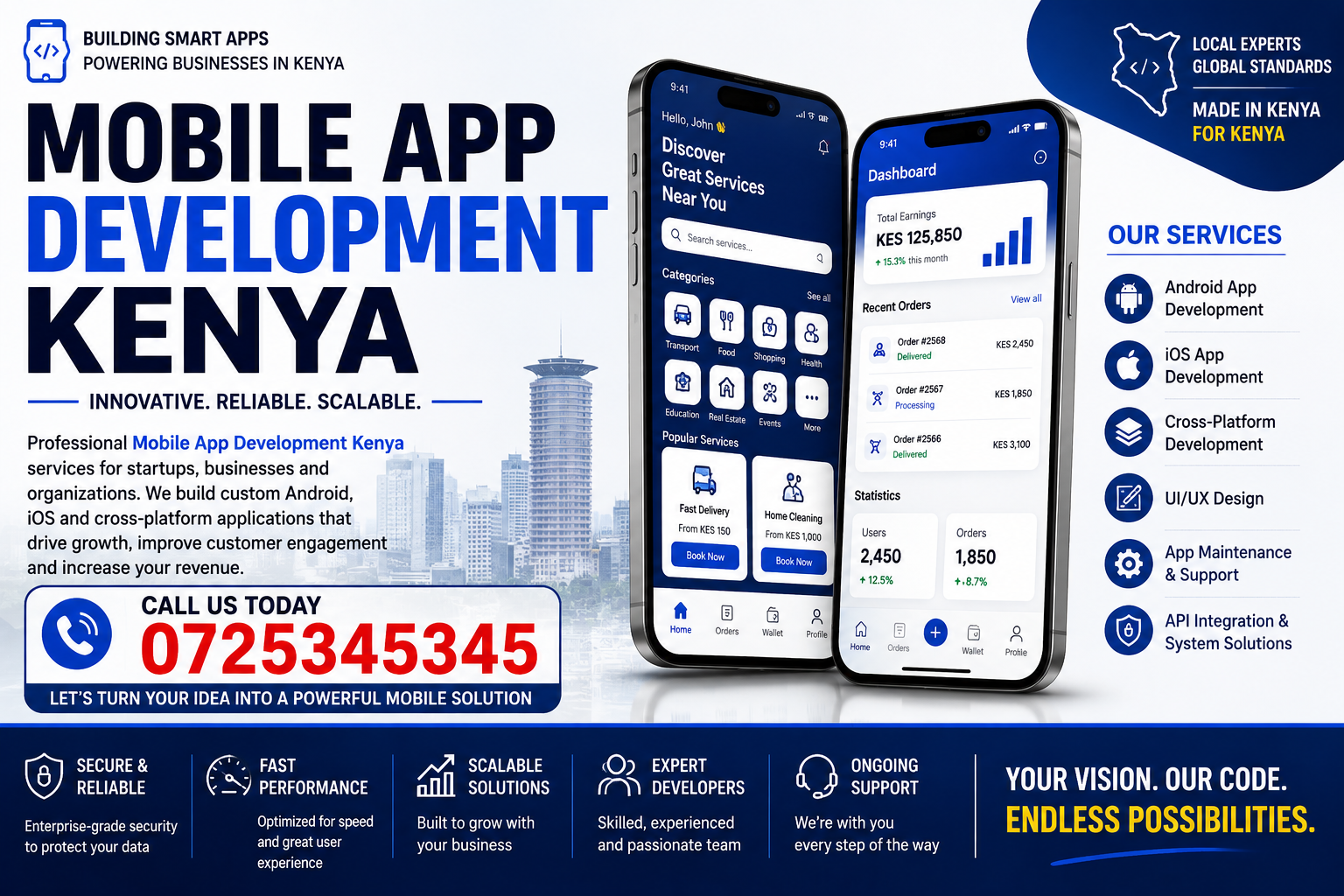
The digital economy in Kenya is expanding rapidly, and businesses are increasingly investing in mobile applications to improve customer engagement, increase revenue, and streamline operations. From startups and schools to hospitals, banks, hotels, and e-commerce businesses, mobile technology has become an essential part of modern business operations.
As smartphone usage continues to rise across the country, mobile app development in Kenya has become one of the most important investments a business can make. Companies that embrace mobile technology gain a significant advantage by providing customers with convenient, secure, and personalized experiences.
Whether you want to launch a food delivery platform, an e-commerce store, a payment application, a booking platform, or a business management system, partnering with a professional mobile app development company in Kenya can help transform your idea into reality.
Why Mobile App Development Kenya Is Growing Rapidly
Mobile applications have changed the way businesses interact with customers. Instead of relying solely on websites and social media platforms, companies can create direct communication channels through dedicated mobile applications.
Some of the benefits include:
- Improved customer engagement
- Increased brand visibility
- Better customer support
- Enhanced security
- Faster communication
- Greater customer loyalty
- Higher conversion rates
- Better data collection and analysis
Businesses that invest in mobile applications often experience increased productivity and stronger customer relationships.
Benefits of Mobile App Development Kenya for Businesses
Kenya has become one of Africa’s leading technology hubs. Affordable smartphones, improved internet connectivity, and widespread mobile payment systems have accelerated digital transformation throughout the country.
Several industries are benefiting from mobile applications, including:
- Banking and financial services
- Healthcare
- Transportation
- Education
- Agriculture
- Tourism
- Real estate
- Retail businesses
Mobile applications allow organizations to reach more customers while reducing operational costs.
Types of Mobile Applications Developed Kenya
Android Applications
Android applications dominate the Kenyan market because many consumers use Android-powered devices. Businesses often prioritize Android development due to its large user base and flexibility.
iOS Applications
iOS applications are designed specifically for Apple devices, including iPhones and iPads. These applications are known for their excellent performance and security.
Cross-Platform Applications
Cross-platform development enables businesses to create applications that work on multiple operating systems simultaneously.
Popular technologies include:
- Flutter
- React Native
- Kotlin
- Swift
- Java
- Node.js
Industries That Benefit from Mobile App Development
E-Commerce Businesses
Mobile applications enable online stores to provide convenient shopping experiences. Features may include product catalogs, payment integration, order tracking, and customer support.
Healthcare Institutions
Hospitals and clinics can use mobile applications to manage appointments, medical records, and communication with patients.
Educational Institutions
Schools and universities use applications to deliver learning materials, monitor attendance, and facilitate communication.
Logistics Companies
Transport companies use mobile applications to track deliveries and manage their operations efficiently.
Financial Institutions
Banks and financial organizations provide secure digital payment solutions through mobile applications.
Essential Features Every Mobile Application Should Have
A professionally developed application should include the following features:
- User registration and authentication
- Push notifications
- Secure payment integration
- Real-time messaging
- Cloud storage
- Analytics dashboards
- GPS location tracking
- Multi-language support
- Offline functionality
- Data encryption
These features improve both the user experience and overall application performance.
Mobile App Development Process
Requirement Analysis
The development team identifies business goals, user requirements, and technical specifications.
User Interface Design
Designers create intuitive interfaces that provide excellent user experiences.
Application Development
Developers write code and integrate various functionalities into the application.
Testing
Quality assurance specialists conduct extensive testing to identify and fix potential problems.
Deployment
The application is published on platforms such as Google Play Store and Apple App Store.
Maintenance
Regular updates help improve security, performance, and functionality.
How Much Does Mobile App Development Cost Kenya?
The cost of developing a mobile application depends on various factors, including:
- Application complexity
- Number of features
- Development platform
- Security requirements
- Integration needs
- Maintenance requirements
Simple applications generally cost less, while advanced enterprise applications require larger investments.
How to Choose the Best Mobile App Development Company Kenya
Before selecting a development partner, consider the following factors:
- Industry experience
- Technical expertise
- Portfolio quality
- Customer reviews
- Security standards
- Communication processes
- Technical support availability
Choosing the right company can significantly influence the success of your project.
Future Trends in Mobile App Development
The future of mobile application development in Kenya will be influenced by several technologies, including:
- Artificial intelligence
- Blockchain technology
- Machine learning
- Augmented reality
- Internet of Things (IoT)
- Cloud computing
Businesses that adopt these innovations early will gain a competitive advantage.
Why Your Business Should Invest in Mobile App Development Kenya
The competition among businesses has increased significantly over the past few years. Customers expect faster communication, instant access to information, and seamless digital experiences. A mobile application allows businesses to satisfy these expectations while creating new revenue opportunities.
Unlike social media platforms, where businesses rely on algorithms and third-party policies, a mobile application gives companies complete control over their products, services, and customer interactions.
Additional advantages include:
- Improved customer retention
- Enhanced operational efficiency
- Faster customer feedback collection
- Increased sales opportunities
- Reduced marketing costs
- Greater market reach
- Better brand recognition
- Easier business management
Businesses that embrace mobile technology today will be better positioned for future growth.
Common Challenges During Mobile App Development
Developing a successful mobile application involves overcoming several challenges. Understanding these obstacles can help businesses prepare effectively and avoid costly mistakes.
Security Threats
Cybersecurity remains one of the biggest concerns in application development. Sensitive customer information must be protected through encryption, secure authentication mechanisms, and regular security updates.
Common security concerns include:
- Data breaches
- Malware attacks
- Unauthorized access
- Weak passwords
- Insecure application programming interfaces (APIs)
Compatibility Issues
Applications must work effectively across different devices, operating systems, and screen sizes. This process requires extensive testing and optimization.
Performance Optimization
Users expect applications to load quickly and function smoothly. Poor performance often leads to negative reviews and reduced customer satisfaction.
Developers continuously optimize applications by:
- Reducing loading times
- Compressing images
- Improving database efficiency
- Enhancing network communication
- Eliminating unnecessary code
Essential Technologies Used in Mobile App Development
Choosing the right technology stack is crucial because it directly affects performance, scalability, security, and maintenance requirements.
Front-End Development Technologies
These technologies control the appearance and functionality of the application interface:
- Flutter
- React Native
- Kotlin
- Swift
- Java
Back-End Development Technologies
The back end manages data processing and communication between systems.
Popular technologies include:
- Node.js
- Laravel
- Django
- Spring Boot
- Express.js
Database Technologies
Applications rely on databases to store and organize information.
Examples include:
- MySQL
- PostgreSQL
- MongoDB
- Firebase
- SQLite
Mobile App Development Kenya for Startups
Mobile App Development Kenya services enable startups to create innovative applications that attract customers and improve business operations. By investing in Mobile App Development Kenya solutions, companies can build secure, scalable, and user-friendly applications that support long-term growth.
Why Businesses Choose Mobile App Development Kenya Services
Businesses invest in Mobile App Development Kenya because mobile applications improve customer engagement, increase efficiency, and strengthen brand awareness. Professional Mobile App Development Kenya services ensure that businesses receive high-performance Android and iOS applications tailored to their requirements.
The Future of Mobile App Development Kenya
The future of Mobile App Development Kenya is promising as more businesses continue their digital transformation journeys. Artificial intelligence, cloud computing, blockchain technology, and advanced cybersecurity solutions are shaping the future of Mobile App Development Kenya services.
2. Your outbound links are set to nofollow
The message means that the links point to external websites, but search engines are not following them.
You should change them to dofollow links.
Examples include:
- Android Developers
- Apple Developer
- Flutter
- React Native
- Google Play Store
- Google Firebase
- Microsoft Azure
Mobile Payment Integration in Kenya
One of the most important features of applications developed for the Kenyan market is payment integration.
Businesses frequently incorporate solutions such as:
- M-Pesa integration
- Airtel Money integration
- Credit card processing
- Mobile banking integration
- Online payment gateways
These payment systems simplify transactions and improve customer experiences.
Search Engine Optimization for Mobile Applications
Many businesses focus entirely on app development while overlooking visibility. Search engine optimization (SEO) and application store optimization (ASO) are essential for attracting users.
Important optimization strategies include:
- Writing keyword-rich descriptions
- Optimizing titles and headings
- Improving application speed
- Encouraging customer reviews
- Creating high-quality content
- Building strong backlinks
- Optimizing images
These strategies increase visibility on both search engines and application stores.
Frequently Asked Questions
How long does mobile app development take in Kenya?
Development timelines vary depending on complexity. Simple applications may take several weeks, while more advanced systems can require several months.
Which is better: Android or iOS development?
The answer depends on your target audience. Many Kenyan businesses prioritize Android development because of the larger user base.
Can an existing website be converted into a mobile application?
Yes. Professional developers can transform existing websites into fully functional mobile applications.
Can M-Pesa be integrated into a mobile application?
Yes. Mobile applications can easily integrate M-Pesa services to facilitate secure digital payments.
How much does it cost to maintain a mobile application?
Maintenance costs vary according to security requirements, hosting expenses, feature updates, and technical support requirements.