 Vega
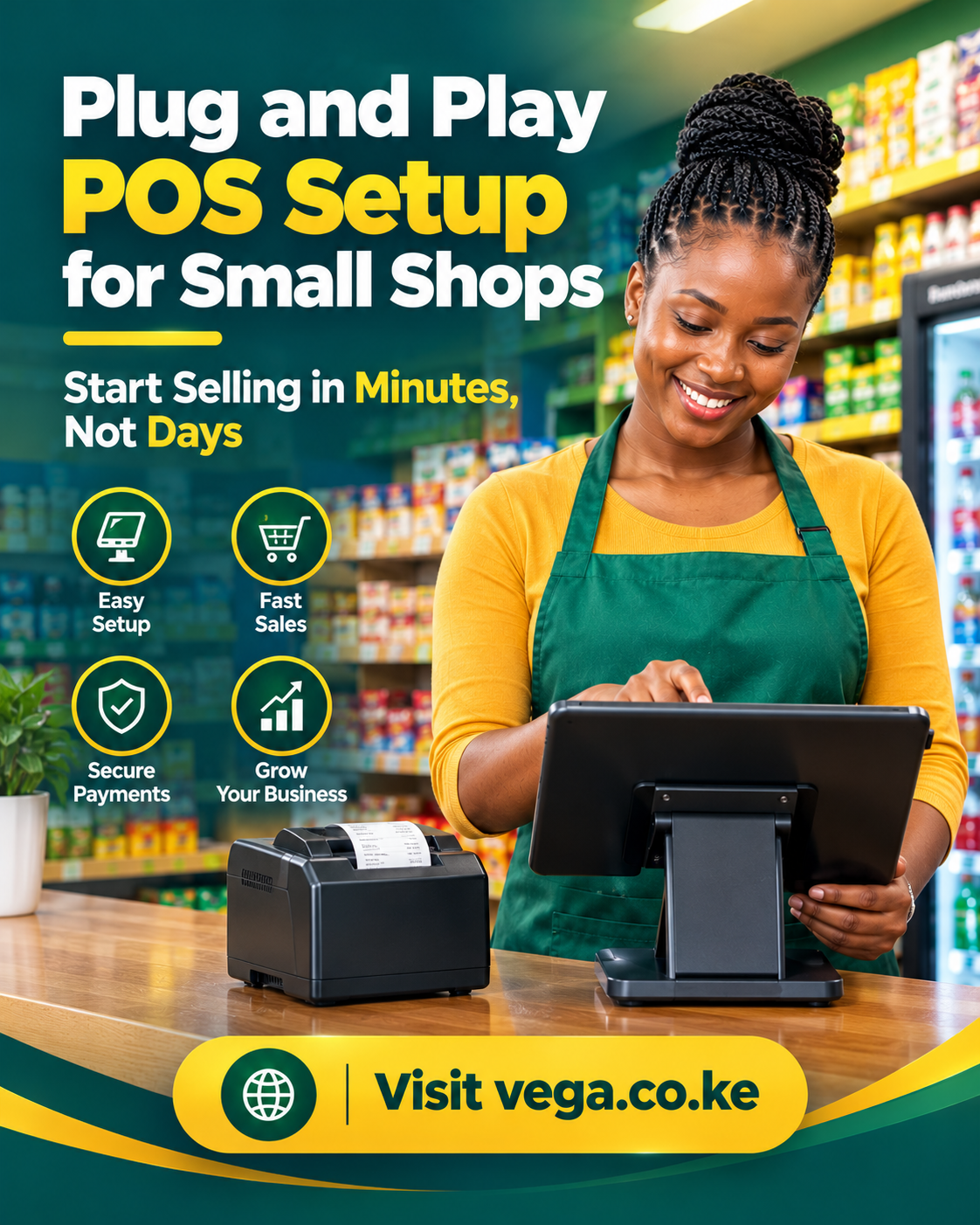
Plug and play POS setup for small shops is the fastest way to modernize your retail business without hiring an IT expert. You simply unbox the hardware, log into the software, and start selling. There are no complex installations or lengthy configurations required.
Understanding the Plug and play POS setup for small shops process saves you time and money. Whether you run a kiosk in Nakuru or a boutique in Nairobi, speed is essential when opening your doors.
This guide explores how a Plug and play POS setup for small shops transforms your daily operations. We will look at practical steps to get your system running in hours, not weeks.
Many Kenyan retailers struggle with complicated software that requires technical support. A Plug and play POS setup for small shops eliminates this headache by focusing on user-friendly design.
You will learn how to configure a Plug and play POS setup for small shops step by step. We cover everything from choosing the right hardware to connecting your M-Pesa till number.
By the end of this article, you will master the Plug and play POS setup for small shops workflow. This knowledge will help you start selling faster and tracking your sales accurately.
Let us look at why this approach is perfect for new and growing businesses. A Plug and play POS setup for small shops ensures you do not waste precious capital on unnecessary IT infrastructure.
You will discover how a Plug and play POS setup for small shops helps you maintain accurate financial records from day one.
We will cover the best practices for training your staff on the new system. A Plug and play POS setup for small shops must be intuitive enough for anyone to learn quickly.
Do not let the fear of technology stop you from upgrading your retail operations. Choosing a Plug and play POS setup for small shops gives you total peace of mind.
Your staff will also appreciate the simplicity provided by a Plug and play POS setup for small shops. It reduces frustration and prevents checkout errors.
It is time to lock down your checkout process with reliable, simple tools. A Plug and play POS setup for small shops is the ultimate solution for busy owners.
We will explore how a Plug and play POS setup for small shops supports multi-branch operations as you grow. You can monitor all locations from a central, secure dashboard.
Protecting your data is just as important as protecting your cash. A Plug and play POS setup for small shops ensures your transaction history remains safe and easily accessible.
Let us dive into the details of this vital technology. The guide to a Plug and play POS setup for small shops starts right now.
By implementing these strategies, you build a resilient and trustworthy business. A Plug and play POS setup for small shops is an investment in your long-term survival.
Why a Plug and Play POS Setup for Small Shops Matters
In the past, setting up a POS system meant hiring a technician. They would install software on a local computer, configure the network, and spend days training staff. For a small shop, this was too expensive and disruptive.
A Plug and play POS setup for small shops changes the game completely. Modern cloud-based POS systems run on standard devices like tablets and smartphones. You do not need a dedicated server or complex networking.
This simplicity means you can start selling on the same day you buy the system. You do not have to wait for an IT team. You have complete control over the setup process.
When you use a Plug and play POS setup for small shops, you minimize downtime. If your tablet breaks, you simply log into another device. Your data is safe in the cloud.
This resilience is crucial for small retailers. You cannot afford to close your shop because of a computer crash. A Plug and play POS setup for small shops keeps your doors open.
The Real Cost of Overcomplicated POS Systems
If you buy an enterprise-level POS system for a small duka, you are wasting money. Complex systems require expensive hardware, ongoing maintenance, and specialized training.
Many features in these systems are irrelevant to a small shop. You end up paying for software capabilities you will never use.
The biggest cost of an overcomplicated system is time. You spend hours trying to figure out how to process a simple refund or add a new product. This distracts you from your core business: selling.
A Plug and play POS setup for small shops strips away the unnecessary features. It focuses on what matters: fast checkout, accurate inventory, and simple reports.
Investing in a simple, straightforward system is the smartest financial decision you can make. It saves you from the frustration of technical issues.
Step-by-Step Guide to a Plug and Play POS Setup for Small Shops
Setting up your new POS system is an exciting step. You can do it yourself without technical expertise. Follow these steps to ensure a smooth transition.
Step 1: Choose a Cloud-Based Software
The foundation of a Plug and play POS setup for small shops is cloud software. Do not buy software that requires installation on a local hard drive.
Cloud software runs in your web browser. This means it works on any device. It also means you never have to manually update the software. The provider handles all maintenance.
Look for software that offers a free trial. This allows you to test the system before committing. A good provider will offer a simple sign-up process.
Step 2: Select the Right Hardware
You do not need expensive, specialized POS hardware. A standard Android tablet or an iPad is often sufficient for a small shop.
You will also need a receipt printer. Look for a thermal printer that connects via Bluetooth or USB. For scanning, a basic handheld scanner is perfect.
Because it is a Plug and play POS setup for small shops, the hardware connects easily. You simply pair the Bluetooth devices or plug in the USB cable.
Step 3: Create Your Account and Log In
Once you have your hardware, visit the software provider’s website and create an account. You will need to enter your business details.
After registering, you will receive login credentials. Open your tablet, go to the website, and log in. The system should load instantly.
This immediate access is the beauty of a Plug and play POS setup for small shops. There is no waiting for software to download or install.
Step 4: Add Your Products and Prices
Your system is empty. You need to populate it with your inventory. Start by adding your most popular items.
Enter the product name, price, and category. If you have a barcode scanner, you can scan the item to capture the barcode number automatically.
Do not try to enter thousands of products at once. Start with the essentials. You can add more items as you go. This phased approach makes the Plug and play POS setup for small shops less overwhelming.
Step 5: Connect Your M-Pesa Till Number
In Kenya, M-Pesa is essential. A good POS system will have built-in M-Pesa integration.
Go to the payment settings in your software. Enter your Lipa Na M-Pesa till number. You may need to enter API keys provided by Safaricom if you want automated reconciliation.
A true Plug and play POS setup for small shops will guide you through this process with clear prompts. Test a small transaction to ensure the connection works.
Step 6: Configure Your Receipt Printer
Connect your thermal printer to your tablet. Install the printer driver if required (often just a simple app download).
Go to the receipt settings in your POS software. Set up your shop name, location, and contact details. These will appear on every receipt.
Print a test receipt to ensure the formatting is correct. This finalizes the hardware side of your Plug and play POS setup for small shops.
Step 7: Train Your Staff
Your staff will be using the system daily. Training them is crucial. However, because it is designed to be simple, training should only take a few hours.
Show them how to log in, scan items, and accept payments. Let them practice during quiet hours.
A good interface makes the Plug and play POS setup for small shops easy to learn. Staff should feel confident using it before you go live.
Step 8: Run a Test Sale
Before you officially launch, run a complete test sale. Act as the customer. Choose items, scan them, and select a payment method.
Print the receipt and check that the stock levels have updated correctly in the system.
If everything works, you have successfully completed your Plug and play POS setup for small shops. You are ready to go live.
Best Practices for a Plug and Play POS Setup for Small Shops
Use Reliable Internet
Cloud software requires an internet connection. Ensure you have a stable Wi-Fi or mobile data connection in your shop.
However, a good Plug and play POS setup for small shops should also have offline mode. If the internet drops, you can still sell. The system will sync later.
Keep Hardware Charged
If you use tablets, keep them charged. Have a charging cable at the counter. Consider a power bank for backup during outages.
A dead tablet means a closed shop. Keep your hardware powered up and ready.
Back Up Your Data
Even though the data is in the cloud, ensure you have a local backup. Most systems allow you to export your sales reports to Excel or PDF.
Do this weekly. A Plug and play POS setup for small shops gives you access to your data, so use it.
Use Clear Product Names
When adding products, use clear and descriptive names. Avoid internal codes that only you understand. This makes searching for items faster during checkout.
Good data entry is essential for a smooth Plug and play POS setup for small shops.
Organize Your Categories
Group your products into logical categories. For example, separate “Beverages” from “Groceries.” This makes it easier to find items and analyze your sales reports later.
A well-organized system supports a Plug and play POS setup for small shops.
Common Mistakes to Avoid
Buying Complex Hardware
Do not buy large, bulky desktop computers for a small shop. They are expensive and unnecessary. Stick to tablets or basic laptops.
A Plug and play POS setup for small shops thrives on minimal, affordable hardware.
Skipping Staff Training
Never assume your staff will figure it out on their own. Even the simplest system needs guidance. Train them properly to avoid errors and frustration.
Effective training is the cornerstone of a successful Plug and play POS setup for small shops.
Ignoring M-Pesa Integration
If you do not integrate M-Pesa, you are missing out on the biggest benefit of modern POS systems. Manual entry slows down checkout and increases errors.
Ensure your Plug and play POS setup for small shops includes seamless mobile money integration.
Not Testing Offline Mode
Internet in Kenya can be unpredictable. Before relying on the system, test what happens when the internet goes down. Ensure you can continue selling.
Testing offline mode is a critical step in your Plug and play POS setup for small shops.
Forgetting to Update Prices
Once the system is set up, you must keep it updated. If supplier prices change, update the POS immediately. Otherwise, your profit margins will suffer.
Routine maintenance is required even after a Plug and play POS setup for small shops.
How vega.co.ke Helps
At vega.co.ke, we believe that technology should make your life easier, not harder. That is why we designed our platform to be the ultimate Plug and play POS setup for small shops.
Our system is entirely cloud-based. You can log in from any device, anywhere. The interface is clean, intuitive, and requires zero technical expertise.
We provide built-in M-Pesa integration. You can accept payments and reconcile them automatically. We also offer secure cloud backup, ensuring your data is never lost.
Setting up with vega.co.ke takes minutes. You can create an account, add a few products, and start selling immediately.
If you want a hassle-free transition to digital retail, visit vega.co.ke today. Experience the easiest Plug and play POS setup for small shops in Kenya.
Frequently Asked Questions
1. What is a Plug and play POS setup for small shops?
It is a POS system that requires no complex installation or technical configuration. You simply unbox the hardware, log into the cloud software, and start selling.
2. Do I need an IT expert to set it up?
No. These systems are designed for business owners, not technicians. If you can use a smartphone, you can set up a plug and play POS.
3. How long does the setup take?
You can complete the basic setup in less than an hour. Adding all your products might take longer, but you can start selling with your top items immediately.
4. Can it work without the internet?
Yes, if it has an offline mode. It will store sales locally and sync to the cloud when the connection returns. Always test this feature before going live.
5. What hardware do I need?
Usually, a tablet or laptop, a thermal receipt printer, and optionally, a barcode scanner. You do not need specialized server hardware.
6. Does it support M-Pesa?
Yes, a good modern system will have built-in M-Pesa integration. This allows for automatic payment confirmation and easier reconciliation.
7. How much does it cost?
Costs vary, but cloud-based systems usually charge a low monthly subscription fee. This is much cheaper than buying expensive software licenses upfront.
8. How can vega.co.ke help my small shop?
vega.co.ke offers a simple, cloud-based POS system that is perfect for small shops. It includes M-Pesa integration and is easy to set up. Visit vega.co.ke to learn more.
Take Action Today
Upgrading to a digital POS system is the best decision you can make for your small shop. It saves time, reduces errors, and gives you total control over your sales data.
With a Plug and play POS setup for small shops, you avoid the headaches of traditional IT infrastructure. You can start selling faster and focus on growing your business.
Start by choosing a reliable cloud software provider. Buy basic, affordable hardware. Enter your products, connect M-Pesa, and train your staff.
Do not wait for the perfect moment. Take action today.
Visit vega.co.ke to explore our platform. Let us help you set up a fast, reliable, and easy POS system for your shop.