 Vega
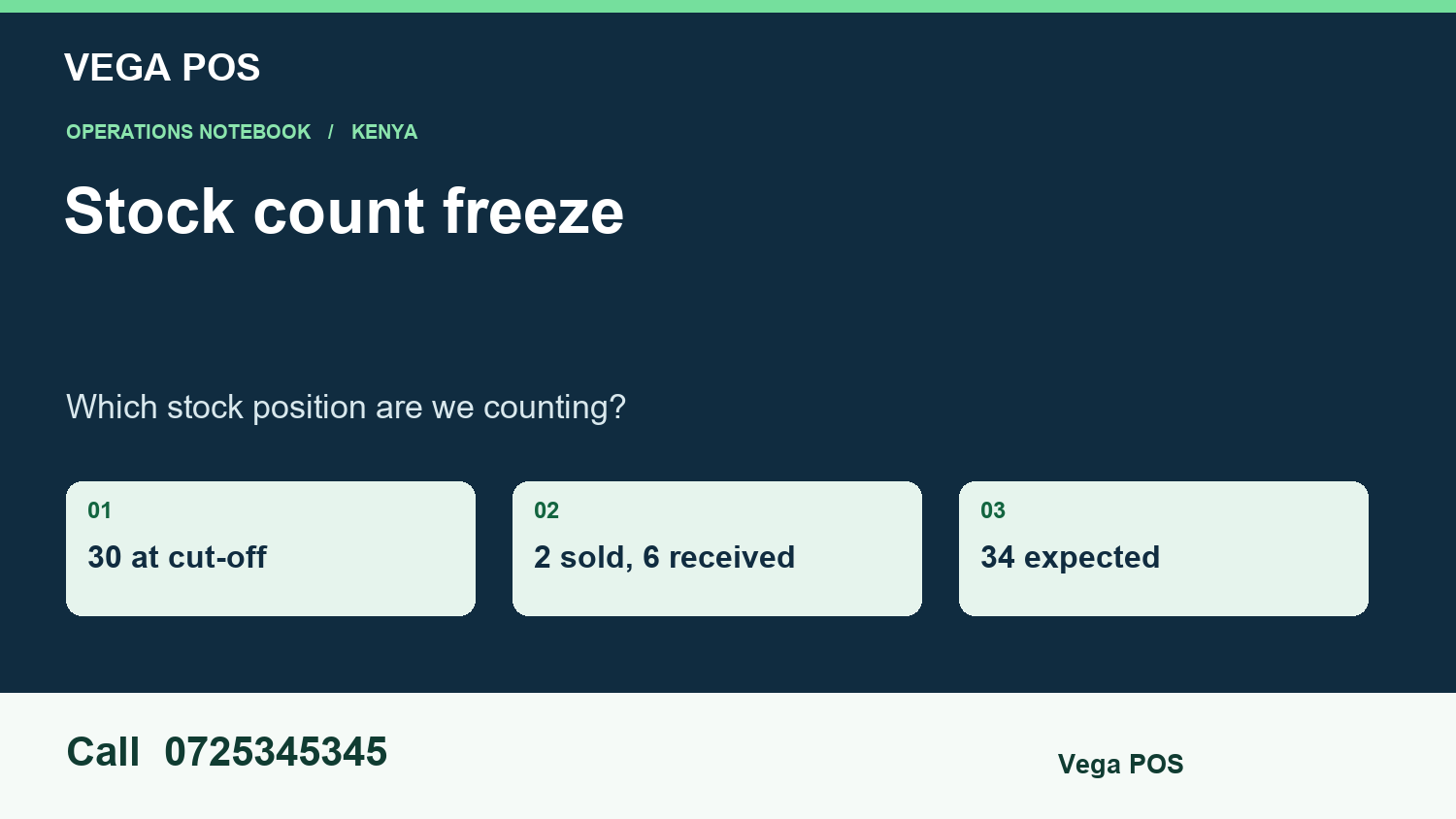
Stock count freeze planning defines which stock position a count is meant to describe. A fictional shelf starts with thirty mugs. While a colleague counts, a cashier sells two and a receiver adds six. A physical count of thirty-four may be correct at the end, but comparing it with the opening balance of thirty without recording movements creates a false discrepancy.
Choose a small test area and a clear cut-off reference. A freeze can mean stopping movements temporarily or controlling and reconciling movements while work continues; the business must choose a practical method. This article describes a rehearsal, not a claim that a particular screen can freeze stock automatically. Ask the counter team, receiver and cashier to explain how an exceptional movement will be recorded.
Stock count freeze in four decisions
Use the four decisions below as a tabletop exercise. The case is fictional. Each decision pairs a new scenario with field notes drawn from a linked guide in our library. Read the scenario aloud first, and ask the next person to explain the result before consulting the notes.
1. Set a visible starting position
Name the location, product references, starting time and person authorising the count window. Record the system quantity at that cut-off under the supported process. Avoid using a live report that changes underneath the counter without preserving the original reference.
If customers still need access, define how sales during the window will be recognised. Stock count freeze instructions should answer what staff do when a unit must move urgently. A rule that nobody can follow during normal trading will quickly become an undocumented exception rather than a reliable control. For stock count freeze, keep this starting assumption visible beside the result.
Field notes from our reorder exception review guide:
Confirm the product and purchasing unit
Start with a stable product identity and the unit used for buying. A carton, packet and individual piece can produce very different order quantities. Similar supplier references may also describe different pack sizes. Resolve these differences before comparing stock levels with a proposed purchase.
Review recent demand in context
Compare the recent pattern with the circumstances of the period. A large one-off order, a promotion, a temporary closure or missing trading days may make an average misleading. Keep those events visible instead of treating every change as a permanent shift in demand.
Understand the lead time being used
Ask how long the business currently expects between ordering and usable receipt. Distinguish the supplier’s stated dispatch time from the full journey through delivery, receiving and availability. A product that reaches the gate on Friday may not be ready for sale at the moment a customer needs it.
Communicate the practical consequence
Receiving staff, branch teams or customer-facing employees may need to know what the decision means. Tell them the relevant action: an order is postponed, a substitute needs approval or a promised arrival remains uncertain. Share the information needed for their task without sending a long purchasing discussion to everyone.
The retail handover log guide can support this communication. Reorder exception review is only complete when the decision reaches the people who would otherwise act on an outdated assumption.
2. Capture movements during the window
Use the thirty-mug example and record two sold and six received after the start. The expected end quantity is thirty-four if nothing else moved. Keep receipt and sale references so a reviewer can determine whether each event is before or after the cut-off.
A delivery parked beside the shelf but not yet accepted should not be treated as the same thing as a completed receipt. Check where the actual mugs were when the counter counted them. The arithmetic cannot resolve a disagreement about whether a box was included physically in the first place. This stage of stock count freeze tests a different question from the final total.
Field notes from our partial delivery tracking guide:
Give each receipt its own evidence
Keep a distinct receiving reference for each arrival. Record the date, related order, accepted lines, quantities and any exception. Link the supplier’s delivery document where appropriate. This allows the team to reconstruct the sequence without treating the latest document as a replacement for everything that happened earlier.
Reconcile the open quantity after every receipt
Compare the ordered quantity with accepted receipts and any authorised changes. Investigate a negative or unexpected outstanding balance. It may indicate an overdelivery, duplicate receipt, unit mismatch or an order amendment that was not recorded correctly. Do not treat the balance as trustworthy merely because it appears on a screen.
For partial delivery tracking, keep cancellations distinguishable from receipts. Goods that will no longer arrive are not the same as goods already received. The person reviewing the order should be able to explain how the remaining balance changed and which document or decision supports that change.
Protect customers from unclear availability
Goods that are ordered, in transit, received or reserved are in different states. Confirm how the business represents each state before promising availability. Staff should know whether an outstanding supplier delivery has been allocated to a customer or simply replenishes the shelf.
Use a checked update when the goods arrive, and follow the normal collection process. The customer order pickup guide is useful for the next stage. Partial delivery tracking supports customer service when staff can distinguish a purchasing expectation from a confirmed item ready to collect.
3. Control recounts and location changes
A recount finds thirty-three rather than thirty-four. Preserve both observations and establish whether another unit moved between counts. Do not overwrite the first figure without the context needed to interpret the second.
If one mug was moved to a display table, decide whether that table belongs to the count scope and avoid counting it twice. Stock count freeze work needs location clarity as much as timing clarity. Ask a second counter to follow the marked scope without verbal coaching; inconsistent boundaries can make an otherwise careful count impossible to reconcile. Use stock count freeze to expose this exception before relying on the ordinary successful path.
Field notes from our barcode label checks guide:
Separate product labels from shelf information
A product barcode identifies an item or unit within the agreed process. A shelf label may also show a price, location or promotional message. Treat those functions separately during barcode label checks. An accurate shelf description does not prove that the product sticker underneath it belongs to the same record.
Place labels where people can use them
Agree a sensible label position for each packaging type. Staff should find it without covering important product information or opening the package. Avoid folds, seams and places likely to rub against shelves. If a supplier code remains visible beside your own label, demonstrate which code staff should scan and why.
Keep price changes under separate control
A correct barcode match does not authorise a new selling price. Where labels include prices, compare the price against the approved change and its effective date. Confirm whether an old promotional sticker needs removal. Staff should not guess which price applies when the shelf, package and counter disagree.
Train the exception routine
Show cashiers what to do when scanning fails during a queue. They need a supported search method and a clear way to confirm the selected item. Picking the first similar description may complete the sale quickly while creating a stock error that appears much later.
4. Approve the difference before reopening normal work
Compare the agreed cut-off position, documented movements and final physical count. Investigate any remaining difference through the business’s approval process before posting an adjustment. A broken mug found during the exercise needs its own condition and movement record, not an invisible reduction made solely to force agreement.
Stock count freeze completion should identify the reviewed quantity, unresolved items, approver and time normal movement resumes. Teach staff which record is final so an old count sheet is not entered again after the corrected position is already in use. The final stock count freeze record should explain the outcome to someone who was not present.
Field notes from our retail damaged stock guide:
Capture evidence that answers a question
Take only the evidence needed to show the condition and identify the goods. Useful photographs may show the overall item, affected area and identifying label. Record the delivery or transaction reference when relevant. Keep evidence in the approved business location so the reviewer can find it later.
Include open cases in shift handover
Tell the next shift which cases need attention, where the goods are held and who owns the next action. Keep the handover brief and refer to the full record for evidence. Do not duplicate long descriptions across several notebooks, because copies can disagree after the case changes.
Use the retail handover log guide to keep responsibilities visible. A good retail damaged stock handover allows an employee who was absent at discovery to locate the goods and understand the immediate task without calling everyone involved.
Learn from repeated retail damaged stock cases
Review recurring patterns by product, handling stage and location. Repeated torn packaging near one shelf may suggest a storage problem. Repeated incoming issues may require a supplier discussion. Treat these as questions to investigate, not proof of a cause based on a small number of observations.
Choose a practical corrective action and check whether it addresses the problem. Improve a shelf arrangement, clarify an unpacking instruction or adjust the receiving checklist where justified. Retail damaged stock reporting earns its value when the records help the team change a routine, rather than simply count unpleasant events.
Stock count freeze test sheet
Before running the example, cover the expected results and ask a colleague to predict them. Use the disagreements to decide which rule needs explaining. These are fictional test cases; use your own approved references for the real procedure.
| Test condition | Expected evidence |
|---|---|
| Thirty mugs at the cut-off | The starting quantity, scope and time are preserved for comparison. |
| Two sold and six received afterward | Expected end quantity is thirty-four if no other movement occurred. |
| One unit moves to a display | The agreed location scope determines where it is counted once. |
| Recount differs from first count | Both observations retain enough context to investigate intervening movement. |
| Final adjustment proposed | The difference is reviewed and authorised before normal work resumes. |
Stock count freeze: questions from the counter
Must every shop stop trading during a count?
Not necessarily. Choose a workable count method and define how movements are controlled and reconciled. A temporary physical pause may suit one area, while another needs a clear movement log and cut-off. Do not call the count frozen if ordinary undocumented movements continue.
Should a recount replace the original number?
Preserve enough evidence to explain why the figures differ and which result was approved. The first observation can help identify an intervening sale or location mistake. A final reviewed count should be clear, but silently overwriting the earlier figure can remove useful context.
What makes a count discrepancy meaningful?
It compares quantities for the same product, selling unit, location scope and time basis. Resolve those assumptions before treating a difference as loss. A receipt counted physically but posted after the cut-off can create a mismatch even when no item is actually missing.
Use stock count freeze in your next demonstration
For a discussion about stock count freeze, contact Vega POS on 0725345345. Bring one anonymised example, its starting position and the result your colleague expects. Ask for a demonstration using those details before assuming a particular feature or integration is available.
Other Kenyan business workflows
For a custom business portal, explore Zama Web Experts. If your team is working in another sector, these services provide different examples: Prim for salon bookings, sales and stock; TAS for chama records and contributions; Saseni for writing orders and delivery; JAAT for shop and product listings; Dereva for driver discovery. Use the service that fits your task; a link does not establish that the systems exchange data.