 Vega
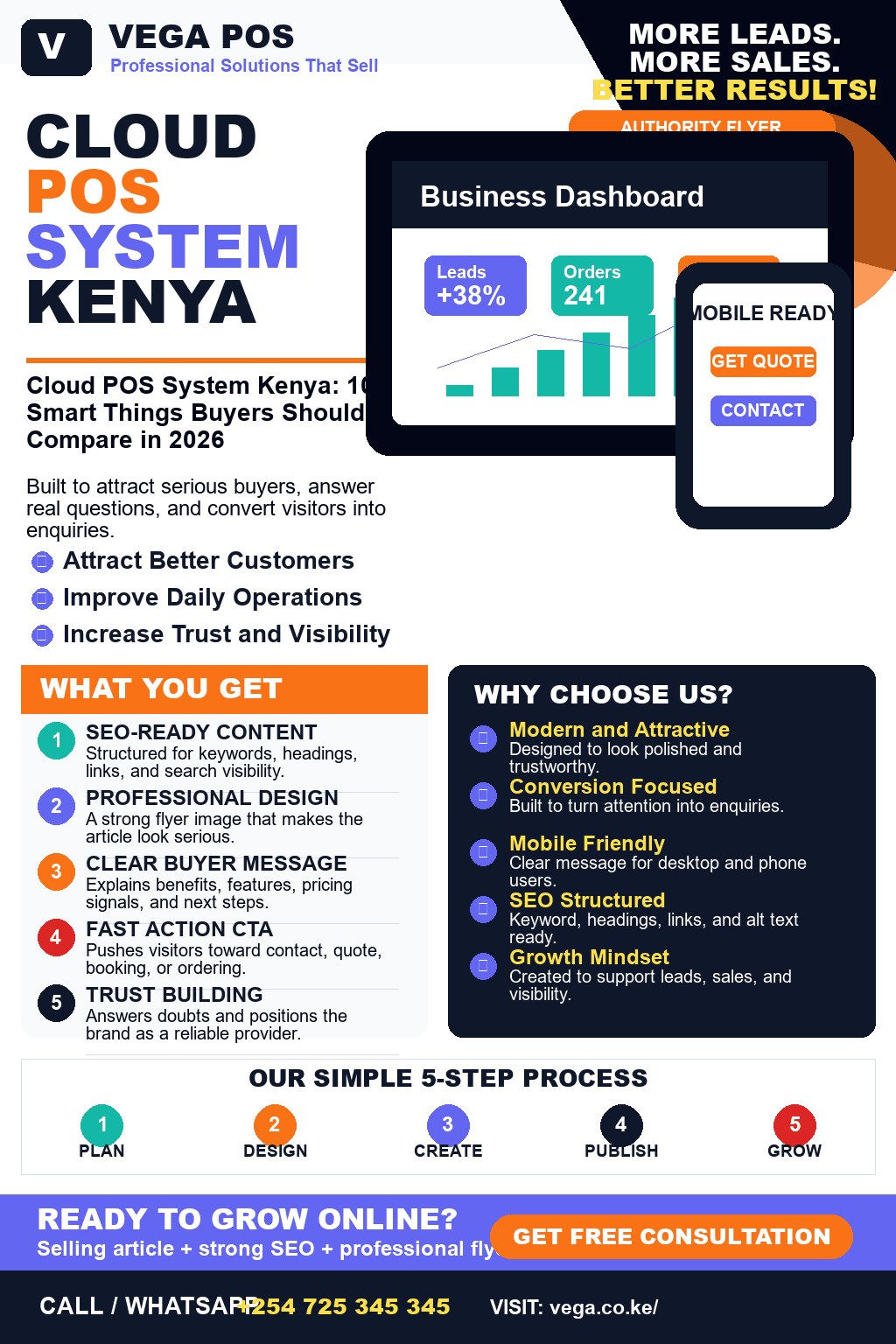
Cloud POS vs traditional POS Kenya is a decision every retailer must make as they grow. A traditional POS runs on a computer inside your shop. A cloud POS runs on remote servers and connects through the internet.
This guide compares both systems in detail. You will learn Cloud POS vs traditional POS Kenya across cost, reliability, features, and scalability. By the end, you will know which system fits your business.
Whether you run a kiosk in Nakuru or a supermarket in Nairobi, Cloud POS vs traditional POS Kenya affects your daily operations. Many Kenyan retailers choose based on price alone. That often leads to regret.
A cheap system that fails during peak hours costs more than an expensive one that works. Cloud POS vs traditional POS Kenya requires understanding your real needs.
You will also see Cloud POS vs traditional POS Kenya when your internet is unreliable. And you will learn Cloud POS vs traditional POS Kenya when you have multiple branches.
The Cloud POS vs traditional POS Kenya comparison starts with understanding how each system works. It continues with cost analysis. And it ends with a clear recommendation.
You will also understand Cloud POS vs traditional POS Kenya during power outages. And you will see Cloud POS vs traditional POS Kenya when you need eTIMS compliance.
The Cloud POS vs traditional POS Kenya debate also covers data security. And it includes Cloud POS vs traditional POS Kenya for M-Pesa integration.
You will learn Cloud POS vs traditional POS Kenya through real price ranges. And you will see Cloud POS vs traditional POS Kenya for total cost of ownership.
Finally, the Cloud POS vs traditional POS Kenya guide will help you avoid common mistakes. It will also show Cloud POS vs traditional POS Kenya for long-term value. Let us begin.
Understanding Cloud POS and Traditional POS
A traditional POS is installed on a computer or terminal inside your shop. The data stays on that device. You cannot access it from elsewhere. If the device fails, you may lose your records.
A cloud POS runs on remote servers. You access it through a browser or app. Your data is stored in the cloud. You can view it from anywhere with internet access.
The Cloud POS vs traditional POS Kenya difference is not just technical. It affects how you manage your business daily.
Traditional systems are familiar to many Kenyan retailers. They have been used for years. Cloud systems are newer but growing fast.
How Traditional POS Works
A traditional POS runs on a local computer or terminal. The software is installed directly on the device. Data is stored on the hard drive.
You need a physical machine for each till. You need local backups. If the machine breaks, your sales stop.
Traditional POS systems may work offline. They do not need internet to process sales. This is an advantage in areas with poor connectivity.
But traditional systems have limits. You cannot see sales from another location. You cannot check reports from home. You must be physically present.
How Cloud POS Works
A cloud POS runs on remote servers. You access it through a web browser or mobile app. Sales data is sent to the cloud in real time.
You can use any device with internet. A laptop, tablet, or phone works. You do not need a powerful local computer.
Cloud POS systems often work offline too. They record sales locally and sync when connection returns. This hybrid approach is common in Kenya.
With cloud POS, you can view reports from anywhere. You can manage multiple branches from one dashboard. This flexibility is a major advantage.
Cloud POS vs Traditional POS Kenya: Cost Comparison
Cost is often the first factor retailers consider. The two systems have different cost structures.
Upfront Costs
Traditional POS requires a larger upfront investment. You buy hardware and software licences. Hardware costs range from KES 50,000 to KES 300,000 depending on specifications.
Cloud POS has lower upfront costs. You may only need a tablet or basic computer. Software is subscription-based. Hardware can cost as little as KES 10,000 per terminal.
Monthly Costs
Traditional POS may have no monthly fees after purchase. But you pay for updates and support separately. These costs can be unpredictable.
Cloud POS charges monthly subscriptions. Starter plans cost KES 499 to KES 5,000 per month. Standard plans cost KES 2,000 to KES 10,000 per month.
Hidden Costs
Traditional POS has hidden costs. Repairs, replacements, and IT support add up. Data loss can be catastrophic.
Cloud POS has fewer hidden costs. Updates and backups are usually included. Support is often part of the subscription.
The Cloud POS vs traditional POS Kenya cost comparison favours cloud for small shops. Larger businesses may find traditional systems more economical at scale.
Cloud POS vs Traditional POS Kenya: Reliability and Uptime
Reliability matters in retail. A system that fails during peak hours loses sales.
Traditional POS Reliability
Traditional POS does not need internet. It works during network outages. This is a real advantage in Kenya.
But traditional systems have their own risks. Hardware fails. Power cuts cause shutdowns. Without backup power, you cannot sell.
Cloud POS Reliability
Cloud POS depends on internet. If the connection drops, you may not process sales. This is a concern in areas with unstable networks.
However, many cloud POS systems work offline. They record sales locally and sync later. This hybrid approach solves the connectivity problem.
The Cloud POS vs traditional POS Kenya reliability debate favours hybrid systems. They offer the best of both worlds.
Cloud POS vs Traditional POS Kenya: Features and Functionality
Features determine what you can do with your system. Cloud POS generally offers more features.
Traditional POS Features
Traditional POS covers basic sales recording. It prints receipts. It may track inventory. It may generate simple reports.
Advanced features are limited. Real-time reporting is rare. Remote access is impossible. Integration with mobile money is often manual.
Cloud POS Features
Cloud POS offers real-time sales tracking. You can see sales as they happen. You can view reports from anywhere.
Cloud POS integrates with M-Pesa. It supports eTIMS compliance. It handles multiple branches. It offers detailed analytics.
The Cloud POS vs traditional POS Kenya feature comparison clearly favours cloud systems.
Cloud POS vs Traditional POS Kenya: Scalability
Scalability matters if you plan to grow. Your system must handle more tills, more staff, and more branches.
Traditional POS Scalability
Traditional POS is hard to scale. Each new till needs a new computer and licence. Adding a branch means duplicating everything.
Data from different branches stays separate. You cannot easily compare performance. You cannot see consolidated reports.
Cloud POS Scalability
Cloud POS scales easily. You can add users and tills from a dashboard. New branches connect to the same system.
You see all branches in one view. You can compare performance. You can move stock between locations.
The Cloud POS vs traditional POS Kenya scalability comparison favours cloud for growing businesses.
Cloud POS vs Traditional POS Kenya: Data Security and Backup
Data is valuable. Losing it can cripple your business. Both systems have risks.
Traditional POS Security
Traditional POS stores data locally. If the computer is stolen, data is lost. If the hard drive fails, data is gone.
Backups are manual. You must remember to back up. Many businesses do not. They learn the hard way.
Cloud POS Security
Cloud POS stores data on secure servers. The provider handles backups. Your data survives device failure.
You can access data from any device. You can restore it after problems. Security is a major advantage of cloud systems.
The Cloud POS vs traditional POS Kenya security comparison favours cloud systems.
Cloud POS vs Traditional POS Kenya: eTIMS Compliance
KRA requires eTIMS for VAT-registered businesses. Your POS must be compliant.
Traditional POS may not support eTIMS. You may need separate software. This adds cost and complexity.
Cloud POS often includes eTIMS integration. Invoices are generated automatically. Compliance becomes easier.
The Cloud POS vs traditional POS Kenya compliance comparison favours cloud systems.
Cloud POS vs Traditional POS Kenya: M-Pesa Integration
M-Pesa is the dominant payment method in Kenya. Your POS must handle it smoothly.
Traditional POS may require manual M-Pesa confirmation. The cashier waits for an SMS. This slows down checkout.
Cloud POS integrates M-Pesa automatically. STK Push sends a prompt to the customer’s phone. Payment confirms instantly.
The Cloud POS vs traditional POS Kenya payment comparison favours cloud systems.
Step-by-Step: How to Choose Between Cloud POS and Traditional POS
Step 1: Assess Your Internet Reliability
Check your internet connection. Is it stable? Does it drop often? If your area has reliable internet, cloud POS is viable.
If internet is unreliable, consider a hybrid system. It works offline and syncs later.
Step 2: Count Your Tills and Branches
How many tills do you need? How many branches do you plan? Traditional POS works for single locations. Cloud POS works for multiple locations.
Step 3: List Your Must-Have Features
Do you need M-Pesa integration? eTIMS compliance? Real-time reports? Cloud POS offers these. Traditional POS may not.
Step 4: Calculate Total Cost of Ownership
Add hardware, software, support, and training. Compare over three years. Cloud POS may be cheaper for small shops. Traditional POS may be cheaper for large ones.
Step 5: Consider Your Growth Plans
Will you expand? Cloud POS scales easily. Traditional POS does not. Choose based on your future, not just today.
Step 6: Test Both Systems
Ask for demos. Run trials. Test during peak hours. See how each system handles pressure.
Step 7: Check Support Quality
Support matters when problems appear. Ask about response times. Ask about local technicians. Poor support ruins any system.
Step 8: Make Your Decision
Weigh all factors. Choose the system that fits your needs. Do not choose on price alone.
Best Practices for Cloud POS vs Traditional POS Kenya
Start with Clean Data
Whatever system you choose, clean data is essential. Remove duplicates. Standardise names. Accurate data makes reports reliable.
Train Staff Thoroughly
Untrained staff make errors. They may avoid using the system. Train them on sales, returns, and reports.
Reconcile Daily
Count cash at the end of every shift. Compare with system reports. Investigate differences immediately.
Back Up Your Data
Cloud POS backs up automatically. Traditional POS requires manual backups. Either way, test the restore process.
Review Reports Weekly
Look at sales, stock, and cash variances. Act on findings. Reports only help if you read them.
Common Mistakes to Avoid
Choosing on Price Alone
The cheapest system may lack support. It may fail during peak hours. Compare total value.
Ignoring Internet Reliability
Cloud POS needs internet. If your connection is poor, choose a hybrid system. Test offline mode.
Skipping eTIMS Compliance
Non-compliance leads to fines. Ensure your POS is eTIMS compliant if you are VAT-registered.
Not Training Staff
Untrained staff make errors. They slow down service. Budget time for training.
Failing to Back Up Data
Data loss is painful. Back up regularly. Test the restore process.
How vega.co.ke Helps with Cloud POS vs Traditional POS Kenya
Cloud POS vs traditional POS Kenya becomes easier with vega.co.ke. The platform helps you track sales, cash, and shift data in one place.
With vega.co.ke, you can see sales by product, cashier, and shift. You can spot variances quickly. This supports accountability and better decisions.
vega.co.ke is designed for Kenyan and African businesses. It focuses on clarity and ease of use. You do not need technical expertise.
If you are comparing Cloud POS vs traditional POS Kenya, consider using vega.co.ke for your tracking and reporting. Visit vega.co.ke to see how it can support your retail business.
Frequently Asked Questions
1. What is the main difference between cloud POS and traditional POS in Kenya?
Cloud POS runs on remote servers and is accessed via internet. Traditional POS runs on a local computer inside your shop. Cloud offers remote access and scalability. Traditional offers offline reliability.
2. Which is cheaper for a small shop in Kenya?
Cloud POS has lower upfront costs. You pay monthly. Traditional POS has higher upfront costs. For small shops, cloud is often cheaper.
3. Can cloud POS work without internet in Kenya?
Many cloud POS systems work offline. They record sales locally and sync when connection returns. This hybrid approach is common.
4. Is traditional POS still relevant in Kenya?
Yes, for businesses with unreliable internet or single locations. Traditional POS works offline and needs no monthly fees.
5. How do I choose between cloud POS and traditional POS?
Assess your internet reliability. Count your tills and branches. List must-have features. Calculate total cost. Consider growth plans. Test both systems.
6. Which system is better for eTIMS compliance?
Cloud POS often includes eTIMS integration. Traditional POS may need separate software. Check compliance before you buy.
7. Can I use M-Pesa with both systems?
Yes. Cloud POS integrates M-Pesa automatically. Traditional POS may require manual confirmation. Check the integration options.
8. How can vega.co.ke help me choose?
vega.co.ke helps you track sales, cash, and shift data. It gives you visibility into daily operations. Visit vega.co.ke to learn more.
Take Action on Cloud POS vs Traditional POS Kenya
Cloud POS vs traditional POS Kenya is a decision that affects your daily operations. Cloud POS offers flexibility, scalability, and remote access. Traditional POS offers offline reliability and no monthly fees.
Consider your internet reliability. Consider your growth plans. Consider your budget. Test both systems. Choose the one that fits your needs.
Remember that Cloud POS vs traditional POS Kenya is not just about technology. It is about control, efficiency, and growth.
Visit vega.co.ke today to explore how it can support your retail operations. Take the first step toward better control and higher profit.