 Vega
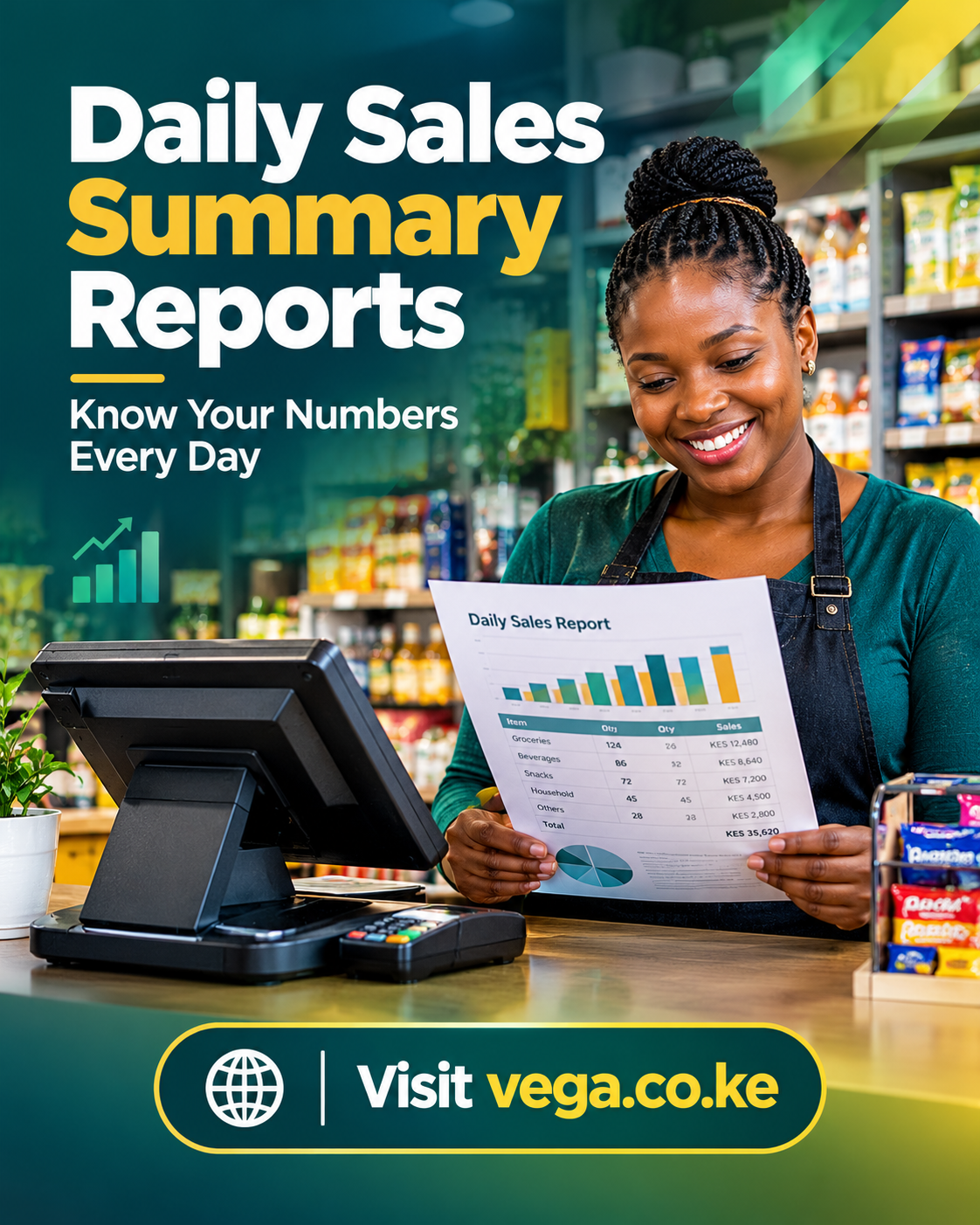
Daily sales summary reports for retail are the backbone of successful business management. You cannot run a profitable shop if you do not know your daily numbers. You need to know your total sales. You need to know your cash flow. You need to know which products are moving.
Looking at Daily sales summary reports for retail helps you make quick decisions. Whether you run a small duka in Nakuru or a large supermarket in Nairobi, data is crucial.
The Daily sales summary reports for retail give you a clear snapshot of your business performance. They show you exactly what happened yesterday.
Many owners rely on guesswork. They wait until the end of the month to check their profits. This is dangerous.
You need Daily sales summary reports for retail to catch problems early. This guide will show you how to generate and use them effectively.
We will explore the Daily sales summary reports for retail features you need to look for in a POS system.
You will learn how Daily sales summary reports for retail can reduce theft and improve staff accountability.
Understanding Daily sales summary reports for retail is essential for growth. It tells you which items to restock.
We will also cover the Daily sales summary reports for retail best practices for Kenyan retail environments.
You will see how Daily sales summary reports for retail help you manage your cash flow better.
The Daily sales summary reports for retail are your best defence against inventory shrinkage.
Let us look at the Daily sales summary reports for retail strategies that top retailers use every day.
You will discover the Daily sales summary reports for retail formats that are easiest to read.
We will break down the Daily sales summary reports for retail step by step.
Many managers struggle with the Daily sales summary reports for retail because they lack the right tools.
This guide solves that problem. The Daily sales summary reports for retail tools are easier to use than you think.
You will master the Daily sales summary reports for retail process by the end of this article.
Let us dive into why these reports matter so much.
Why Daily Sales Summary Reports for Retail Matter
The retail environment in Kenya is highly competitive. Margins are thin. A small error can wipe out your profit for the week.
You cannot afford to operate in the dark. You need to know your exact numbers every single day.
Generating Daily sales summary reports for retail gives you an immediate financial checkup. It shows you your total revenue. It shows you your payment breakdown.
It also shows you your cash position. If the report says you should have KSh 50,000 in cash, and you only have KSh 45,000, you have a problem.
You can investigate the missing KSh 5,000 immediately. You do not have to wait until the end of the month.
These reports are also your best defence against employee fraud. When cashiers know that cash is reconciled daily against a report, they are less likely to steal.
The Daily sales summary reports for retail create a culture of accountability. They protect your honest staff too. If there is a discrepancy, the report shows exactly who was on duty and what they processed.
Key Components of a Great Report
What should actually be on your daily report? A good report is not just a single number. It is a detailed breakdown.
First, you need the total gross sales. This is the total amount of money received from customers before any expenses.
Second, you need the payment breakdown. How much was paid in cash? How much via M-Pesa? How much via credit cards?
Third, you need the transaction count. How many customers did you serve? This helps you calculate your average basket size.
Fourth, you need the details on discounts, voids, and refunds. These are the areas where money leaks. A high number of voids is a red flag.
Fifth, you need the cash reconciliation section. This shows the expected cash versus the actual cash counted in the drawer.
Finally, you need a list of top-selling items. You need to know what is leaving your shelves fastest.
When you have all these components, you have a complete picture. The Daily sales summary reports for retail become a powerful management tool.
Step-by-Step Guide to Generating and Using Reports
Implementing a system for daily reporting takes discipline. You do not need to be a math expert. You just need a consistent routine.
Step 1: Choose the Right POS System
Your point of sale system must be capable of generating accurate reports. If you rely on a notebook, you will make mistakes.
Modern POS systems do the math for you. They track every transaction in real time. They capture the payment methods automatically.
When looking for software, check the reporting features. Ensure it can export data to Excel or PDF. This makes it easier to share with your accountant or review on your phone.
A good system is the foundation of Daily sales summary reports for retail. Without it, the process is too slow and tedious.
Step 2: Set a Standard Closing Routine
The best time to generate the report is immediately after the shop closes. Do not wait until the next morning.
The cash must be fresh in the drawer. The staff’s memory of the day’s events must be clear.
Set a rule: no cashier goes home until the daily report is printed and the cash is reconciled.
This routine ensures that Daily sales summary reports for retail are accurate and timely.
Step 3: Reconcile Physical Cash Against the Report
This is the most critical step. Count all the cash in the till. Count the petty cash.
Compare the physical cash with the cash total on your report. If there is a shortage, investigate immediately.
Do not just accept shortages as a normal cost of doing business. A recurring shortage is a sign of theft or poor cash handling.
The Daily sales summary reports for retail highlight these discrepancies instantly.
Step 4: Verify Digital Payments
Do not forget about M-Pesa and card payments. Your report will show expected M-Pesa collections.
Check your M-Pesa statement to ensure the funds actually arrived. Confirm that the transaction codes match the sales.
Sometimes, a customer claims to have paid, but the transaction fails. The report helps you catch these issues.
Reconciling digital payments is a vital part of Daily sales summary reports for retail.
Step 5: Review the Voids and Refunds
Every void and refund must be approved by a supervisor. But you still need to review them.
Look at the report. Who processed the void? Why? Were the items returned to stock?
High voids often indicate sweethearting. A cashier might void a sale and pocket the cash.
Regularly reviewing these sections in your Daily sales summary reports for retail deters this behaviour.
Step 6: Analyze the Top Sellers
Look at your top 10 products for the day. Are they the items you expected to sell?
If an item is missing from the top list, check its stock levels. Maybe it is out of stock, or maybe it was pushed to the back of the shelf.
Use this data to plan your restocking for tomorrow.
This analytical approach makes your Daily sales summary reports for retail actionable.
Step 7: Compare Against Previous Days
Do not look at the numbers in isolation. Compare today’s sales to yesterday’s. Compare it to the same day last week.
Were sales up or down? If they dropped, can you identify why? Was it raining? Did you have a stockout?
Spotting trends helps you forecast demand. It is a key benefit of Daily sales summary reports for retail.
Step 8: Sign and File the Report
Once the report is reviewed and the cash is reconciled, sign it. Have the supervisor sign it too.
This creates a formal audit trail. It proves that the day’s accounts were checked and approved.
File the physical report safely. Keep digital backups as well.
Storing your Daily sales summary reports for retail securely protects you during tax audits.
Step 9: Communicate Findings with Staff
Share the wins with your team. If you hit a sales target, celebrate it.
If there were issues, like excessive voids or late closing, address them privately.
When staff see that the reports are used for management, they take the process seriously.
The Daily sales summary reports for retail become a tool for team improvement, not just surveillance.
Step 10: Adjust Your Operations
The ultimate goal of reporting is to improve the business. Use the data to make changes.
If you realize you have too many staff on Tuesday mornings, adjust the roster.
If you notice a certain product is always returned, stop buying it.
Use the Daily sales summary reports for retail to drive continuous improvement in your shop.
Best Practices for Using Daily Sales Summary Reports for Retail
Keep it Simple and Readable
The report should fit on one page. Do not overwhelm yourself with too many metrics.
Focus on sales, payment types, cash variance, and top items. These are the critical numbers.
A clean, simple layout makes it easy to review every day. Complicated reports get ignored.
Simplicity is a key principle when designing Daily sales summary reports for retail.
Automate the Process
Manual reporting is time-consuming. It is also prone to mathematical errors.
Use software that generates the report with one click. This saves time and ensures accuracy.
Automation allows you to focus on analyzing the data, rather than compiling it.
Modern POS systems make automating Daily sales summary reports for retail very easy.
Track Cash Variance Closely
Cash variance is the difference between expected cash and actual cash.
Monitor this number every day. Even small, consistent shortages are a warning sign.
Do not let variances slide. Address them immediately. Zero variance should be the goal.
Tracking variances is a core part of Daily sales summary reports for retail.
Use Unique Logins
To make the reports accurate, you must know who did what.
Ensure every cashier has their own login. Never allow shared accounts.
If a void happens, the report will show exactly which user was logged in.
Accountability makes your Daily sales summary reports for retail meaningful.
Review Weekly and Monthly Totals
While daily reports are crucial, do not ignore the bigger picture.
Every week, aggregate your daily reports. Look at the weekly trends.
Every month, do a deeper dive. Compare month-over-month growth.
This layered approach to Daily sales summary reports for retail provides both short-term control and long-term strategy.
Secure Your Data
Paper reports can be lost or damaged. Digital reports can be deleted.
Keep physical reports in a locked cabinet. Back up your digital data to the cloud.
You need these records for tax purposes. KRA requires accurate records.
Secure storage of Daily sales summary reports for retail protects your business.
Train Managers on Analysis
Generating the report is step one. Analyzing it is step two.
Train your managers to look for anomalies. Teach them how to spot a trend.
A manager who understands data is invaluable to your business.
Empower your team with Daily sales summary reports for retail.
Common Mistakes to Avoid
Relying on Memory
Never rely on memory to close the day. “I think we sold around 50 items” is not good enough.
You need hard numbers. Memory is unreliable and biased.
Always use a system to generate formal Daily sales summary reports for retail.
Ignoring Discrepancies
If the cash is short by KSh 100, it is easy to just ignore it. Do not do this.
A small shortage today could be a test. If ignored, it could become a large theft tomorrow.
Investigate every variance shown in your Daily sales summary reports for retail.
Not Involving Staff
Do not keep the reports a secret. Share relevant data with your team.
If they know the targets, they will work towards them. If they see the impact of voids, they will reduce them.
Inclusivity makes Daily sales summary reports for retail more effective.
Forgetting About M-Pesa
Some businesses only reconcile the cash. They forget about the M-Pesa till.
This is a massive blind spot. M-Pesa is the most common payment method in Kenya.
You must reconcile your digital payments just as strictly as your cash.
Your Daily sales summary reports for retail must include a full M-Pesa breakdown.
Using Outdated Systems
If your POS cannot generate a report, it is time for an upgrade.
Manual notebooks cannot keep up with the speed of modern retail.
Outdated systems lead to leaks and lost profits.
Upgrade to a system that supports accurate Daily sales summary reports for retail.
How vega.co.ke Helps
Getting accurate Daily sales summary reports for retail is effortless with vega.co.ke.
Our platform automatically tracks every sale, payment, and void. You do not need to do manual calculations.
At the end of the day, you simply click a button. The system generates a comprehensive report instantly.
You can see your cash sales, M-Pesa collections, and card payments clearly separated.
The vega.co.ke dashboard allows you to spot variances immediately. You can see which cashier processed which transaction.
This level of visibility helps you eliminate theft and improve efficiency.
We designed our reporting features specifically for Kenyan retailers. We understand the challenges you face.
If you want to make Daily sales summary reports for retail easy and accurate, visit vega.co.ke today.
Sector-Specific Tips
Supermarkets and Mini-Marts
You have high volumes of transactions. Your report must focus on total transaction counts and average basket sizes.
Look at the hourly breakdown. Identify your peak hours. Use this data to schedule more tills during those times.
Reconcile your cash and M-Pesa multiple times a day, not just at closing.
Use the Daily sales summary reports for retail to manage your high-volume environment.
Restaurants and Cafes
Your focus is on table turnover and average spend per customer.
Your report should track voids carefully. In restaurants, voids often hide free meals for friends.
Monitor your payment types. If many customers pay by card, ensure your reconciliation is tight.
Use the Daily sales summary reports for retail to control food costs and theft.
Pharmacies and Chemists
Accuracy is life or death. Your daily report must align perfectly with your inventory system.
Track the sale of controlled substances closely. Ensure the report matches the prescription records.
Your reports will also help you identify slow-moving medicines before they expire.
For pharmacies, Daily sales summary reports for retail are a critical compliance tool.
Hardware and Building Supplies
Transactions are fewer, but values are higher. Your report should focus on gross revenue.
Track credit sales carefully. The report must show who owes you money.
Cash shortages on large transactions are very costly. Reconcile meticulously.
Use Daily sales summary reports for retail to manage high-value sales.
Salons and Barbershops
Track the sales per stylist. Your daily report should show who brought in the most revenue.
This helps you calculate commissions accurately. It also highlights top performers.
Track retail product sales separately from service sales.
Your Daily sales summary reports for retail should break down these two categories.
Frequently Asked Questions
1. What is a daily sales summary report?
It is a document that summarizes all sales made in a single day. It includes total revenue, payment methods, cash totals, and often top-selling items.
It is essential for tracking business performance and preventing theft.
2. Why are daily sales summary reports important?
They provide a daily snapshot of your financial health. They help you reconcile cash and digital payments.
They catch errors and theft early. They also guide your purchasing decisions.
3. What should be included in the report?
Include gross sales, payment breakdown (cash, M-Pesa, card), voids, refunds, and total cash counted.
It should also show the top 10 products sold that day.
4. How do I generate these reports without a POS?
Doing it manually is hard. You would need to tally receipts and calculate totals by hand.
It is highly prone to errors. Investing in a POS system is the best way to get accurate Daily sales summary reports for retail.
5. Should I reconcile cash daily?
Yes, absolutely. You must reconcile cash at the end of every shift.
If you wait, you will forget the details. Small shortages will accumulate into big losses.
6. How do I handle M-Pesa in the daily report?
Your POS should generate a separate M-Pesa total. You must compare this to your actual M-Pesa statement.
Ensure the transaction codes match. This prevents fraud and ensures all funds are received.
7. Who should review the daily reports?
The shop owner or the manager must review the reports.
They should sign off on them daily. This creates accountability and ensures the process is taken seriously.
8. How can vega.co.ke help with my daily reports?
vega.co.ke automates the entire process. It generates accurate reports with one click.
It gives you clear visibility into your sales, cash, and M-Pesa. Visit vega.co.ke to learn more.
Take Action Today
Generating Daily sales summary reports for retail is not optional. It is a fundamental requirement for anyone serious about growing their business.
It gives you control. It gives you peace of mind. It protects your hard-earned profits.
Do not wait until the end of the month to check your business. Start today.
Ensure you have a POS system that can generate these reports accurately.
Make the daily review a strict routine. Involve your staff. Act on the data you see.
Visit vega.co.ke today to explore our tools. We can help you generate accurate Daily sales summary reports for retail effortlessly.