 Vega
VegaERP Implementation Partner Kenya is a high-intent solution for businesses comparing teams to implement or replace enterprise software. Buyers searching this term are usually beyond general awareness: they need to understand the workflow, required capabilities, implementation effort and commercial case.
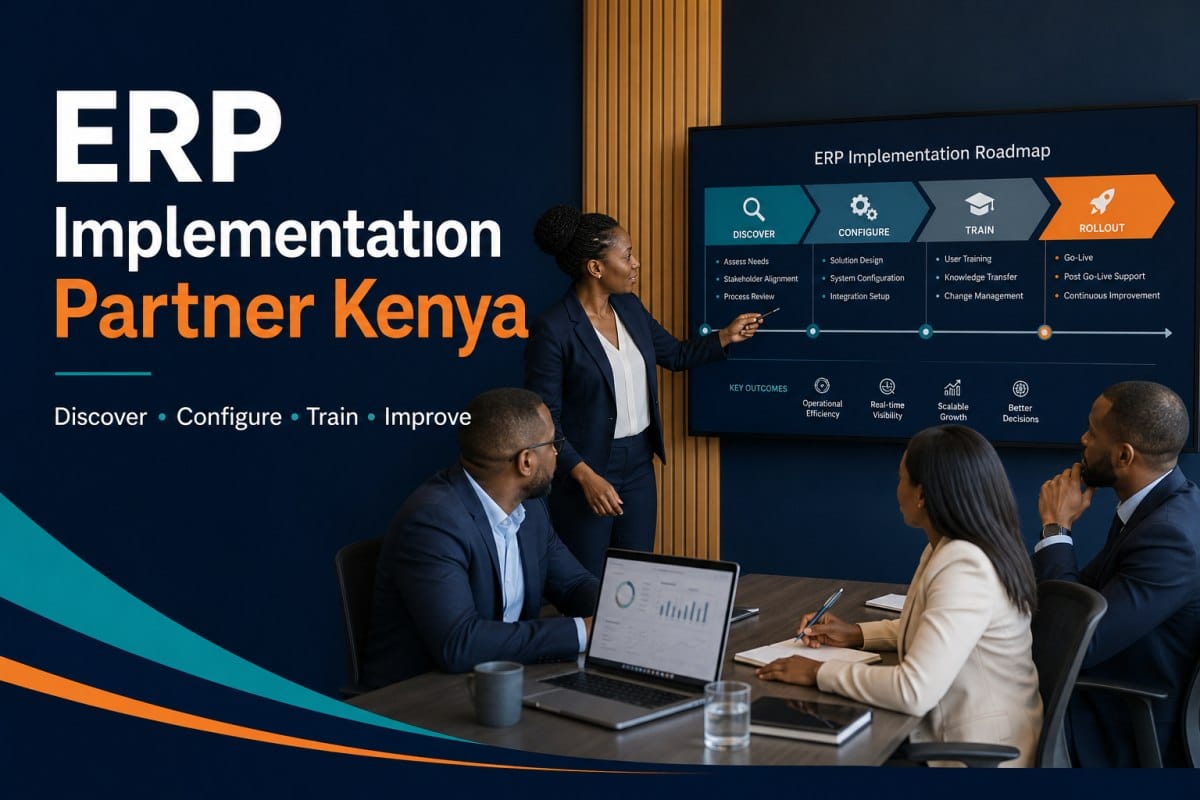
ERP projects underperform when the supplier focuses on software screens but does not understand process ownership, data quality, adoption and measurable business outcomes. A useful system replaces disconnected records with a controlled process, clear ownership and timely management information.
Who should consider this solution?
businesses comparing teams to implement or replace enterprise software should assess it when transaction volume, locations, assets or reporting needs have outgrown manual coordination. Start with the current pain, the people involved, the records exchanged and the outcome management wants to improve.
Core capabilities buyers should compare
- process discovery and scope control: define what good execution looks like, which records are required, who is responsible and how exceptions will be handled.
- solution design and configuration: define what good execution looks like, which records are required, who is responsible and how exceptions will be handled.
- data migration and integration planning: define what good execution looks like, which records are required, who is responsible and how exceptions will be handled.
- role, approval and security setup: define what good execution looks like, which records are required, who is responsible and how exceptions will be handled.
- user testing and practical training: define what good execution looks like, which records are required, who is responsible and how exceptions will be handled.
- go-live support and improvement roadmap: define what good execution looks like, which records are required, who is responsible and how exceptions will be handled.
Expected operational outcomes
- a realistic implementation plan
- clear accountability
- better user readiness
- measurable operational improvement
Results depend on accurate setup, user adoption, process discipline, connectivity and management follow-through. Establish a baseline before implementation and measure the same indicators after launch.
How to plan implementation
- Map the current workflow: document users, decisions, hand-offs, records, approvals and recurring exceptions.
- Define the first release: choose the smallest complete workflow that produces measurable value.
- Prepare data: clean master records, remove duplicates and agree who owns future accuracy.
- Confirm integrations: verify interfaces, account ownership, reconciliation and failure handling before promising automation.
- Pilot realistic scenarios: test normal work, exceptions and reports with actual users.
- Train and improve: assign administrators, monitor adoption and maintain a controlled enhancement roadmap.
What determines price?
Pricing depends on scope, users, locations, modules, data migration, integrations, devices, implementation services, training and support. Compare the total operating solution, not only a headline licence fee. Ask suppliers to separate one-time implementation costs, recurring platform charges, third-party services and optional enhancements.
Questions to ask potential vendors
- Which workflows are included in the proposed scope?
- Which integrations are proven, and what access is required?
- How are roles, approvals and audit records controlled?
- Can data be exported in a usable format?
- What training, support, backups and service response are included?
- How will the system scale across additional users, sites or business units?
Security, data and operational control
Use role-based access, strong authentication, encrypted connections, backups and audit records. Collect only information needed for legitimate operations and define who may view, change or export it. Applicable privacy, tax, labour, sector and contractual obligations should be confirmed with qualified advisers.
Build a measurable business case
Before requesting proposals, quantify the current process. Estimate transaction volume, staff time, delays, write-offs, stock differences, missed maintenance, reporting effort or customer disputes that relate to the problem. Choose a small set of measures that management already understands. The business case should also include implementation work: data preparation, user availability, devices, connectivity, process changes and ongoing administration. This makes it easier to compare vendors on total value instead of selecting the lowest licence price.
Common implementation risks to avoid
Projects struggle when scope is vague, decision-makers are unavailable, poor data is migrated without review or users first see the system at launch. Another risk is automating a broken approval chain without simplifying it. Assign an accountable process owner, agree acceptance criteria, test with representative users and document how the team will handle exceptions. Management should review adoption after launch and address workarounds quickly before they become the new unofficial process.
Why consider Vega ERP?
Vega ERP, powered by Zama Systems, is designed for organisations that need connected operations across finance, sales, inventory, procurement, production, people and management reporting.
A useful discovery session should examine a real workflow and its exceptions. That produces a more reliable scope than selecting software from a feature checklist alone.
Frequently asked questions
Can the system support multiple locations?
That depends on configuration, roles and reporting needs. Confirm site-level administration, consolidated dashboards and the treatment of transfers or shared records.
Can it integrate with existing systems?
Integration may be possible where authorised and documented interfaces exist. Data mapping, reconciliation, security and error handling must be tested.
How long does implementation take?
A focused pilot is faster than a multi-site transformation. Process decisions, data quality, integrations and user availability have a major effect on timing.
Should every manual process be automated immediately?
No. Begin with a complete, valuable workflow, prove adoption and expand using evidence.
Take the next step
Request a Vega ERP consultation and share your current process, users, locations, pain points and reporting requirements.