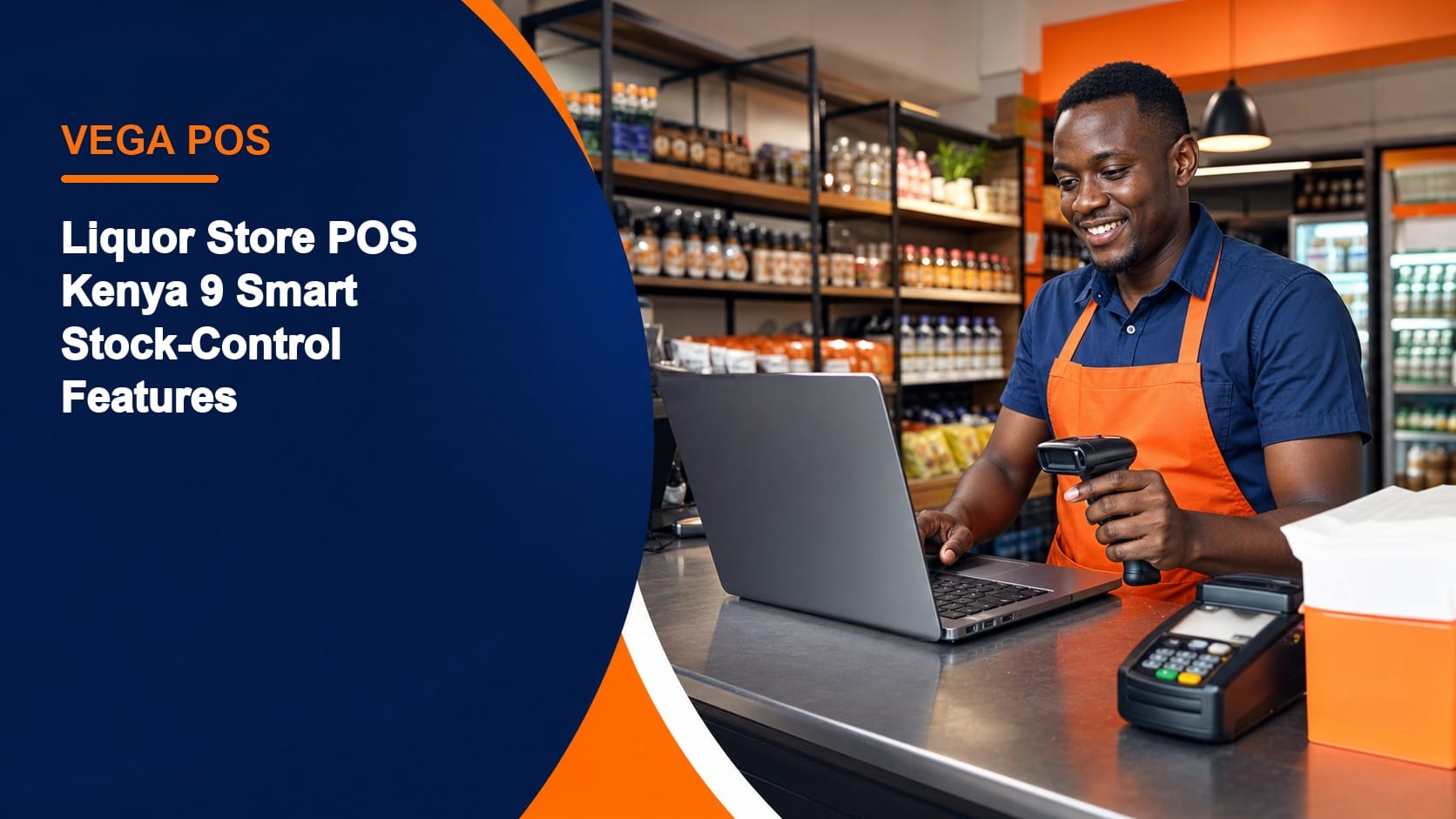
liquor store POS Kenya helps wines and spirits retailers connect fast checkout, bottle and case units, M-Pesa payments, stock control and branch reports in one controlled workflow. Manual books and disconnected spreadsheets can work at a very small scale, but they make reconciliation, accountability and timely decisions increasingly difficult as activity grows.
This guide explains nine capabilities to examine before choosing or commissioning a system. The aim is not to buy the longest feature list. It is to select a platform that fits daily work, protects reliable records and produces information management can act on.
Table of Contents
- 1. Barcode checkout
- 2. Bottle, pack and case units
- 3. Real-time inventory
- 4. M-Pesa and payment methods
- 5. Pricing and promotions
- 6. Staff accountability
- 7. Supplier purchases
- 8. Branch transfers
- 9. Sales and profit reports
1. Barcode checkout in liquor store POS Kenya
Barcode checkout should begin with the real workflow used by wines and spirits retailers. Document who performs each action, what information they need, which approval follows and what exception can interrupt the process. A useful liquor store POS Kenya platform should simplify those decisions without hiding accountability. During a demonstration, use realistic Kenyan examples and confirm that staff can complete the task accurately under normal operating pressure.
Configuration matters when introducing barcode checkout. Agree on names, roles, rules and required reports before importing live information. Test an ordinary transaction, a correction and a reversal so the team understands how the audit trail behaves. This practical review protects data quality and prevents the business from discovering important gaps after launch.
2. Bottle, pack and case units in liquor store POS Kenya
Configuration matters when introducing bottle, pack and case units. Agree on names, roles, rules and required reports before importing live information. Test an ordinary transaction, a correction and a reversal so the team understands how the audit trail behaves. This practical review protects data quality and prevents the business from discovering important gaps after launch.
Management should define a measurable result for bottle, pack and case units. The result may be faster service, fewer stock differences, clearer approvals or more reliable reporting. Review that measure after implementation and adjust permissions or training where necessary. Technology provides visibility, but consistent procedures and responsible supervision remain essential.
3. Real-time inventory in liquor store POS Kenya
Management should define a measurable result for real-time inventory. The result may be faster service, fewer stock differences, clearer approvals or more reliable reporting. Review that measure after implementation and adjust permissions or training where necessary. Technology provides visibility, but consistent procedures and responsible supervision remain essential.
Real-time inventory should begin with the real workflow used by wines and spirits retailers. Document who performs each action, what information they need, which approval follows and what exception can interrupt the process. A useful liquor store POS Kenya platform should simplify those decisions without hiding accountability. During a demonstration, use realistic Kenyan examples and confirm that staff can complete the task accurately under normal operating pressure.
For related implementation guidance, read Auto Spare Parts POS Kenya: 9 Inventory Controls.
4. M-Pesa and payment methods in liquor store POS Kenya
M-Pesa and payment methods should begin with the real workflow used by wines and spirits retailers. Document who performs each action, what information they need, which approval follows and what exception can interrupt the process. A useful liquor store POS Kenya platform should simplify those decisions without hiding accountability. During a demonstration, use realistic Kenyan examples and confirm that staff can complete the task accurately under normal operating pressure.
Configuration matters when introducing m-pesa and payment methods. Agree on names, roles, rules and required reports before importing live information. Test an ordinary transaction, a correction and a reversal so the team understands how the audit trail behaves. This practical review protects data quality and prevents the business from discovering important gaps after launch.
5. Pricing and promotions in liquor store POS Kenya
Configuration matters when introducing pricing and promotions. Agree on names, roles, rules and required reports before importing live information. Test an ordinary transaction, a correction and a reversal so the team understands how the audit trail behaves. This practical review protects data quality and prevents the business from discovering important gaps after launch.
Management should define a measurable result for pricing and promotions. The result may be faster service, fewer stock differences, clearer approvals or more reliable reporting. Review that measure after implementation and adjust permissions or training where necessary. Technology provides visibility, but consistent procedures and responsible supervision remain essential.
6. Staff accountability in liquor store POS Kenya
Management should define a measurable result for staff accountability. The result may be faster service, fewer stock differences, clearer approvals or more reliable reporting. Review that measure after implementation and adjust permissions or training where necessary. Technology provides visibility, but consistent procedures and responsible supervision remain essential.
Staff accountability should begin with the real workflow used by wines and spirits retailers. Document who performs each action, what information they need, which approval follows and what exception can interrupt the process. A useful liquor store POS Kenya platform should simplify those decisions without hiding accountability. During a demonstration, use realistic Kenyan examples and confirm that staff can complete the task accurately under normal operating pressure.
7. Supplier purchases in liquor store POS Kenya
Supplier purchases should begin with the real workflow used by wines and spirits retailers. Document who performs each action, what information they need, which approval follows and what exception can interrupt the process. A useful liquor store POS Kenya platform should simplify those decisions without hiding accountability. During a demonstration, use realistic Kenyan examples and confirm that staff can complete the task accurately under normal operating pressure.
Configuration matters when introducing supplier purchases. Agree on names, roles, rules and required reports before importing live information. Test an ordinary transaction, a correction and a reversal so the team understands how the audit trail behaves. This practical review protects data quality and prevents the business from discovering important gaps after launch.
8. Branch transfers in liquor store POS Kenya
Configuration matters when introducing branch transfers. Agree on names, roles, rules and required reports before importing live information. Test an ordinary transaction, a correction and a reversal so the team understands how the audit trail behaves. This practical review protects data quality and prevents the business from discovering important gaps after launch.
Management should define a measurable result for branch transfers. The result may be faster service, fewer stock differences, clearer approvals or more reliable reporting. Review that measure after implementation and adjust permissions or training where necessary. Technology provides visibility, but consistent procedures and responsible supervision remain essential.
9. Sales and profit reports in liquor store POS Kenya
Management should define a measurable result for sales and profit reports. The result may be faster service, fewer stock differences, clearer approvals or more reliable reporting. Review that measure after implementation and adjust permissions or training where necessary. Technology provides visibility, but consistent procedures and responsible supervision remain essential.
Sales and profit reports should begin with the real workflow used by wines and spirits retailers. Document who performs each action, what information they need, which approval follows and what exception can interrupt the process. A useful liquor store POS Kenya platform should simplify those decisions without hiding accountability. During a demonstration, use realistic Kenyan examples and confirm that staff can complete the task accurately under normal operating pressure.
Implementation checklist
- Map the existing workflow and the people responsible.
- Clean product, member, client or employee records before migration.
- Configure roles and approval limits using least-privilege access.
- Test ordinary transactions, corrections, reversals and exports.
- Train users with realistic examples from the business.
- Agree on backups, support, ownership and success measures.
Internal guides and useful external resources
Continue with Agrovet POS System Kenya: 9 Essential Retail Features and Cosmetics Shop POS Kenya: 9 Powerful Sales Tools. For responsible digital operations, consult the Office of the Data Protection Commissioner. Businesses considering M-Pesa integration can review the official Safaricom Daraja portal.
Related Kenyan business platforms include PRIM salon software, Vega POS, Awasam business solutions, Saseni digital services, SpaceKits technology solutions, RentalDesk property software. Choose integrations according to relevance, security and the operational requirements of the business.
Frequently asked questions about liquor store POS Kenya
How should a business choose the right system?
Begin with current problems, users, approval rules, reports, integrations and budget. Ask the provider to demonstrate those exact workflows rather than relying only on a feature list.
Can the platform support several branches?
A properly designed cloud platform can provide branch-specific access and consolidated reporting. Confirm user permissions, transfers, connectivity and reporting requirements during discovery.
How long does implementation take?
The timeline depends on scope, configuration, migration, integrations and training. A focused phased launch is often easier to validate than attempting every optional feature at once.
Is staff training necessary?
Yes. Even an intuitive system needs agreed procedures. Role-based training should cover daily work, exceptions, data protection and who to contact when help is needed.
Choose a practical platform for sustainable growth
The right liquor store POS Kenya solution should improve visibility without making daily work harder. Compare systems using real scenarios, clear success measures and total implementation requirements. Contact Vega POS to discuss setup, demonstrations and support for your organisation.