 Vega
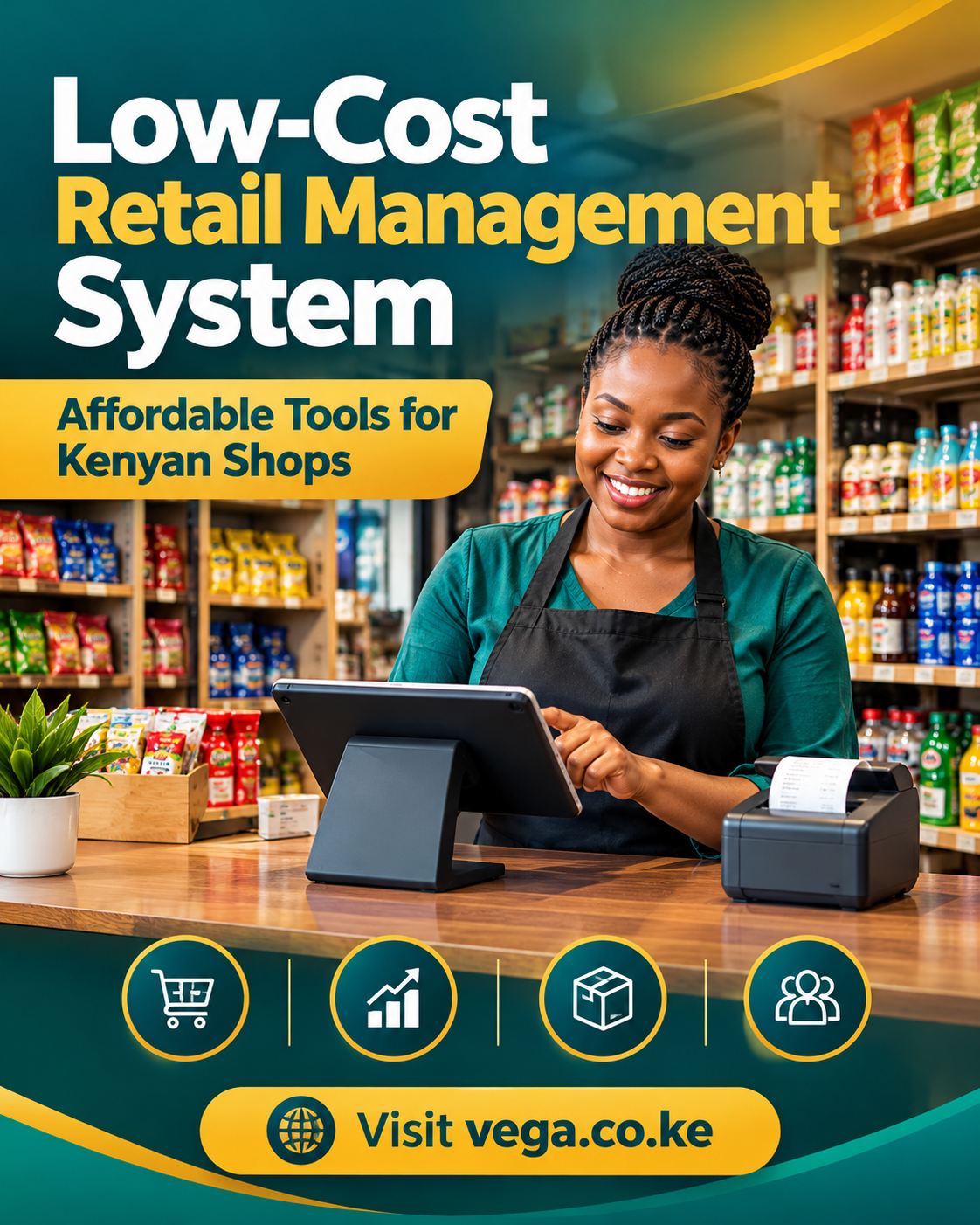
Low-cost retail management system in Kenya is a practical solution for shop owners who want control without overspending. Rent is high. Stock is expensive. Every shilling counts. You need a system that works without draining your capital.
This guide shows you a Low-cost retail management system in Kenya step by step. We cover features, pricing, and common mistakes. By the end, you will know how to find a Low-cost retail management system in Kenya with confidence.
Whether you run a kiosk in Nakuru or a mini-mart in Nairobi, a Low-cost retail management system in Kenya follows the same principles. Many owners overspend on features they never use. Others buy cheap systems that fail during peak hours.
You will learn how to find a Low-cost retail management system in Kenya across different budgets. We also show a Low-cost retail management system in Kenya for different shop types.
The Low-cost retail management system in Kenya includes M-Pesa integration and offline mode. Both are essential for Kenyan retailers. You will see a Low-cost retail management system in Kenya with vega.co.ke supporting your tracking.
The Low-cost retail management system in Kenya also covers eTIMS compliance and reporting. And it shows a Low-cost retail management system in Kenya during peak seasons.
You will understand a Low-cost retail management system in Kenya when your internet is unreliable. And you will see a Low-cost retail management system in Kenya for growing shops.
The Low-cost retail management system in Kenya starts with understanding your needs. It continues with comparing options. And it ends with a system that fits your budget.
You will also learn a Low-cost retail management system in Kenya through real examples. And you will see a Low-cost retail management system in Kenya for total cost of ownership.
Finally, a Low-cost retail management system in Kenya will help you avoid common mistakes. Let us begin.
Why Low-Cost Retail Management Systems Matter in Kenya
Kenyan retailers face unique challenges. Rent is high. Competition is fierce. Customers demand speed and convenience. Manual processes cannot keep up.
A retail management system helps you control these challenges. It records sales. It tracks stock. It manages payments. It generates reports.
But retail management systems can be expensive. Full-featured systems cost hundreds of thousands of shillings. Many small shops cannot afford them.
A Low-cost retail management system in Kenya solves this. You get the essential features without the premium price. You can start small and upgrade as you grow.
Low cost does not mean low quality. It means matching the system to your actual needs. A kiosk does not need a full supermarket setup. A boutique does not need restaurant features.
The right low-cost system gives you control without breaking your budget. It protects your cash. It saves you time. It helps you grow.
What Makes a Retail Management System Low-Cost
Low cost is not just about the purchase price. It is about total cost of ownership. A cheap system that fails often is expensive. A slightly pricier system that works reliably is affordable.
Look at hardware costs. Tablets are cheaper than all-in-one terminals. Basic printers cost less than premium models. You can start with the essentials.
Look at software costs. Monthly subscriptions spread the cost. Annual billing offers discounts. Free tiers exist for very small shops.
Look at support costs. Some vendors include support in the subscription. Others charge extra. Understand what is included.
Look at hidden costs. Internet, consumables, and training add up. Budget for these from the start.
The Low-cost retail management system in Kenya balances all these factors. It gives you value, not just a low price.
Key Features of a Low-Cost Retail Management System
Not all systems are the same. Look for these features when choosing a system.
Sales Recording
The system must record every sale. It should calculate totals automatically. It should print or send receipts.
M-Pesa Integration
M-Pesa is the dominant payment method in Kenya. Your system must handle it smoothly. Manual confirmation slows down checkout.
Inventory Tracking
The system should track stock in real time. Every sale reduces stock. Every delivery increases it. You should see current levels at any moment.
Low-Stock Alerts
The system should alert you when items fall below a set level. This prevents stockouts.
eTIMS Compliance
KRA requires eTIMS for VAT-registered businesses. Your system must generate compliant invoices.
Offline Mode
Internet in Kenya can be unreliable. Your system should work offline. It should record sales locally and sync when connection returns.
Multiple User Logins
Every cashier needs a unique login. This creates accountability. It also protects honest staff.
Reporting
You need reports on daily sales, payment types, and stock movement. These reports guide decisions.
Credit Tracking
If you sell on credit, you need to track who owes what. The system should show balances and payment history.
Multi-Location Support
If you have more than one shop, you need multi-location support. You should see sales and stock for each branch.
The Low-cost retail management system in Kenya includes these features. It gives you complete control.
Step-by-Step: How to Choose a Low-Cost Retail Management System in Kenya
Step 1: Assess Your Current Process
Start by understanding how you manage your shop today. Do you use notebooks? Do you count stock weekly? Do you guess what to order?
Write down your pain points. Where do errors happen? Where do you lose money? Where do you waste time?
Talk to your staff. They see problems you miss. Their input shapes your requirements.
Step 2: Define Your Must-Have Features
Create a list of must-have features. For most Kenyan retailers, this includes M-Pesa integration, eTIMS compliance, and daily sales reports.
Add inventory tracking if you have many products. Add credit tracking if you sell on credit. Add offline mode if your internet is unreliable.
Keep this list short. Focus on solving real problems. Do not get distracted by features you will never use.
Step 3: Set a Realistic Budget
Decide how much you can spend on hardware. Decide how much you can pay monthly for software.
A small kiosk may budget KSh 20,000 for hardware and KSh 1,000 per month for software. A mini-mart may budget KSh 80,000 for hardware and KSh 3,000 per month.
Stick to your budget. Do not let vendors upsell you on features you do not need.
Step 4: Choose a Cloud-Based System
Cloud systems have lower upfront costs. You pay monthly. Updates and backups are included. On-premise systems require a large one-time licence fee.
For small shops with limited capital, cloud is usually better. It preserves cash for stock and rent.
Cloud systems also scale easily. You can add users and tills as you grow. You do not need to buy new licences.
Step 5: Check M-Pesa Integration
M-Pesa is essential for Kenyan retailers. Your system must handle it smoothly.
Look for STK Push integration. It sends a payment prompt to the customer’s phone. The system confirms payment automatically.
Test M-Pesa during the demo. Make a small payment. Confirm that it records correctly. This is essential for a Low-cost retail management system in Kenya.
Step 6: Verify eTIMS Compliance
KRA requires eTIMS for VAT-registered businesses. Your system must be compliant.
Ask the vendor about eTIMS. Is it included? Does it cost extra? Test the compliance features before you buy.
Non-compliance leads to fines. Ensure your system generates compliant invoices.
Step 7: Check Offline Capability
Internet in Kenya can drop. Your system must work offline. It should record sales locally and sync later.
Test offline mode before buying. Disconnect the internet. Make a sale. See what happens. If the system stops, do not buy it.
Offline capability protects your sales. It is essential for any Low-cost retail management system in Kenya.
Step 8: Review Reporting Features
Reports help you make decisions. You need daily sales reports. You need sales by product and payment type.
Ask to see sample reports. Can you see what sells best? Can you see peak hours? Can you see slow movers?
Good reports help you order stock. They show which products to promote. They show when to add more staff.
Step 9: Consider Ease of Use
Your cashiers must use the system daily. If it is complicated, they will make mistakes.
Watch how many steps it takes to complete a sale. Test the interface yourself. Ask your staff to try it.
Simple systems reduce training time. They also speed up checkout.
Step 10: Ask About Support
Support matters when problems appear. Ask about response times. Ask about local technicians. Ask about phone or WhatsApp support.
Poor support turns a cheap system into an expensive problem. Prioritise vendors with strong local support.
Step 11: Request a Trial
Never buy without testing. Ask for a trial period. Use the system in your shop for a few days.
Test it during peak hours. Test offline mode. Test reports. A trial reveals problems that demos hide.
Step 12: Plan Your Setup
Once you choose a system, plan the rollout. Prepare your product list and prices. Train staff before you go live.
Test everything. Run the old and new systems in parallel for a short time if possible. This helps you catch problems.
Affordable Retail Management System Options for Kenyan Shops
Different shops need different systems. Here are affordable options for common shop types.
Kiosks and Dukas
A tablet and basic printer cost KSh 20,000 to KSh 35,000. Software costs KSh 500 to KSh 1,500 per month. This setup handles sales, M-Pesa, and basic reports.
Keep it simple. Do not buy barcode scanners if you have few products.
Boutiques and Fashion Shops
A tablet or laptop with a receipt printer costs KSh 30,000 to KSh 50,000. Software costs KSh 1,500 to KSh 3,000 per month.
Look for size and colour variants. Check product categories. Ensure M-Pesa works smoothly.
Mini-Marts and Groceries
A basic computer or tablet with a barcode scanner costs KSh 50,000 to KSh 80,000. Software costs KSh 2,000 to KSh 5,000 per month.
Prioritise barcode scanning and stock tracking. Check reorder alerts.
Pharmacies and Chemists
A computer with a barcode scanner and receipt printer costs KSh 60,000 to KSh 100,000. Software costs KSh 3,000 to KSh 6,000 per month.
Prioritise batch and expiry tracking. Ensure eTIMS compliance.
Hardware and Building Supplies
A computer with a receipt printer costs KSh 50,000 to KSh 90,000. Software costs KSh 2,000 to KSh 5,000 per month.
Look for bulk sales and credit tracking. Check multiple units of measure.
Salons and Barbershops
A tablet with a receipt printer costs KSh 25,000 to KSh 40,000. Software costs KSh 1,000 to KSh 2,500 per month.
Look for appointment tracking and service lists. Check staff commission features.
Benefits of a Low-Cost Retail Management System in Kenya
Faster Checkout
A retail management system speeds up checkout. Cashiers scan or select items quickly. Totals calculate automatically. Receipts print instantly.
Faster checkout reduces queues. It also increases sales. Customers appreciate the speed.
Accurate Sales Records
Manual records have gaps. Sales are forgotten. Receipts are lost. A system records every sale automatically.
Accurate records help you trust your numbers. You know exactly what you sold. You know your true revenue.
Better Stock Control
A system tracks stock in real time. Every sale reduces stock. Every delivery increases it. You see current levels at any moment.
This prevents stockouts. It also prevents overstocking. You order the right quantities at the right time.
Reduced Theft and Errors
A system links every transaction to a cashier. Voids and refunds are recorded. Patterns become visible. Theft becomes harder to hide.
Errors also decrease. The system calculates totals. It applies prices correctly. This reduces disputes and losses.
Detailed Reports
A system generates reports automatically. You can see daily sales, sales by product, and sales by cashier. You can see peak hours and slow periods.
These reports guide decisions. They show which products to promote. They show which staff need training.
Easier Growth
A system scales with your business. You can add tills, users, and branches. You can maintain central visibility.
Manual systems cannot scale. They break under pressure. A retail management system gives you a repeatable model.
Best Practices for Using a Low-Cost Retail Management System in Kenya
Start with the Essentials
Buy only what you need now. Add hardware and features as you grow. A basic tablet and printer can handle a small shop.
Train Staff Thoroughly
Training is not optional. Staff must know how to process sales, returns, and payments. They must know what to do when something goes wrong.
Reconcile Daily
Count cash at the end of every shift. Compare with the system report. Investigate differences immediately.
Review Reports Weekly
Look at sales, stock, and cash variances. Act on findings. Reports only help if you read them.
Keep Records Clean
Update prices. Remove discontinued items. Standardise names and codes. Clean data makes reports reliable.
Back Up Your Data
Cloud systems back up automatically. But keep local exports too. Test the restore process.
Control User Access
Limit who can adjust prices and process refunds. Use unique logins. Do not share passwords.
Upgrade When Ready
Do not stay on a basic plan if you outgrow it. Upgrade to a higher tier when sales increase.
Common Mistakes to Avoid
Buying on Price Alone
The cheapest system may lack support. It may fail during peak hours. It may not scale. Compare total value, not just price.
Skipping the Trial
Demos are controlled. Real shops are chaotic. A trial reveals how the system handles pressure. Insist on a trial.
Ignoring Offline Mode
Internet drops. If your system stops, you lose sales. Choose a system that works offline.
Forgetting eTIMS Compliance
Non-compliance leads to fines. Ensure your system is eTIMS compliant if you are VAT-registered.
Underestimating Training
Untrained staff make errors. They slow down service. Budget time and money for training.
Not Backing Up Data
Data loss is painful. Choose a system with cloud backup. Test the restore process.
Choosing a System That Cannot Grow
A system that fits today may not fit tomorrow. Ask about scalability. Plan for growth from the start.
Ignoring Support Quality
Support matters when problems appear. Ask about response times. Ask about local technicians.
Mixing Personal and Business Cash
Never mix personal money with business cash. It creates confusion and hides errors.
Not Reconciling Daily
If you do not reconcile daily, errors accumulate. You may not notice shortages. Make it a daily habit.
How vega.co.ke Helps with a Low-Cost Retail Management System in Kenya
A Low-cost retail management system in Kenya becomes easier with vega.co.ke. The platform helps you track sales, cash, and shift data in one place.
With vega.co.ke, you can see sales by product, cashier, and shift. You can spot variances quickly. This supports accountability and better decisions.
vega.co.ke is designed for Kenyan and African businesses. It focuses on clarity and ease of use. You do not need technical expertise.
If you want a Low-cost retail management system in Kenya, start by using vega.co.ke for tracking and reporting. Visit vega.co.ke to see how it can support your retail business.
Sector-Specific Tips
Kiosks and Dukas
Keep it simple. Choose a basic tablet and printer. Focus on M-Pesa integration and daily sales reports. Do not pay for features you will never use.
Mini-Marts and Groceries
Prioritise barcode scanning and stock tracking. Check reorder alerts. Ensure the system handles many products.
Boutiques and Fashion Shops
Look for size and colour variants. Check product categories. Ensure M-Pesa works smoothly.
Pharmacies and Chemists
Prioritise batch and expiry tracking. Check prescription management. Ensure eTIMS compliance.
Hardware and Building Supplies
Look for bulk sales and credit tracking. Check multiple units of measure. Ensure supplier management features.
Restaurants and Cafes
Look for table management and kitchen coordination. Check order splitting and transfers. Ensure M-Pesa works smoothly.
Salons and Barbershops
Look for appointment tracking and service lists. Check staff commission features. Ensure product inventory works.
Frequently Asked Questions
1. What is a low-cost retail management system in Kenya?
It is software that helps you manage sales, stock, and payments affordably. It includes essential features like M-Pesa integration and eTIMS compliance.
2. How much does a retail management system cost in Kenya?
Software costs KSh 500 to KSh 10,000 per month. Hardware costs KSh 20,000 to KSh 100,000. Total first-year cost is KSh 30,000 to KSh 150,000.
3. Can I use a retail management system without internet?
Yes, if it has offline mode. It records sales locally and syncs when connection returns. Test offline mode before buying.
4. Do I need eTIMS compliance for my system?
Yes, if you are VAT-registered. KRA requires eTIMS. Non-compliance leads to fines.
5. What hardware do I need for a low-cost system?
You need a tablet or computer, a receipt printer, and a cash drawer. A barcode scanner is optional for small shops.
6. How long does it take to learn a new system?
Simple systems take a few days. Complex systems take weeks. Training quality matters more than complexity.
7. What if I make a mistake during setup?
Do not worry. Most mistakes are easy to fix. Call support for help. They can guide you through corrections.
8. How can vega.co.ke help my retail shop?
vega.co.ke helps you track sales, cash, and shift data. It gives you visibility into daily operations. Visit vega.co.ke to learn more.
Take Action on a Low-Cost Retail Management System in Kenya
A Low-cost retail management system in Kenya is about value, not just price. You need speed, accuracy, and control without overspending.
Start by assessing your needs. Define must-have features. Set a budget. Check M-Pesa and eTIMS. Test offline mode. Request a trial. Train your staff.
Remember that a Low-cost retail management system in Kenya is an investment, not an expense. A good system reduces theft, speeds up checkout, and gives you accurate data.
Use vega.co.ke to track your sales and cash. Visit vega.co.ke today to explore how it can support your retail business. Take the first step toward better control and higher profit.