Retail Business Automation Software – Complete Guide for Modern Retail Businesses
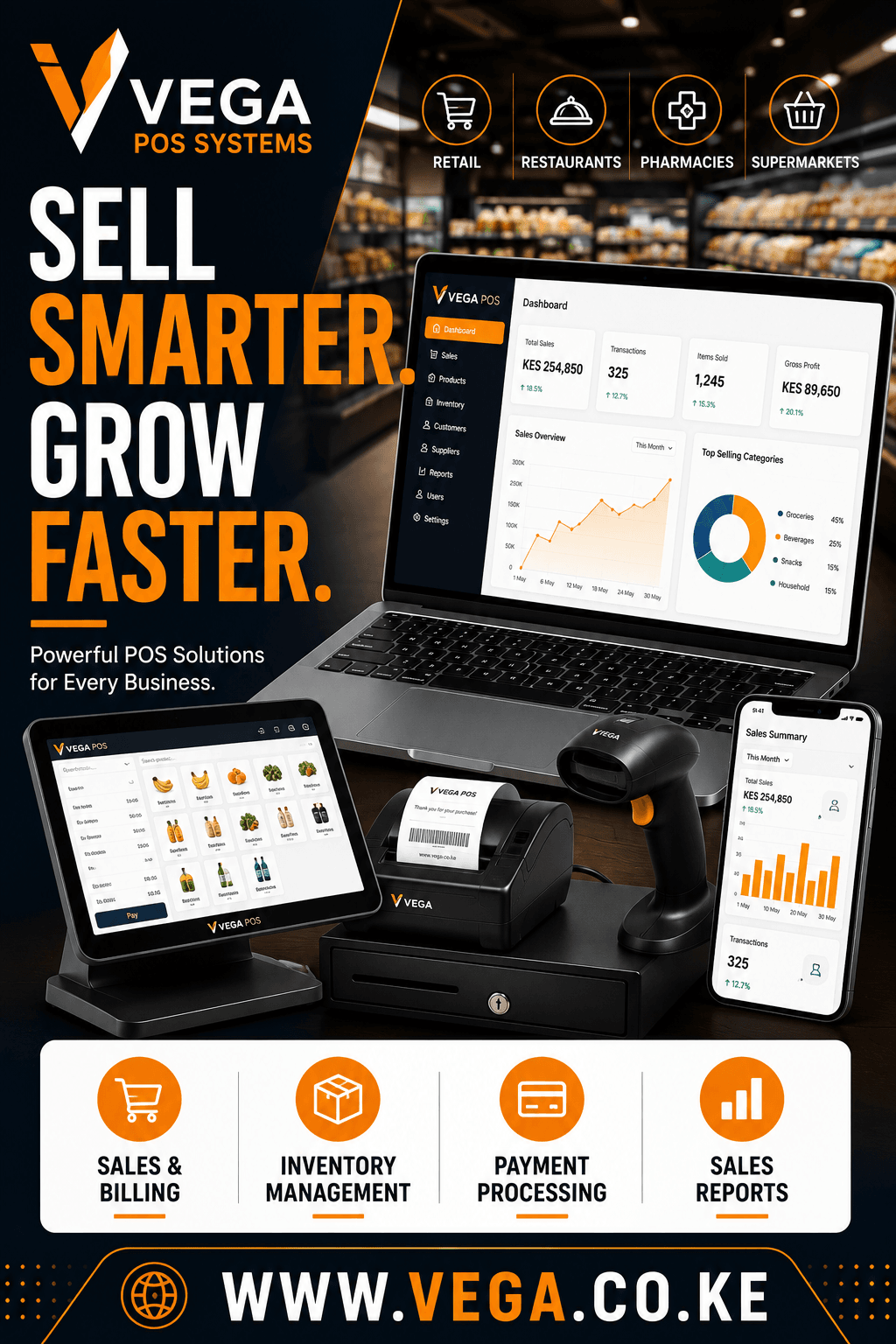
Retail businesses are evolving rapidly as customer expectations, competition, and technology continue to reshape the marketplace. Whether operating a supermarket, pharmacy, hardware store, electronics shop, fashion outlet, wholesale business, convenience store, or multi-branch retail chain, business owners must manage inventory, sales, purchasing, customer service, accounting, supplier relationships, employee performance, and financial reporting efficiently. As operations become more complex, manual processes can no longer support sustainable business growth.
Retail Business Automation Software provides a centralized digital platform that automates day-to-day retail operations while improving productivity, accuracy, and profitability. Instead of relying on spreadsheets, handwritten records, disconnected software, and repetitive administrative work, retailers can manage every business function from one integrated solution.
Automation transforms the way retail businesses operate.
Sales transactions are processed instantly.
Inventory updates occur automatically.
Purchase orders are generated efficiently.
Customer records remain organized.
Supplier management becomes streamlined.
Financial reports are always available.
Managers gain complete operational visibility across every department.
As Kenya’s retail sector continues expanding, businesses require technology capable of supporting growth while maintaining operational efficiency.
A modern Retail Business Automation Software solution enables organizations to reduce manual work, improve customer experiences, strengthen financial control, and make better business decisions using accurate real-time information.
Automation also improves inventory accuracy.
Every sale updates stock levels immediately.
Reorder alerts prevent stock shortages.
Slow-moving inventory becomes easier to identify.
Businesses maintain optimal stock levels while minimizing unnecessary inventory costs.
Financial management benefits as well.
Revenue, expenses, profitability, purchasing, stock valuation, supplier balances, customer accounts, and business performance remain visible through real-time dashboards.
Decision-makers no longer wait for manually prepared reports before responding to changing market conditions.
Customer satisfaction improves significantly.
Faster checkout processes, accurate pricing, reliable inventory availability, loyalty programs, and better customer service contribute to stronger customer relationships and increased repeat business.
Whether managing one retail outlet or multiple branches across Kenya, Retail Business Automation Software provides the operational foundation necessary for long-term business success.
Organizations improve efficiency, reduce costs, strengthen operational control, increase profitability, and create scalable systems capable of supporting continued expansion.
Table of Contents
- Understanding Retail Business Automation Software
- Why Retail Automation Matters
- Core Features of Retail Business Automation Software
- Sales and Point of Sale Automation
- Inventory and Stock Management Automation
- Customer and Supplier Management
- Reporting and Business Intelligence
- Challenges of Manual Retail Operations
Understanding Retail Business Automation Software
Retail businesses perform hundreds of operational activities every day.
Products are purchased.
Inventory is received.
Sales transactions are processed.
Customers are served.
Suppliers are paid.
Employees perform daily tasks.
Financial records are updated.
Managers monitor business performance.
When these activities are managed manually, administrative workloads increase while operational accuracy declines.
A Retail Business Automation Software solution centralizes every retail process within one integrated system.
Sales, inventory, purchasing, accounting, customer management, supplier administration, reporting, pricing, promotions, and operational monitoring remain connected through one secure platform.
This integration eliminates duplicate data entry while improving operational consistency.
Managers access accurate information immediately.
Departments collaborate more efficiently.
Business processes become standardized.
Historical records remain organized.
As retail businesses throughout Kenya continue expanding, centralized automation provides the operational infrastructure needed to maintain efficiency while supporting long-term growth.
Why Retail Automation Matters
Modern retail businesses operate within highly competitive environments.
Customers expect fast service, accurate pricing, product availability, multiple payment options, and professional customer experiences.
Manual operations often struggle to meet these expectations.
A Retail Business Automation Software platform automates repetitive operational activities while improving overall business performance.
Sales processing becomes faster.
Inventory updates occur automatically.
Purchase planning improves.
Customer information remains organized.
Financial reporting becomes immediate.
Automation also reduces operational costs.
Employees spend less time performing repetitive administrative work while focusing more on customer service and business development.
Decision-making improves considerably because managers receive real-time operational information rather than delayed manual reports.
Business scalability also becomes much easier.
As organizations open additional branches, standardized automated workflows maintain consistency across every location.
For retail businesses throughout Kenya, automation supports profitability, operational excellence, and sustainable expansion.
Core Features of Retail Business Automation Software
Modern retail management platforms combine numerous operational capabilities within one integrated solution.
Point of sale management processes transactions efficiently.
Inventory control tracks stock movement automatically.
Purchasing management simplifies procurement.
Supplier administration strengthens vendor relationships.
Customer management improves service delivery.
Barcode support increases transaction speed.
Pricing management controls product pricing.
Promotional management supports marketing campaigns.
Employee management strengthens operational oversight.
Financial reporting provides business intelligence.
Operational dashboards provide real-time visibility.
A Retail Business Automation Software platform integrates these capabilities into one centralized environment, allowing every department to operate using consistent and accurate information.
Sales and Point of Sale Automation
Efficient sales processing forms the foundation of successful retail operations.
Modern point of sale automation enables cashiers to complete transactions quickly while maintaining pricing accuracy and inventory synchronization.
A Retail Business Automation Software platform records every transaction automatically.
Inventory updates immediately after each sale.
Receipts are generated instantly.
Customer purchase history remains available.
Multiple payment methods can be processed efficiently.
Sales returns and exchanges follow standardized workflows.
Branch managers monitor transaction performance continuously.
Operational dashboards display sales volumes, revenue, popular products, cashier performance, and customer activity in real time.
Automation reduces checkout waiting times while improving customer satisfaction and operational productivity.
Inventory and Stock Management Automation
Inventory represents one of the largest investments within retail businesses.
Poor inventory management leads to stock shortages, excess inventory, lost sales, and reduced profitability.
A Retail Business Automation Software solution automates stock management by monitoring inventory movement continuously.
Every purchase, sale, transfer, return, adjustment, and stock receipt updates inventory records automatically.
Managers receive low-stock alerts before products become unavailable.
Reorder levels support purchasing decisions.
Stock valuation remains accurate.
Warehouse management improves.
Inventory reports provide complete visibility into product performance.
Businesses reduce inventory losses while maintaining optimal stock availability.
Automation strengthens operational control while improving profitability.
Customer and Supplier Management
Strong business relationships support sustainable retail growth.
Customer records help improve service quality while supplier management strengthens procurement efficiency.
A Retail Business Automation Software platform centralizes customer and supplier information within one integrated database.
Customer purchase history remains accessible.
Credit limits are monitored.
Loyalty programs improve retention.
Supplier performance becomes measurable.
Purchase history supports procurement planning.
Outstanding balances remain visible.
Communication improves because departments access consistent information.
Businesses strengthen relationships while improving operational efficiency.
Reporting and Business Intelligence
Successful retailers require reliable information to support decision-making.
Operational dashboards transform business data into actionable intelligence.
A Retail Business Automation Software platform provides real-time reporting covering sales performance, inventory valuation, purchasing trends, profitability, customer activity, supplier performance, employee productivity, and financial health.
Historical reports support budgeting, forecasting, pricing decisions, expansion planning, marketing strategies, and operational improvement.
Managers identify opportunities and operational challenges quickly using accurate business intelligence.
Better information leads to better business decisions.
Challenges of Manual Retail Operations
Many retail businesses continue relying on spreadsheets, handwritten records, disconnected accounting software, manual inventory counts, and paper-based administrative processes.
Although these approaches may appear manageable during early business growth, they become increasingly inefficient as operations expand.
Manual sales processing slows customer service.
Inventory inaccuracies increase.
Purchasing decisions become less reliable.
Financial reporting requires significant administrative effort.
Operational visibility declines.
Decision-making suffers because managers lack access to timely business information.
Administrative costs continue increasing.
Business growth becomes more difficult to manage.
A Retail Business Automation Software platform addresses these challenges by centralizing operations, automating repetitive workflows, improving reporting, strengthening inventory control, increasing operational accuracy, and supporting scalable business growth.
For supermarkets, wholesalers, pharmacies, electronics retailers, hardware stores, fashion businesses, convenience stores, and multi-branch retail organizations throughout Kenya, adopting modern automation technology has become an essential investment for improving profitability, customer satisfaction, operational efficiency, and long-term business success.
Benefits for Business Owners
Retail businesses operate in an increasingly competitive environment where profitability depends on speed, efficiency, customer satisfaction, and effective decision-making. Business owners must monitor sales performance, inventory levels, purchasing activities, supplier relationships, employee productivity, customer behavior, and financial performance while ensuring daily operations run smoothly. As retail operations expand across multiple branches, managing these responsibilities manually becomes increasingly difficult.
One of the greatest advantages of Retail Business Automation Software is the ability to centralize every operational process within one secure digital platform. Instead of relying on spreadsheets, paper records, disconnected applications, manual calculations, and repetitive administrative work, business owners gain complete visibility into every aspect of their operations from one integrated dashboard.
This centralized approach significantly improves operational efficiency.
Sales transactions update instantly.
Inventory adjusts automatically.
Purchase orders follow predefined workflows.
Customer records remain synchronized.
Financial information updates in real time.
Managers no longer waste valuable hours consolidating information from different departments before making business decisions.
Another important benefit is improved business visibility.
Interactive dashboards provide real-time insights into daily sales, product performance, branch revenue, gross profit, stock movement, supplier balances, customer purchases, employee productivity, and financial performance.
Business owners immediately identify declining sales, stock shortages, slow-moving inventory, pricing inconsistencies, purchasing inefficiencies, and operational bottlenecks before they affect profitability.
Retail Business Automation Software also strengthens strategic planning.
Historical business information enables owners to evaluate seasonal trends, customer purchasing patterns, inventory turnover, supplier performance, branch comparisons, and long-term profitability.
Reliable operational intelligence supports informed investment decisions while reducing business risks.
Financial control improves substantially.
Revenue, expenses, purchasing costs, stock valuation, profit margins, and cash flow remain continuously visible.
Decision-makers respond more quickly to changing market conditions because accurate business information is always available.
For retailers throughout Kenya, digital automation strengthens operational control while supporting sustainable long-term business growth.
Benefits for Store Managers and Supervisors
Store managers coordinate daily retail operations while ensuring customer service, inventory availability, employee productivity, merchandising, purchasing, and financial performance remain consistent.
Manual operational management often requires excessive paperwork, manual reporting, physical stock verification, and repetitive administrative tasks.
A Retail Business Automation Software platform simplifies these responsibilities by providing managers with complete operational visibility.
Real-time dashboards display current sales, inventory availability, pending purchase orders, stock transfers, supplier deliveries, cashier performance, customer transactions, and operational alerts.
Managers immediately identify issues requiring attention.
Inventory shortages become visible before products run out.
Pricing inconsistencies can be corrected quickly.
Cashier performance becomes measurable.
Supplier deliveries remain trackable.
Operational planning also improves significantly.
Managers schedule staff more effectively using accurate business information.
Inventory replenishment becomes proactive rather than reactive.
Business decisions become faster because operational data remains continuously updated.
Communication between departments improves because sales, inventory, purchasing, finance, and warehouse teams all work from one centralized platform.
Historical operational reports also provide valuable insights.
Managers evaluate employee productivity, sales performance, branch efficiency, stock movement, and purchasing effectiveness using reliable information.
For retail organizations operating throughout Kenya, automation enables store managers to improve operational performance while maintaining consistent customer experiences.
Benefits for Employees
Retail employees perform numerous operational activities each day including processing sales, receiving inventory, serving customers, updating stock records, handling returns, processing payments, and maintaining product displays.
Manual systems often require repetitive paperwork, manual calculations, duplicate data entry, and time-consuming administrative work.
A Retail Business Automation Software platform significantly improves employee productivity by automating routine operational tasks.
Cashiers process transactions faster.
Inventory personnel update stock automatically using barcode scanning.
Warehouse staff monitor inventory movement digitally.
Sales representatives access accurate product information instantly.
Finance personnel eliminate repetitive manual calculations.
Automation reduces operational errors while allowing employees to focus more on serving customers and improving business performance.
Training new employees also becomes easier because standardized workflows guide daily operations.
Every department follows consistent procedures supported by centralized business information.
Communication improves because employees work from the same operational data.
Responsibility becomes clearer.
Performance measurement becomes more objective.
For businesses throughout Kenya, automation creates a more productive workplace while improving employee efficiency and operational consistency.
Benefits for Customers
Customer satisfaction remains one of the most important factors influencing retail success.
Modern customers expect fast checkout, accurate pricing, reliable inventory availability, flexible payment options, professional service, and personalized shopping experiences.
Manual retail operations frequently struggle to meet these expectations.
A Retail Business Automation Software solution significantly improves the customer experience.
Sales transactions are completed faster.
Barcode scanning improves checkout efficiency.
Pricing remains accurate across all sales channels.
Inventory availability improves because stock updates occur automatically.
Customers are less likely to encounter unavailable products or pricing discrepancies.
Customer information also remains organized.
Purchase histories support personalized service.
Loyalty programs reward repeat customers.
Digital receipts improve transaction convenience.
Returns and exchanges follow standardized procedures.
Customer inquiries are resolved faster because staff access accurate information immediately.
Consistent service delivery strengthens customer confidence while encouraging repeat business.
For retailers throughout Kenya, improved customer experiences contribute directly to stronger brand loyalty, increased revenue, and long-term business success.
Improving Operational Efficiency Through Automation
Traditional retail operations require considerable administrative effort.
Employees prepare manual reports, update spreadsheets, count inventory physically, reconcile sales manually, process purchase orders, verify supplier deliveries, calculate stock balances, and prepare financial summaries.
These repetitive activities consume valuable business resources while increasing operational costs.
A Retail Business Automation Software platform automates many routine retail activities.
Sales processing updates inventory immediately.
Purchase orders follow automated workflows.
Supplier deliveries update stock automatically.
Financial reports generate instantly.
Inventory transfers synchronize across locations.
Operational dashboards remain continuously updated.
Automation significantly reduces administrative workloads.
Managers spend less time compiling reports while focusing more on customer service, inventory planning, marketing, staff development, and business growth.
Operational accuracy also improves considerably.
Standardized workflows reduce duplicate records, pricing errors, inventory discrepancies, purchasing mistakes, and reporting inconsistencies.
Real-time reporting eliminates delays associated with manually prepared summaries.
Business leaders always access current operational information.
Automation further improves collaboration because sales, purchasing, warehouse, finance, inventory, and management departments operate using one integrated business platform.
For retailers throughout Kenya, automation transforms complex retail management into an efficient, reliable, and scalable operational process.
Business Governance, Security, and Risk Management
Successful retail organizations depend upon secure operational systems supported by reliable business controls.
A Retail Business Automation Software platform strengthens governance by maintaining complete records for every operational activity performed within the business.
Role-based user permissions protect sensitive business information while allowing authorized employees to access relevant operational data.
Comprehensive audit trails record every sales transaction, inventory adjustment, purchase order, supplier payment, stock transfer, customer transaction, pricing update, and financial adjustment.
Historical records remain available for audits, financial reviews, inventory verification, taxation, compliance inspections, and management reporting.
Risk management also improves significantly.
Managers identify unusual inventory losses, declining profitability, pricing inconsistencies, purchasing irregularities, supplier performance issues, employee exceptions, and operational inefficiencies before they affect business performance.
Business continuity strengthens because centralized digital information remains secure and accessible.
For retailers throughout Kenya, improved governance supports accountability while reducing financial and operational risks.
Why Vega Is the Ideal Solution
Vega has been developed specifically to simplify retail management by integrating point of sale operations, inventory management, purchasing, supplier administration, customer management, financial reporting, barcode processing, stock control, business intelligence, and operational automation within one comprehensive cloud-based platform.
Unlike standalone retail applications, Vega provides a complete business management solution that supports every department from one centralized environment.
A Retail Business Automation Software solution delivers maximum value when every retail operation functions together seamlessly.
Vega combines sales management, inventory automation, purchasing workflows, customer relationship management, supplier administration, employee monitoring, branch management, reporting, analytics, and financial dashboards into one secure platform.
Business owners gain complete operational visibility.
Store managers improve productivity.
Employees work more efficiently.
Customers receive faster and more reliable service.
Whether operating a single retail outlet or managing a nationwide chain of supermarkets, pharmacies, wholesalers, hardware stores, electronics retailers, fashion outlets, convenience stores, or specialty shops, Vega provides scalable technology capable of supporting continuous business growth.
For retail businesses throughout Kenya, Vega delivers a comprehensive automation platform that improves profitability, strengthens operational control, enhances customer satisfaction, and supports long-term business success.
Future Trends
Retail automation continues evolving through advances in artificial intelligence, cloud computing, predictive analytics, machine learning, smart inventory management, self-service technologies, and digital commerce.
Artificial intelligence will increasingly assist retailers by forecasting demand, predicting purchasing behavior, optimizing pricing strategies, identifying inventory risks, and recommending business improvements automatically.
Cloud-based retail management platforms will continue improving accessibility while supporting centralized operations across multiple branches.
A Retail Business Automation Software solution will increasingly integrate with e-commerce platforms, mobile payment systems, accounting software, customer loyalty platforms, supplier portals, warehouse technologies, and business intelligence tools.
Advanced analytics will provide deeper visibility into customer behavior, inventory performance, profitability, employee productivity, marketing effectiveness, and operational efficiency.
Retail businesses throughout Kenya that embrace modern automation technology will remain better positioned to compete while delivering exceptional customer experiences.
Getting Started
Implementing a modern retail automation platform begins with reviewing existing business processes and identifying operational improvement opportunities.
Business owners should assess sales operations, inventory management, purchasing workflows, supplier administration, customer service procedures, reporting requirements, employee responsibilities, and financial management practices.
Following this assessment, operational workflows are configured according to business requirements.
Historical inventory records, product catalogs, supplier information, customer databases, pricing structures, sales history, and financial information can be migrated where necessary.
User permissions are established for business owners, managers, cashiers, warehouse personnel, finance teams, purchasing officers, and administrators.
Comprehensive employee training ensures every department understands sales processing, inventory management, purchasing, reporting, customer administration, and operational workflows.
Continuous performance monitoring after implementation enables organizations to optimize business operations while improving profitability.
For retailers seeking comprehensive automation capabilities, Vega provides integrated solutions covering point of sale management, inventory control, purchasing, customer management, supplier administration, reporting, business intelligence, financial analytics, barcode processing, and complete retail management.
By implementing Retail Business Automation Software, retail businesses throughout Kenya can improve operational efficiency, automate repetitive business processes, strengthen inventory control, increase profitability, enhance customer satisfaction, support informed decision-making, and establish a scalable operational foundation capable of supporting sustainable long-term business growth.