 Vega
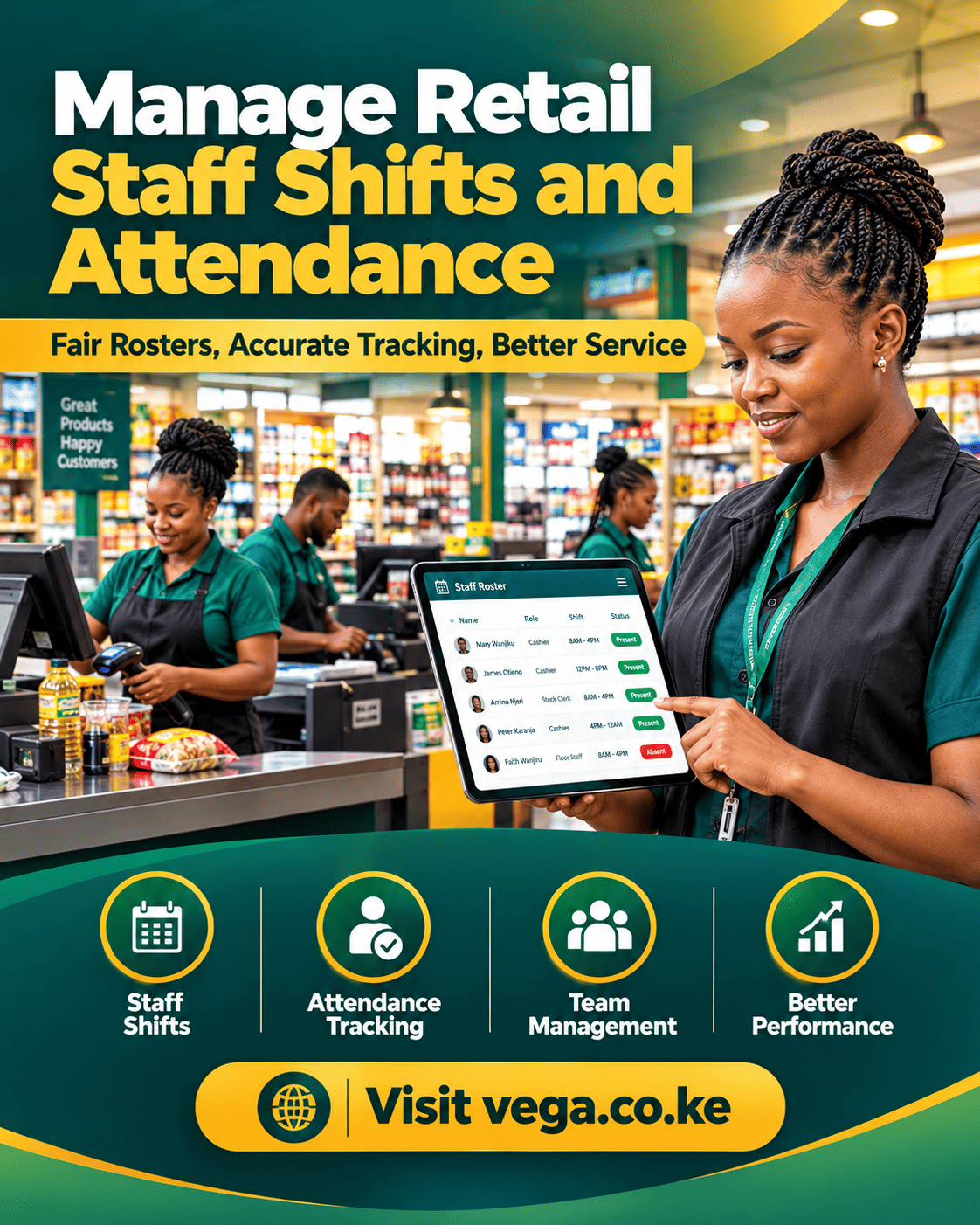
Best way to manage retail staff shifts and attendance is one of the most important skills for any Kenyan retail owner. Staff are your biggest cost. They are also your biggest asset. How you schedule them affects sales, service, and morale.
This guide shows you the Best way to manage retail staff shifts and attendance step by step. We cover rosters, attendance tracking, peak planning, and common mistakes. By the end, you will know the Best way to manage retail staff shifts and attendance with confidence.
Whether you run a kiosk in Nakuru or a supermarket in Nairobi, the Best way to manage retail staff shifts and attendance follows the same principles. Many owners schedule by habit. That leads to understaffing during peaks and overstaffing during quiet hours.
You will learn the Best way to manage retail staff shifts and attendance across different business sizes. We also show the Best way to manage retail staff shifts and attendance for different shop types.
The Best way to manage retail staff shifts and attendance includes clear rosters, shift-based tracking, and attendance reports. You will see the Best way to manage retail staff shifts and attendance with vega.co.ke supporting your tracking.
The Best way to manage retail staff shifts and attendance also covers fairness and staff welfare. And it shows the Best way to manage retail staff shifts and attendance during peak seasons.
You will understand the Best way to manage retail staff shifts and attendance when you have multiple cashiers. And you will see the Best way to manage retail staff shifts and attendance for multi-branch operations.
The Best way to manage retail staff shifts and attendance starts with understanding your sales pattern. It continues with building fair rosters. And it ends with accurate attendance records.
You will also learn the Best way to manage retail staff shifts and attendance through real examples. And you will see the Best way to manage retail staff shifts and attendance for total value.
Finally, the Best way to manage retail staff shifts and attendance will help you avoid common mistakes. Let us begin.
Why Managing Shifts and Attendance Matters in Retail
Retail runs on people. Cashiers, supervisors, and storekeepers keep your shop running. If they are not present, sales suffer. If they are poorly scheduled, service suffers.
Poor shift management causes many problems. Understaffing during peaks means long queues and lost sales. Overstaffing during quiet hours wastes money.
Attendance problems also hurt. Late arrivals disrupt handovers. Absenteeism leaves gaps. Frequent absences create resentment among staff who always show up.
The Best way to manage retail staff shifts and attendance solves these problems. It ensures the right staff are present at the right times. It creates fairness. It reduces disputes.
Good shift management also improves staff morale. When schedules are fair and predictable, staff feel respected. They are more likely to stay. This reduces turnover and training costs.
The Real Cost of Poor Shift and Attendance Management
Poor shift management costs money in several ways. The first is lost sales. Understaffed peaks mean long queues and abandoned purchases.
The second is excess labour cost. Overstaffed quiet hours waste wages. You pay staff to stand around.
The third is errors. Tired or rushed staff make mistakes. Wrong change. Wrong prices. Wrong payment types. These errors cost money.
The fourth is turnover. Staff who face unfair schedules leave. Replacing them costs recruitment and training. It also disrupts service.
The fifth is disputes. Without clear records, attendance disputes arise. You cannot prove lateness. You cannot prove absence. Arguments waste time and damage trust.
The Best way to manage retail staff shifts and attendance removes these costs. It gives you control and clarity.
Understanding Retail Shift Patterns in Kenya
Retail shift patterns vary by shop type and location. Understanding your pattern is the first step.
Supermarkets often run long hours. They need morning, afternoon, and evening shifts. Some run night shifts for restocking.
Restaurants have meal-time peaks. Lunch and dinner rushes need more staff. Mid-afternoon and late evening are quieter.
Pharmacies follow clinic hours. They are busy when nearby clinics close. They may need extra staff at those times.
Hardware shops peak during construction seasons. They may need more staff on weekdays than weekends.
Small kiosks may operate with one or two people. Shifts are simpler but still need planning.
The Best way to manage retail staff shifts and attendance matches shifts to your specific pattern. It does not copy another shop’s schedule.
Step-by-Step: Best Way to Manage Retail Staff Shifts and Attendance
Step 1: Map Your Sales Pattern
Start by understanding when customers come. Use your sales records. Look at hourly, daily, and weekly patterns.
Identify your peak hours. These are the times you need the most staff. Identify quiet hours. These are the times you can reduce staff.
Look at seasonal patterns too. Month-end is busier. Holidays are busier. Some products sell only in certain seasons.
This data shapes your roster. The Best way to manage retail staff shifts and attendance starts with understanding your pattern.
Step 2: Decide How Many Staff You Need
Based on your sales pattern, decide how many staff you need at each time. More tills need more cashiers. Peak hours need more support.
Consider supervisors. You need at least one supervisor on duty at all times. They approve voids and refunds. They handle customer complaints.
Consider storekeepers. Deliveries need someone to receive stock. Restocking needs someone to move items.
The Best way to manage retail staff shifts and attendance matches staffing to workload.
Step 3: Build a Fair Roster
A fair roster is the foundation. Publish it at least one week in advance. Include names, shifts, break times, and days off.
Rotate unpopular shifts fairly. Track who worked last weekend. Track who worked last holiday. Balance the load.
Give staff a way to request changes early. Allow reasonable swaps. Communicate changes respectfully.
When staff see fairness, they trust the system. The Best way to manage retail staff shifts and attendance becomes easier because they cooperate.
Step 4: Use Shift-Based Tracking
Every shift should have a clear start and end. Every staff member should log in at shift start. They should log out at shift end.
This creates a record. You know who was present. You know when they arrived. You know when they left.
Shift-based tracking also links sales to staff. You see which cashier processed which sale. This supports accountability.
The Best way to manage retail staff shifts and attendance relies on accurate shift records.
Step 5: Track Attendance Daily
Attendance tracking is essential. Note who arrives on time. Note who is late. Note who is absent.
Use a sign-in sheet or a digital system. Digital systems are better. They record time automatically. They reduce disputes.
Review attendance weekly. Look for patterns. One person may be consistently late. Another may have frequent absences. Address issues early.
The Best way to manage retail staff shifts and attendance includes daily attendance records.
Step 6: Set Clear Attendance Rules
Rules prevent disputes. Write down your attendance policy. Include start times, break times, and lateness rules.
Explain what happens when someone is late. Explain what happens when someone is absent without notice.
Share the policy with every staff member. Ask them to sign that they have read it. Keep a copy in the staff room.
Clear rules make the Best way to manage retail staff shifts and attendance fair and consistent.
Step 7: Handle Lateness and Absence Fairly
When someone is late, address it immediately. Do not ignore it. Do not wait until review time.
Talk to the person privately. Ask why they were late. Listen to their explanation. Apply consequences consistently.
For absence, follow your policy. If someone is sick, ask for proof. If someone is absent without notice, follow disciplinary steps.
Fair handling builds trust. The Best way to manage retail staff shifts and attendance requires consistency.
Step 8: Plan for Peaks and Seasons
Peaks need more staff. Plan ahead. Do not wait until the rush begins.
For month-end, add extra cashiers. For holidays, extend shifts. For promotions, bring in additional support.
Communicate peak plans early. Staff can prepare. They can arrange transport and family duties.
Peak planning is essential for the Best way to manage retail staff shifts and attendance.
Step 9: Manage Breaks Properly
Breaks are required by law. They also improve performance. Tired staff make mistakes.
Stagger breaks so not everyone is away at once. Ensure someone covers the till during breaks.
Track break times. Ensure staff take their full break. Ensure they return on time.
Proper break management supports the Best way to manage retail staff shifts and attendance.
Step 10: Use Technology to Track Shifts and Attendance
Technology makes tracking easier. A POS with shift tracking records logins and logouts. It links sales to staff. It generates attendance reports.
Use a simple app or system. Train staff on how to use it. Ensure they log in and out correctly.
Technology reduces paperwork. It also improves accuracy. The Best way to manage retail staff shifts and attendance is easier with the right tools.
Step 11: Review Performance Regularly
Review shift performance monthly. Look at sales per shift. Look at attendance. Look at errors.
Identify top performers. Recognise them. Identify struggling staff. Coach them.
Use data to improve schedules. Adjust staffing where needed. The Best way to manage retail staff shifts and attendance is an ongoing process.
Step 12: Communicate Changes Early
When you change a shift, tell affected staff as early as possible. Explain why. Listen to concerns. Offer options if possible.
Early communication shows respect. It reduces absences and resignations. It keeps the team stable.
Good communication is part of the Best way to manage retail staff shifts and attendance.
Best Practices for Managing Retail Staff Shifts and Attendance
Publish Rosters Early
Publish rosters at least one week in advance. Two weeks is better. Staff need time to plan.
Early rosters reduce confusion. They also reduce last-minute requests. They show respect for staff time.
Rotate Unpopular Shifts Fairly
Weekends, holidays, and night shifts are unpopular. Rotate them fairly. Track who worked them last.
Fair rotation reduces resentment. It builds trust. It supports the Best way to manage retail staff shifts and attendance.
Keep Accurate Records
Record every shift. Record every attendance issue. Keep records for at least one year.
Accurate records protect you during disputes. They also help you spot patterns.
Train Supervisors on Shift Management
Supervisors manage shifts daily. Train them on rostering, attendance tracking, and dispute handling.
Well-trained supervisors reduce your workload. They also improve consistency. The Best way to manage retail staff shifts and attendance depends on good supervisors.
Use Unique Logins
Every staff member needs a unique login. This creates accountability. It also links sales to individuals.
Unique logins prevent fraud. They also make attendance tracking easier. The Best way to manage retail staff shifts and attendance requires clear identity.
Respect Labour Laws
Kenyan labour laws require rest periods and reasonable hours. Respect these rules. They protect your staff and your business.
Compliance avoids fines. It also builds your reputation as a good employer.
Reward Good Attendance
Recognise staff with perfect attendance. Small rewards go a long way. They motivate others.
Rewards improve attendance. They support the Best way to manage retail staff shifts and attendance.
Handle Absences Quickly
When someone is absent, find cover quickly. Do not let the shift suffer. Have a list of staff who can cover.
Quick cover reduces disruption. It keeps service running.
Review and Improve
Review your shift system monthly. Ask staff for feedback. Adjust as needed.
Continuous improvement keeps your system fair and effective. The Best way to manage retail staff shifts and attendance is never finished.
Common Mistakes to Avoid
Scheduling by Habit
Do not schedule based on habit. Use sales data. Your busiest hours may have changed.
Habit-based scheduling causes understaffing and overstaffing. Use data instead.
Ignoring Peak Hours
Peaks need more staff. Ignoring this causes queues and lost sales. Plan for peaks.
Publishing Rosters Late
Late rosters cause confusion. Staff cannot plan. They may not show up. Publish early.
Not Tracking Attendance
Without records, you cannot manage attendance. You cannot prove lateness or absence. Track daily.
Ignoring Lateness
Ignoring lateness encourages more of it. Address it immediately. Apply rules consistently.
Being Unfair
Favouritism destroys morale. Rotate shifts fairly. Apply rules to everyone.
Skipping Breaks
Breaks are required. Skipping them causes fatigue and errors. Ensure staff take breaks.
Not Communicating Changes
Last-minute changes disrupt lives. Communicate early. Explain why. Listen to concerns.
Not Using Technology
Manual tracking is slow and error-prone. Use a system. It saves time and improves accuracy.
Failing to Review Performance
Review monthly. Look at data. Improve continuously. Do not let problems grow.
How vega.co.ke Helps with the Best Way to Manage Retail Staff Shifts and Attendance
The Best way to manage retail staff shifts and attendance becomes easier with vega.co.ke. The platform helps you track sales, cash, and shift data in one place.
With vega.co.ke, you can see sales by cashier and shift. You can spot attendance patterns. You can identify training needs.
vega.co.ke is designed for Kenyan and African businesses. It focuses on clarity and ease of use. You do not need technical expertise.
If you want the Best way to manage retail staff shifts and attendance, start by tracking properly. Visit vega.co.ke to see how it can support your retail business.
Sector-Specific Tips
Supermarkets and Mini-Marts
Use shift-based tracking. Open more tills during peaks. Rotate weekend shifts fairly. Track attendance daily.
Restaurants and Cafes
Align shifts with meal times. Stagger breaks. Train staff on speed. Track attendance carefully.
Pharmacies and Chemists
Ensure trained staff on every shift. Track attendance tightly. Accuracy matters.
Hardware and Building Supplies
Plan for construction seasons. Add staff during peaks. Track attendance.
Salons and Barbershops
Use appointment systems. Track staff hours. Manage commissions.
Wholesale and Distribution
Plan for delivery days. Add staff for loading. Track attendance.
Small Kiosks and Dukas
Keep it simple. Use a basic roster. Track attendance in a notebook. Be fair.
Frequently Asked Questions
1. What is the best way to manage retail staff shifts?
Map your sales pattern. Build fair rosters. Publish early. Use shift-based tracking. Handle lateness consistently.
2. How do I track staff attendance?
Use a sign-in sheet or a digital system. Record arrival and departure times. Review weekly. Address issues early.
3. How many staff do I need per shift?
It depends on your sales volume. More tills need more cashiers. Peaks need more support. Use sales data to decide.
4. How do I handle staff who are always late?
Talk to them privately. Ask why. Apply consequences consistently. Document every instance.
5. How do I keep staff happy with their shifts?
Rotate unpopular shifts fairly. Publish rosters early. Allow reasonable swaps. Listen to concerns.
6. How can technology help with shift management?
Technology tracks logins, attendance, and sales by shift. It reduces paperwork. It improves accuracy.
7. What labour laws apply to retail shifts?
Kenyan labour laws require rest periods and reasonable hours. Respect these rules. They protect your staff and business.
8. How can vega.co.ke help with shift management?
vega.co.ke helps you track sales, cash, and shift data. It shows you attendance patterns. Visit vega.co.ke to learn more.
Take Action on the Best Way to Manage Retail Staff Shifts and Attendance
The Best way to manage retail staff shifts and attendance is a practical skill. It reduces costs. It improves service. It builds morale.
Start by mapping your sales pattern. Decide staffing needs. Build fair rosters. Publish early. Track attendance daily. Handle issues consistently. Plan for peaks. Use technology. Review performance monthly.
Remember that the Best way to manage retail staff shifts and attendance is a habit. Small consistent actions create big results. Fair schedules and accurate records build a stronger team.
Use vega.co.ke to track your sales and shift data. Visit vega.co.ke today to explore how it can support your retail business. Take the first step toward better staffing and higher profit.