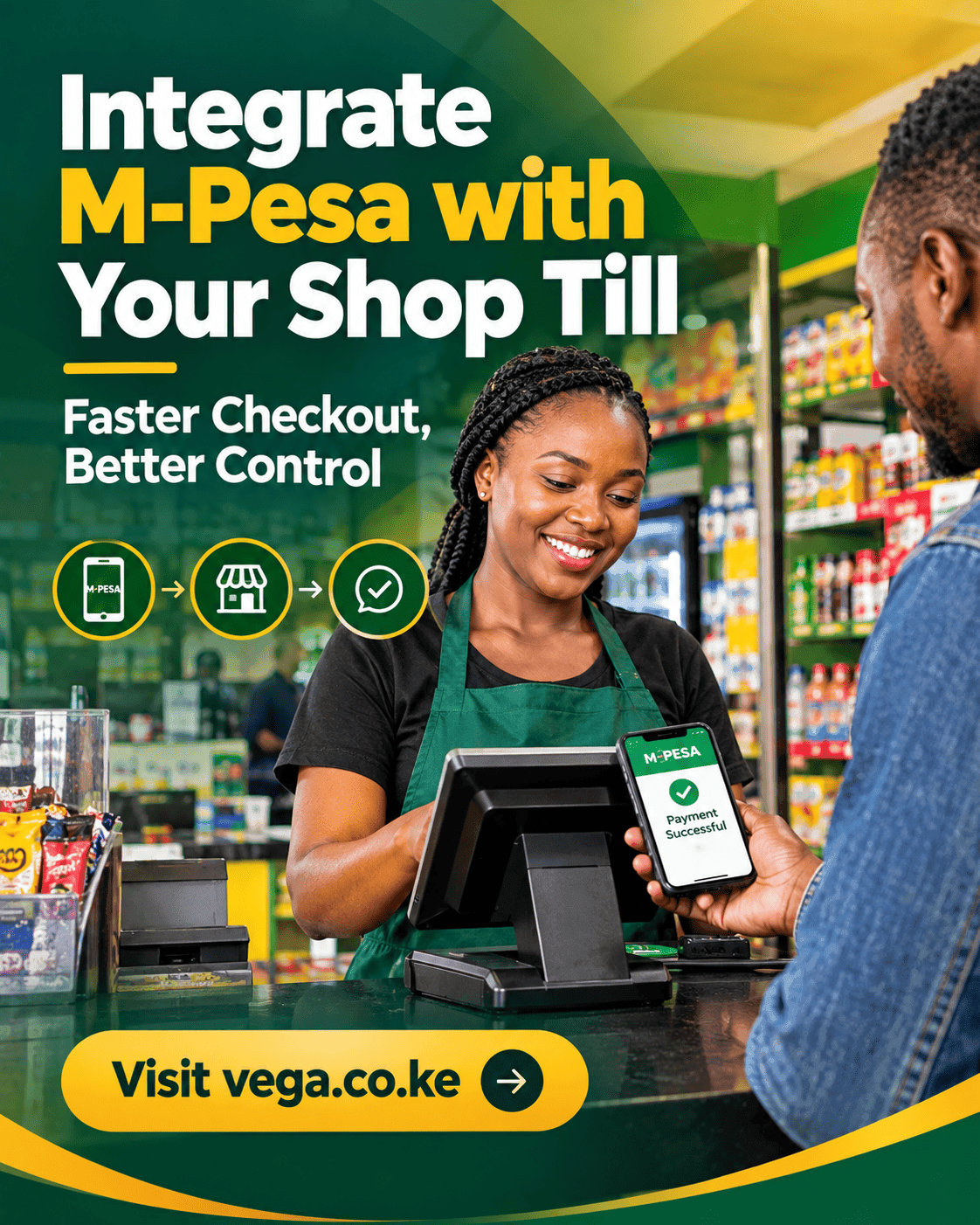
How to integrate M-Pesa with your shop till is one of the most valuable skills for any Kenyan retailer today. Customers expect to pay by phone, and businesses that cannot accept mobile money lose sales every day. This guide walks you through the entire process step by step. You will learn how to integrate M-Pesa with your shop till without technical confusion. We will cover the different integration options, the hardware you need, and the common mistakes to avoid.
By the end, you will know how to integrate M-Pesa with your shop till in a way that speeds up checkout and improves cash control. Whether you run a supermarket in Nairobi, a pharmacy in Kisumu, or a hardware shop in Nakuru, how to integrate M-Pesa with your shop till follows the same basic principles. Many owners delay this step because they fear complexity. Others try it and give up when problems appear. This article removes the guesswork.
It also shows how how to integrate M-Pesa with your shop till connects to your daily sales tracking. You will learn how to integrate M-Pesa with your shop till using both simple and advanced methods. We will also discuss how to integrate M-Pesa with your shop till when you have multiple branches. And we will show how how to integrate M-Pesa with your shop till supports accountability and reduces fraud. The how to integrate M-Pesa with your shop till process is not as hard as it seems.
With the right guidance, how to integrate M-Pesa with your shop till becomes a routine project. You will also see how how to integrate M-Pesa with your shop till improves customer experience. And you will understand how to integrate M-Pesa with your shop till when your internet is unreliable. The how to integrate M-Pesa with your shop till journey starts with understanding your options. It continues with choosing the right method. And it ends with a system that works every day. Let us begin.
Why Integrating M-Pesa with Your Shop Till Matters
M-Pesa is the dominant payment method in Kenya. Millions of customers use it daily. If your shop cannot accept M-Pesa smoothly, you are turning away sales. You are also forcing customers to carry cash, which many prefer to avoid. The how to integrate M-Pesa with your shop till question is really about meeting customer expectations.
Manual M-Pesa payments create problems. The cashier waits for an SMS confirmation. The customer waits too. Queues grow. Sometimes the SMS is delayed, and the cashier must decide whether to release goods. Errors happen. Disputes arise. The how to integrate M-Pesa with your shop till solution removes these frictions.
When M-Pesa is integrated with your till, payment confirmation is automatic. The system records the transaction instantly. The receipt prints or is sent. The cashier does not need to check a phone. This speeds up service and reduces mistakes. The how to integrate M-Pesa with your shop till process directly improves your checkout speed.
Integration also improves cash control. Every M-Pesa payment is recorded in the system. You can reconcile mobile money sales with your till reports. You can see exactly how much came in by M-Pesa and how much by cash. This visibility is a core benefit of how to integrate M-Pesa with your shop till.
Finally, integration supports growth. If you plan to open more branches, you need a payment system that scales. Manual M-Pesa confirmation does not scale. An integrated system does. Learning how to integrate M-Pesa with your shop till prepares your business for the future.
Understanding M-Pesa Integration Options for Shops
There are several ways to connect M-Pesa to your shop till. Each has different costs, complexity, and benefits. Understanding these options is the first step in how to integrate M-Pesa with your shop till.
Option 1: Lipa Na M-Pesa Till Number (Manual)
This is the simplest method. You apply for a Lipa Na M-Pesa Buy Goods Till Number from Safaricom. Customers pay to your till number using their phones. You receive an SMS confirmation on a nominated number. The cashier checks the SMS and then records the sale in your POS or manual system.
This method requires no technical integration. It is cheap and fast to set up. However, it is slow at checkout. It relies on SMS delivery. It does not automatically update your POS. This is the starting point for many businesses learning how to integrate M-Pesa with your shop till.
Option 2: Paybill Number with Manual Confirmation
A Paybill number works similarly to a till number. Customers enter your business number and their account number. You receive payment notifications. Again, confirmation is manual unless you integrate.
Paybill numbers are common for businesses that need to track payments by customer account. But without integration, the same delays and errors apply. This option is a stepping stone in how to integrate M-Pesa with your shop till.
Option 3: STK Push (Lipa Na M-Pesa Online)
STK Push is a merchant-initiated payment. The cashier enters the sale amount and the customer’s phone number into the POS. The customer receives a prompt on their phone to enter their M-Pesa PIN. The payment is confirmed automatically. The POS records the sale.
This is a true integration. It is fast, secure, and reduces errors. The customer does not need to remember your till number. The cashier does not wait for SMS. This is a major step forward in how to integrate M-Pesa with your shop till.
Option 4: C2B API Integration (Customer to Business)
C2B integration connects your till or paybill directly to your POS via Safaricom’s Daraja API. When a customer pays, your system receives instant notification. The sale is recorded automatically. No manual entry is needed.
This is the most advanced option. It requires technical setup or a vendor that supports it. But it delivers the full benefits of how to integrate M-Pesa with your shop till. Reconciliation becomes almost automatic.
Option 5: Third-Party Payment Gateways
Some payment gateways and POS providers offer built-in M-Pesa integration. You do not need to build anything yourself. You simply configure your account and start accepting payments. This is often the easiest path for small and medium businesses.
The gateway handles the technical connection to Safaricom. You focus on selling. This option simplifies how to integrate M-Pesa with your shop till for businesses without technical staff.
Step-by-Step: How to Integrate M-Pesa with Your Shop Till
Step 1: Apply for an M-Pesa Business Till or Paybill
Start by getting your business payment number. Apply through Safaricom or an authorised agent. You will need your business registration certificate, KRA PIN, and ID. The process usually takes a few days.
You will receive a Till Number or Paybill Number. You will also nominate a number to receive payment notifications. This number should be secure. This is the foundation of how to integrate M-Pesa with your shop till.
Step 2: Choose Your Integration Method
Decide between manual confirmation, STK Push, C2B API, or a payment gateway. Consider your transaction volume. High-volume shops need automation. Small shops may start with manual and upgrade later.
Consider your budget. STK Push and API integration may have setup costs. Manual confirmation is free but slow. Weigh these factors carefully when planning how to integrate M-Pesa with your shop till.
Step 3: Select a Compatible POS System
Your POS must support M-Pesa integration. Check whether your current system can connect to Safaricom’s Daraja API or a payment gateway. If not, you may need to upgrade or switch.
Look for POS systems that advertise M-Pesa integration. Ask for a demo. Test the payment flow. This step is critical for how to integrate M-Pesa with your shop till.
Step 4: Register on the Safaricom Developer Portal (for API Integration)
If you are doing a direct API integration, register on the Daraja portal. Create an account and generate your Consumer Key and Consumer Secret. These credentials connect your system to M-Pesa.
Start in the sandbox environment. This is a testing mode. You can simulate transactions without using real money. This reduces risk. It also helps you learn how to integrate M-Pesa with your shop till safely.
Step 5: Configure Your POS or Gateway
Enter your M-Pesa credentials into your POS or gateway settings. Set up your till or paybill number. Configure the callback URL if required. This is the address where M-Pesa sends payment confirmations.
Test the connection. Make a small test payment. Confirm that the sale appears in your POS. Repeat until you are confident. This configuration is the heart of how to integrate M-Pesa with your shop till.
Step 6: Train Your Cashiers
Train your team on the new payment flow. Show them how to initiate STK Push or how to check automatic confirmations. Explain what to do when a payment fails. Practice during quiet hours.
Create a simple guide. Laminate it and keep it near the till. This reduces confusion during busy periods. Good training ensures the success of how to integrate M-Pesa with your shop till.
Step 7: Go Live and Monitor
Once testing is complete, switch to live credentials. Start accepting real M-Pesa payments. Monitor the first few days closely. Check that every payment is recorded correctly.
Look for discrepancies. Investigate immediately. Do not wait until the end of the week. Active monitoring protects your investment in how to integrate M-Pesa with your shop till.
Step 8: Reconcile Daily
Every day, compare your M-Pesa statement with your POS records. The amounts should match. If they do not, investigate. Check for pending transactions or failed payments.
Daily reconciliation catches problems early. It also builds trust in the system. This routine is essential for how to integrate M-Pesa with your shop till.
Step 9: Handle Failed and Reversed Transactions
Payments can fail. Customers can reverse transactions. Your system should handle these cases. Train staff on what to do. Have a process for refunds.
Document every failed or reversed transaction. This protects you during disputes. It also improves your understanding of how to integrate M-Pesa with your shop till.
Step 10: Review and Improve
After a month, review your integration. Look at transaction success rates. Look at checkout times. Ask staff and customers for feedback.
Adjust your process based on what you learn. Maybe you need faster internet. Maybe you need more training. Continuous improvement is part of how to integrate M-Pesa with your shop till.
Benefits of Integrating M-Pesa with Your Shop Till
Faster Checkout and Shorter Queues
Integrated M-Pesa payments are fast. The cashier initiates the payment. The customer enters their PIN. The confirmation is automatic. There is no waiting for SMS. Queues move faster.
Faster checkout means happier customers. It also means more sales per hour. This is one of the most immediate benefits of how to integrate M-Pesa with your shop till.
Reduced Errors and Fraud
Manual M-Pesa confirmation is prone to error. Cashiers may misread amounts. They may accept fake screenshots. They may forget to record the sale. Integration removes these risks.
The system records every payment automatically. It matches the payment to the sale. Fraud becomes much harder. This is a powerful benefit of how to integrate M-Pesa with your shop till.
Better Cash Flow Visibility
When M-Pesa is integrated, you see your mobile money sales in real time. You know exactly how much came in. You can plan your cash flow better. You can also reconcile your bank deposits more easily.
This visibility improves decision-making. You know which payment methods are most popular. You can adjust your operations accordingly. This is a key advantage of how to integrate M-Pesa with your shop till.
Improved Customer Experience
Customers prefer to pay by phone. They do not want to carry cash. They do not want to wait. An integrated till gives them a smooth, modern payment experience.
Satisfied customers return. They also recommend your shop to others. The customer experience benefit is a major reason to learn how to integrate M-Pesa with your shop till.
Easier Reconciliation and Reporting
Manual M-Pesa reconciliation is painful. You must match SMS messages to sales. You must add up amounts. Errors are common. Integration automates this process.
Your daily reports include M-Pesa sales automatically. You can see totals by shift, cashier, or hour. This saves time and improves accuracy. It is a core operational benefit of how to integrate M-Pesa with your shop till.
Scalability for Growing Businesses
As your business grows, manual processes break down. You cannot manage multiple branches with SMS confirmations. An integrated system scales with you.
You can add more tills. You can connect more branches. You can maintain central visibility. This scalability is essential for long-term growth. It is a strategic benefit of how to integrate M-Pesa with your shop till.
Best Practices for How to Integrate M-Pesa with Your Shop Till
Start with a Reliable Internet Connection
M-Pesa integration depends on internet connectivity. If your connection is unreliable, payments may fail. Invest in a stable connection. Consider a backup option.
Test your connection during peak hours. Ensure it can handle the load. A reliable connection is the foundation of how to integrate M-Pesa with your shop till.
Use a Dedicated Phone or Device for Notifications
If you use manual confirmation, keep the notification phone secure. Do not let cashiers use it for personal calls. Keep it charged. Keep it near the till.
A dedicated device reduces errors. It also ensures you do not miss payment notifications. This simple practice supports how to integrate M-Pesa with your shop till.
Train Staff on Error Handling
Payments sometimes fail. Customers sometimes reverse transactions. Staff must know what to do. Create a simple troubleshooting guide. Practice common scenarios.
Well-trained staff handle problems calmly. They do not panic or make ad-hoc decisions. This improves customer confidence. It is an essential part of how to integrate M-Pesa with your shop till.
Reconcile Every Shift
Do not wait until the end of the day to reconcile M-Pesa. Do it at the end of every shift. Count the total M-Pesa sales. Compare with your POS report. Investigate differences immediately.
Shift-level reconciliation creates accountability. It also catches problems early. This habit strengthens how to integrate M-Pesa with your shop till.
Keep M-Pesa Statements for Records
Download or save your M-Pesa statements regularly. These are your official records. Keep them for at least seven years. You may need them for tax or audit purposes.
Statements also help you resolve disputes. They provide proof of payment. Good record-keeping is part of how to integrate M-Pesa with your shop till.
Test the System Before Peak Hours
Do not go live during your busiest time. Test during quiet hours. Make a few real payments. Confirm that everything works. Fix any issues before the rush.
Testing reduces disruption. It also builds confidence. This careful approach is key to how to integrate M-Pesa with your shop till.
Set Transaction Limits
Set reasonable limits for M-Pesa payments. Large transactions may need supervisor approval. This reduces fraud risk. It also protects customers.
Limits should be practical. Do not make them so low that they annoy customers. Balance security with convenience. This is part of how to integrate M-Pesa with your shop till.
Monitor Transaction Fees
M-Pesa charges transaction fees. These fees affect your margins. Understand the fee structure. Factor it into your pricing where possible.
Review your fees monthly. Look for ways to reduce costs. High volumes may qualify for better rates. This financial awareness is part of how to integrate M-Pesa with your shop till.
Back Up Your Transaction Data
Your POS stores M-Pesa transaction data. Back it up regularly. Use cloud backup or external drives. Test the restore process.
Data loss is painful. It can also cause disputes with customers. Backups protect your business. They are a best practice for how to integrate M-Pesa with your shop till.
Keep Customers Informed
Tell customers that you accept M-Pesa. Display your till number clearly. Train cashiers to explain the payment process. Make it easy for customers to pay.
Clear communication improves adoption. More customers will use M-Pesa. This increases the benefits of how to integrate M-Pesa with your shop till.
Common Mistakes to Avoid
Choosing the Wrong Integration Method
Some businesses choose a method that does not fit their volume. A high-traffic supermarket cannot rely on manual confirmation. A small kiosk may not need a full API integration.
Assess your needs before you choose. Match the method to your reality. This prevents wasted effort in how to integrate M-Pesa with your shop till.
Ignoring Internet Reliability
Integration fails without internet. If your connection is weak, payments will fail. Customers will be frustrated. You will lose sales.
Invest in a good connection. Have a backup plan. Test during peak hours. This is critical for how to integrate M-Pesa with your shop till.
Skipping Staff Training
Untrained staff create problems. They may not know how to initiate payments. They may mishandle failed transactions. They may create workarounds that break controls.
Train thoroughly. Practice scenarios. Provide refresher training. Training is not optional when you how to integrate M-Pesa with your shop till.
Not Reconciling Daily
If you do not reconcile daily, errors accumulate. You may not notice missing payments. You may not catch fraud. Your records become unreliable.
Make reconciliation a daily habit. Compare M-Pesa statements with POS reports. Investigate every difference. This routine protects your business.
Using Shared or Insecure Devices
Do not use a personal phone for M-Pesa notifications. Do not share passwords. Do not leave the device unattended. Security is essential.
Use a dedicated device. Keep it secure. Limit access. This protects your payments.
Ignoring Transaction Fees
M-Pesa fees add up. If you ignore them, your margins suffer. Understand the fees. Factor them into your pricing. Review them regularly.
Fee awareness is part of good financial management.
Failing to Test Before Go-Live
Going live without testing is risky. Payments may fail. Reports may be wrong. Customers may be affected.
Test in sandbox mode. Test with small real payments. Fix issues before you go live. This reduces disruption.
Not Having a Backup Plan
What if the internet goes down? What if the POS fails? Have a manual backup process. Keep a manual M-Pesa till number option. Train staff on the backup.
A backup plan keeps you selling during outages. It is a key part of how to integrate M-Pesa with your shop till.
Overlooking Customer Communication
Customers need to know how to pay. If they are confused, checkout slows down. Display clear instructions. Train cashiers to guide them.
Good communication improves the experience. It also increases M-Pesa adoption.
Forgetting to Review and Improve
Integration is not a one-time project. Review performance monthly. Look for issues. Ask for feedback. Improve your process.
Continuous improvement keeps your system efficient.
How vega.co.ke Helps with How to Integrate M-Pesa with Your Shop Till
How to integrate M-Pesa with your shop till becomes easier when you have a platform that organises your sales, cash, and payment data. vega.co.ke helps businesses track daily sales, including M-Pesa transactions. It brings your records together in one place.
With vega.co.ke, you can see M-Pesa sales by shift, cashier, or day. You can compare mobile money totals with cash totals. You can spot variances quickly. This supports better control and accountability.
vega.co.ke also helps with reconciliation. You can match your POS records with M-Pesa statements. Differences are easier to identify. Investigations become faster and fairer.
The platform is designed for Kenyan and African businesses. It focuses on clarity and ease of use. You do not need to be a technical expert. You just need consistent records.
If you want to improve how to integrate M-Pesa with your shop till, start by using vega.co.ke for tracking and reporting. It will not replace good management, but it will make good management easier. It gives you the visibility you need to run a tighter operation.
Sector-Specific Tips
Supermarkets and Mini-Marts
Supermarkets need fast checkout. STK Push or C2B integration is ideal. It reduces queues. It also handles high volumes. Ensure your POS can process multiple M-Pesa payments simultaneously.
Reconcile M-Pesa sales at every shift change. This keeps records accurate.
Restaurants and Cafes
Restaurants need quick table turnover. Integrated M-Pesa speeds up payment. It also reduces cash handling. Train waiters and cashiers on the process.
Consider a separate M-Pesa till for takeaway orders. This reduces congestion.
Pharmacies and Chemists
Pharmacies need accuracy and speed. Integrated M-Pesa records every payment automatically. It reduces disputes. It also helps with insurance claims.
Ensure your system can handle partial payments. Some customers may pay part by M-Pesa and part by cash.
Hardware and Building Supplies
Hardware shops often have large transactions. Set reasonable M-Pesa limits. Large payments may need supervisor approval. This reduces fraud risk.
Reconcile daily. Large transactions require careful tracking.
Salons and Barbershops
Salons have many small transactions. Integrated M-Pesa speeds up service. Customers appreciate the convenience. Train staff on STK Push.
Track M-Pesa sales by stylist or service. This helps with commissions.
Wholesale and Distribution
Wholesale needs fast bulk processing. C2B integration is ideal. It handles large volumes. It also tracks customer accounts.
Reconcile by customer where possible. This improves credit control.
Small Kiosks and Dukas
Small shops can start with a simple till number. Manual confirmation is acceptable at low volumes. Upgrade to STK Push as you grow.
Even simple integration improves control. It reduces errors and speeds up service.
Frequently Asked Questions
1. What is the first step to how to integrate M-Pesa with your shop till?
The first step is to apply for an M-Pesa Business Till or Paybill number from Safaricom. You will need your business registration, KRA PIN, and ID. Once you have the number, you can choose your integration method.
2. Do I need a special POS to integrate M-Pesa?
Not always. Some POS systems support M-Pesa integration natively. Others require a payment gateway. If your current POS cannot integrate, you may need to upgrade or use a gateway. Check compatibility before you commit.
3. How long does integration take?
Manual till number setup takes a few days. STK Push or API integration may take one to two weeks. It depends on your POS vendor and Safaricom’s approval process. Plan ahead.
4. What if the internet goes down during a payment?
If you use STK Push, the payment may fail. Have a backup manual till number. Train staff to switch to manual mode. Inform the customer and complete the sale when connectivity returns.
5. Are there monthly fees for M-Pesa integration?
M-Pesa charges transaction fees per payment. Some POS vendors charge monthly support fees. Payment gateways may also charge a monthly or per-transaction fee. Understand the full cost before you choose.
6. Can I integrate M-Pesa with multiple tills?
Yes. You can have multiple tills connected to one paybill or separate till numbers. For multiple branches, a central system is better. It gives you a unified view of all M-Pesa sales.
7. How do I handle M-Pesa reversals?
Train staff on your reversal policy. Document every reversal. Investigate the cause. If fraud is suspected, follow your disciplinary process. Keep records for future reference.
8. How can vega.co.ke help with M-Pesa integration?
vega.co.ke helps you track and organise your sales data, including M-Pesa payments. It supports daily reconciliation and reporting. It gives you visibility across shifts and cashiers. Visit vega.co.ke to learn more.
Take Action on How to Integrate M-Pesa with Your Shop Till
How to integrate M-Pesa with your shop till is a practical project that pays off quickly. You gain faster checkout. You reduce errors and fraud. You improve customer satisfaction. You get better visibility into your cash flow.
Start by applying for your M-Pesa business till or paybill. Choose an integration method that fits your volume and budget. Configure your POS or gateway. Train your staff. Test thoroughly. Go live during a quiet period. Reconcile daily.
Remember that how to integrate M-Pesa with your shop till is not just about technology. It is about discipline. Good records protect your money. They help you grow. They give you peace of mind.
Use vega.co.ke to organise your sales and payment data. Then build your routines around it. When you commit to how to integrate M-Pesa with your shop till, you build a faster, safer, more profitable business.
Visit vega.co.ke today to explore how it can support your sales tracking and reporting. Take the first step toward smoother payments, better control, and happier customers.