 Vega
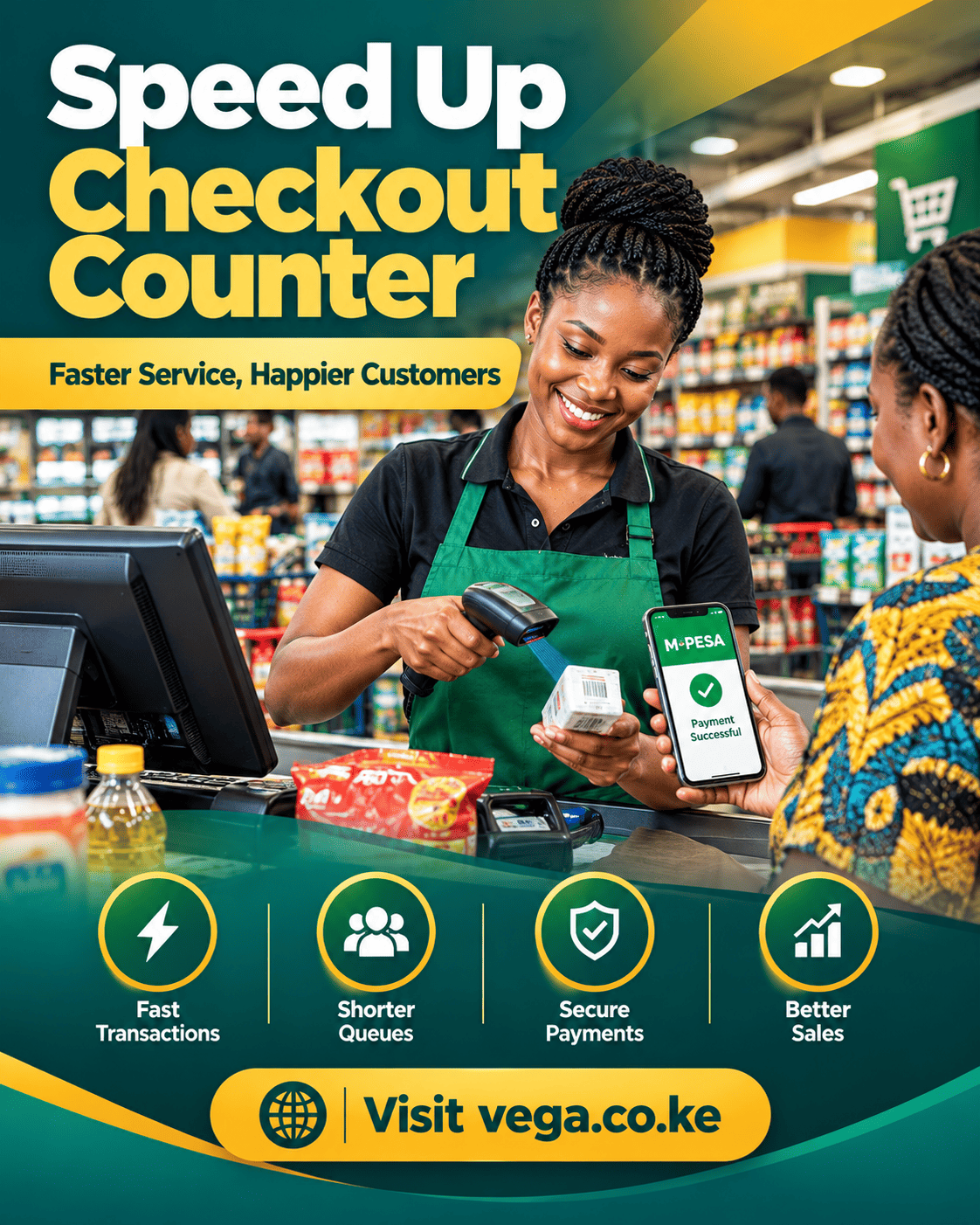
Speed up checkout counter in retail shops is one of the most direct ways to increase sales and customer loyalty. Long queues frustrate customers. They abandon purchases. They do not return.
This guide shows you how to Speed up checkout counter in retail shops step by step. We cover technology, staff training, layout, and payment methods. By the end, you will know how to Speed up checkout counter in retail shops with confidence.
Whether you run a kiosk in Nakuru or a supermarket in Nairobi, how you Speed up checkout counter in retail shops follows the same principles. Many owners accept queues as normal. That is a costly mindset.
You will learn how to Speed up checkout counter in retail shops across different business sizes. We also show how to Speed up checkout counter in retail shops for different shop types.
The approach to Speed up checkout counter in retail shops includes M-Pesa integration, barcode scanning, and staff training. You will see how to Speed up checkout counter in retail shops with vega.co.ke supporting your tracking.
How to Speed up checkout counter in retail shops also covers queue management and peak planning. And it shows how to Speed up checkout counter in retail shops during busy seasons.
You will understand how to Speed up checkout counter in retail shops when you have multiple tills. And you will see how to Speed up checkout counter in retail shops for multi-branch operations.
How to Speed up checkout counter in retail shops starts with measuring current performance. It continues with targeted improvements. And it ends with faster service and higher sales.
You will also learn how to Speed up checkout counter in retail shops through real examples. And you will see how to Speed up checkout counter in retail shops for total value.
Finally, how to Speed up checkout counter in retail shops will help you avoid common mistakes. Let us begin.
Why Checkout Speed Matters So Much
Checkout is the last impression a customer has of your shop. A fast, smooth checkout creates a positive memory. A slow, frustrating checkout destroys everything that came before.
Customers value their time. In Nairobi, time is precious. Traffic is heavy. People shop on their way home or during lunch breaks. They cannot afford to wait.
Long queues cause customers to abandon purchases. They leave their items at the till. They walk out. They may never return.
Slow checkout also frustrates staff. Cashiers face angry customers. They make more errors. They burn out faster.
Speeding up your checkout counter solves these problems. It increases sales. It improves customer loyalty. It reduces staff stress.
The Speed up checkout counter in retail shops approach is practical and affordable. You do not need to rebuild your shop. You need to fix specific bottlenecks.
The Real Cost of Slow Checkout
Slow checkout costs you money in several ways. The first is abandoned sales. Customers who wait too long leave without buying. You lose the sale. You also lose future sales.
The second is staff time. Slow checkout means more staff hours per sale. Your labour cost per transaction rises.
The third is errors. Rushed cashiers make mistakes. Wrong prices. Wrong change. Wrong payment types. These errors cost money and create disputes.
The fourth is reputation. Customers talk. They complain to friends. They post on social media. Your reputation suffers.
The fifth is capacity limits. If checkout is slow, you cannot serve more customers. Your shop is limited by its checkout speed.
Speeding up checkout removes these costs. The Speed up checkout counter in retail shops benefit is immediate and measurable.
Step-by-Step: How to Speed Up Checkout Counter in Retail Shops
Step 1: Measure Your Current Checkout Speed
Start by measuring. You cannot improve what you do not measure. Time your checkout process.
Count how many customers per hour you serve. Measure average transaction time. Note peak hours. Note slow periods.
Ask staff where delays happen. Ask customers how long they wait. Their feedback is valuable.
This baseline shows where you need to improve. The Speed up checkout counter in retail shops process starts with measurement.
Step 2: Identify Your Bottlenecks
Bottlenecks slow everything down. Find them. Common bottlenecks include slow payment confirmation, unclear pricing, and staff searching for items.
Watch your checkout during peak hours. Where do customers wait? Where do staff pause? Where do errors happen?
Talk to your cashiers. They know the pain points. They know what slows them down.
Fixing bottlenecks gives the biggest improvement. The Speed up checkout counter in retail shops approach targets the real problems.
Step 3: Integrate M-Pesa Payments
M-Pesa is the dominant payment method in Kenya. Manual confirmation slows checkout. The cashier waits for SMS. The customer waits too.
Integrate M-Pesa with your POS. Use STK Push. The cashier enters the amount. The customer enters their PIN. The payment confirms automatically.
This saves 30 to 60 seconds per M-Pesa transaction. Over a day, that adds up. The Speed up checkout counter in retail shops benefit is huge.
Test M-Pesa integration before going live. Make small payments. Confirm that they record correctly.
Step 4: Use Barcode Scanning
Barcode scanning speeds up checkout. The cashier scans items. The system records them instantly. No manual entry. No price lookup.
Barcode scanning reduces errors. It ensures correct pricing. It speeds up the entire transaction.
For shops with hundreds of products, barcode scanning is essential. Even small shops benefit. The Speed up checkout counter in retail shops improvement is immediate.
Train staff on scanning. Ensure scanners work properly. Keep spare scanners available.
Step 5: Organise Your Counter Layout
Counter layout affects speed. A cluttered counter slows everything down. Cashiers search for items. They reach awkwardly. They drop things.
Keep the counter clean and organised. Place the scanner where it is easy to reach. Place the printer nearby. Place bags within easy reach.
Ensure space for customers to place baskets. Ensure space for them to pack. Clear space reduces confusion.
Good layout speeds up every transaction. The Speed up checkout counter in retail shops improvement is free.
Step 6: Pre-Price All Items
Items without prices slow checkout. Cashiers must ask. They must check. They must guess. This wastes time.
Pre-price every item. Use shelf labels. Use price stickers. Ensure prices are visible and correct.
Update prices regularly. Remove old labels. Ensure the POS price matches the shelf price.
Pre-pricing speeds up checkout. It also reduces disputes. The Speed up checkout counter in retail shops benefit is significant.
Step 7: Train Cashiers on Speed Techniques
Training matters. Fast cashiers are trained, not born. Teach them keyboard shortcuts. Teach them to scan efficiently.
Teach them to handle multiple customers smoothly. Teach them to manage bags and receipts quickly.
Practice during quiet hours. Time their transactions. Give feedback. Celebrate improvements.
Well-trained cashiers are faster. They also make fewer errors. Training is essential for Speed up checkout counter in retail shops.
Step 8: Open More Tills During Peaks
Peak hours need more tills. If you have three tills but only open one, queues grow. Open more tills during busy times.
Plan staff schedules around peaks. Stagger breaks. Ensure supervisors can open extra tills quickly.
Monitor queues. When a queue reaches a certain length, open another till. Do not wait for customers to complain.
Opening more tills during peaks is one of the fastest ways to Speed up checkout counter in retail shops.
Step 9: Implement Queue Management
Queue management keeps lines moving. A single line feeding multiple tills is often faster than separate lines.
Use clear signage. Show customers where to queue. Use ropes or barriers to guide them.
Consider express lanes for small purchases. Customers with few items move faster. This reduces overall wait times.
Good queue management improves the customer experience. It also speeds up checkout.
Step 10: Reduce Payment Steps
Every step adds time. Reduce the number of steps in your payment process.
Pre-fill customer phone numbers for M-Pesa. Use quick-select buttons for common items. Avoid unnecessary confirmations.
Streamline your POS interface. Remove steps that are not needed. Train staff on the fastest path.
Fewer steps mean faster checkout. This is a key principle of Speed up checkout counter in retail shops.
Step 11: Use Mobile Checkout
Mobile checkout brings the till to the customer. Staff use tablets or handheld devices. They scan items in the queue. They take payment on the spot.
This reduces the time at the counter. Customers pay before reaching the till. The counter becomes a pickup point.
Mobile checkout works well for large shops. It also works for peak hours. Consider it if queues are a persistent problem.
Step 12: Monitor and Improve Continuously
Speed is not a one-time project. Monitor your checkout speed regularly. Track average transaction time. Track queue lengths.
Ask staff for feedback. Ask customers for feedback. Look for new bottlenecks.
Continuous improvement keeps your checkout fast. The Speed up checkout counter in retail shops process never ends.
Best Practices for Speeding Up Checkout Counter in Retail Shops
Keep Staff Trained
Training is ongoing. New staff need training. Existing staff need refreshers. New products and promotions need explanation.
Well-trained staff are faster and more accurate. Training is the foundation of Speed up checkout counter in retail shops.
Maintain Your Equipment
Slow printers and scanners slow checkout. Maintain your equipment. Clean scanners. Replace worn printers. Keep spare paper rolls nearby.
Equipment failure during peak hours causes chaos. Regular maintenance prevents this.
Use Fast Payment Methods
Encourage customers to use fast payment methods. M-Pesa STK Push is fast. Card payments are fast. Cash is slower.
Offer incentives for digital payments. This speeds up checkout and reduces cash handling.
Simplify Pricing
Complex pricing slows checkout. Avoid multiple price tiers. Avoid confusing promotions. Keep pricing simple.
Simple pricing speeds up transactions. It also reduces errors.
Pre-Bag Items
If possible, pre-bag items. This reduces time at the counter. Customers grab and go.
Pre-bagging works for common items. It speeds up checkout for everyone.
Display Clear Signage
Signs help customers prepare. Show payment methods. Show where to queue. Show where to pack.
Clear signage reduces questions. It keeps lines moving.
Handle Complaints Quickly
Complaints slow checkout. Train staff to handle complaints fast. Escalate if needed. Do not let one complaint block the line.
Quick complaint handling keeps queues moving.
Monitor Peak Hours
Know your peak hours. Staff accordingly. Open more tills. Prepare in advance.
Peak planning prevents queues before they start.
Reward Speed and Accuracy
Reward cashiers who are fast and accurate. Recognition motivates. It also reinforces good habits.
Rewards improve performance. They support Speed up checkout counter in retail shops.
Use Data to Improve
Review checkout data. Look at transaction times. Look at peak periods. Look at error rates.
Use data to target improvements. Data-driven changes are more effective.
Common Mistakes to Avoid
Ignoring Peak Hours
Peak hours need more staff. Ignoring this causes queues. Plan for peaks. Open more tills.
Not Training Staff
Untrained staff are slow. They make errors. They frustrate customers. Training is essential.
Slow Payment Confirmation
Manual M-Pesa confirmation slows checkout. Integrate M-Pesa. Use STK Push. Speed up payments.
Cluttered Counter
A messy counter slows everything. Keep it clean and organised. Everything should have a place.
No Queue Management
Unmanaged queues grow. Use single lines. Use clear signage. Guide customers.
Skipping Maintenance
Slow printers and scanners cause delays. Maintain equipment. Replace worn parts. Keep spares.
Ignoring Customer Feedback
Customers know where delays happen. Ask them. Listen to them. Act on their feedback.
Not Measuring Performance
You cannot improve what you do not measure. Track transaction times. Track queue lengths. Track improvements.
Overcomplicating Pricing
Complex pricing slows checkout. Keep it simple. Avoid confusing promotions.
Giving Up Too Soon
Improvements take time. Measure results. Adjust. Keep improving.
How vega.co.ke Helps with Speed Up Checkout Counter in Retail Shops
Speed up checkout counter in retail shops becomes easier with vega.co.ke. The platform helps you track sales, cash, and shift data in one place.
With vega.co.ke, you can see sales by cashier and shift. You can spot slow periods. You can identify training needs.
vega.co.ke is designed for Kenyan and African businesses. It focuses on clarity and ease of use. You do not need technical expertise.
If you want to Speed up checkout counter in retail shops, start by tracking properly. Visit vega.co.ke to see how it can support your retail business.
Sector-Specific Tips
Supermarkets and Mini-Marts
Use barcode scanning. Open more tills during peaks. Use express lanes for small purchases. Integrate M-Pesa STK Push.
Restaurants and Cafes
Use table management. Take orders at the table. Use mobile POS. Speed up payment with STK Push.
Pharmacies and Chemists
Pre-price items. Train staff on common medicines. Use barcode scanning. Speed up payment.
Hardware and Building Supplies
Pre-price items. Use bulk scanning. Train staff on common products. Speed up payment.
Salons and Barbershops
Use appointment systems. Take payment upfront. Use mobile POS. Speed up service.
Wholesale and Distribution
Use bulk scanning. Pre-print invoices. Use fast payment methods. Speed up dispatch.
Small Kiosks and Dukas
Keep it simple. Pre-price items. Use M-Pesa STK Push. Train staff on speed.
Frequently Asked Questions
1. What is the fastest way to speed up checkout?
Integrate M-Pesa STK Push. Use barcode scanning. Train staff on speed techniques. Open more tills during peaks.
2. How much time does M-Pesa integration save?
STK Push saves 30 to 60 seconds per transaction. Over a day, this adds up to hours of saved time.
3. Do I need barcode scanning for a small shop?
Barcode scanning helps any shop with many products. It speeds up checkout and reduces errors. Even small shops benefit.
4. How do I handle peak hour queues?
Open more tills. Stagger breaks. Use queue management. Train staff on speed.
5. What is mobile checkout?
Mobile checkout uses tablets or handheld devices. Staff scan items in the queue. Customers pay before reaching the till.
6. How often should I train staff on speed?
Train new staff immediately. Refresher training every few months. Practice during quiet hours.
7. How can vega.co.ke help speed up checkout?
vega.co.ke helps you track sales by cashier and shift. It shows you where delays happen. Visit vega.co.ke to learn more.
8. What is the biggest mistake in checkout speed?
Ignoring peak hours. If you do not staff for peaks, queues will always form.
Take Action on Speed Up Checkout Counter in Retail Shops
Speed up checkout counter in retail shops is a practical goal. It increases sales. It improves customer loyalty. It reduces staff stress.
Start by measuring current speed. Identify bottlenecks. Integrate M-Pesa. Use barcode scanning. Organise your counter. Train staff. Open more tills during peaks. Monitor and improve.
Remember that Speed up checkout counter in retail shops is ongoing. Small improvements add up. Fast checkout becomes a habit.
Use vega.co.ke to track your sales and cash. Visit vega.co.ke today to explore how it can support your retail business. Take the first step toward faster service and higher profit.